Scammers are circulating a deceptive popup titled “CRITICAL SECURITY ALERT” claiming that your phone is at a “high security risk” and urging immediate action. This message warns of viruses supposedly stealing your personal data—photos, contacts, passwords—and threatens to lock your device unless you subscribe to a costly “antivirus & privacy service.”
These alarming popups are designed to scare you into making rushed decisions. The notice pushes a fake sense of urgency by showing a ticking countdown and using official-sounding language like “Windows Security” and virus counts that do not exist. It even instructs you to pay a monthly fee of $2.50 to “stop the data leakage,” which is a complete fabrication.
No legitimate security alert would appear out of nowhere demanding payment through a popup on your phone. The entire message is crafted to trick users into giving away money and possibly personal information. Always be cautious with any unexpected warnings—never tap suspicious buttons or share your payment details without verifying through official app stores or trusted antivirus providers.
If you see a popup like this, close it immediately and run a genuine antivirus scan from a reputable app. Remember, real security alerts are free and do not pressure you into instant paid subscriptions. Stay informed and protect yourself from these nasty scams!
Table of Contents
🕵️♂️ How the “Critical Security Alert” Scam Operates
“Critical Security Alert” is a deceptive popup scam. 🚨 It’s a type of fraud where fake security warnings are shown on your device, pressuring you to pay for unnecessary or non-existent antivirus services.
When you visit certain shady sites, download pirated apps, or click on misleading ads, you might see a pop-up with these messages:
CRITICAL SECURITY ALERT
Your phone is at a high security risk.
Immediate action is required.
Continue
In the background, the page mimics an official Windows Security notification with details like:
Windows Security
January 19, 2026(2) Viruses are detected. Your personal data is leaking!
The security protection is not enabled on your phone, and your phone has been infected with viruses from the recent high-risk sites that you browsed.
The viruses have hidden on the system files, and they are automatically sending your photos, videos, contacts, passwords and personal data to multiple unknown servers via cellular and Wi-Fi.
We are about to lock your phone soon. The antivirus and security protection is required to avoid being locked.
To pressure you further, the scam gives fake “instructions” to fix the problem:
Tap the ‘Enable Protection’ button below.
Subscribe and activate the antivirus & privacy service by paying $2.50 per month to stop the data leakage and protect your phone.
🔗 Step-by-Step Breakdown of the Scam:
📱 Triggering Fake Security Popups
Scammers create alarming popups like “Your phone is at high security risk” or “Viruses detected!” that appear while browsing certain malicious or compromised websites. These popups mimic legitimate system alerts to scare users.
🕸️ Using Deceptive Wording and Urgency
The popup messages use urgent language, warning that your personal data is leaking or that your phone will be locked soon, pushing you to take immediate action without thinking.
📢 Pressuring Users to Act Quickly
They prompt you to tap a button labeled “Enable Protection,” which supposedly fixes the problem but really leads to subscribing to a worthless service.
💰 Forcing Subscription Payments
After tapping through, the scam convinces victims to pay a monthly fee (e.g., $2.50/month) for an “antivirus & privacy service” that either doesn’t exist or provides no real protection.
🌟 Faking Legitimacy
The scam often pretends to come from trusted sources, using names like “Windows Security” to appear official, even though the message is fraudulent.
📉 Potential Additional Risks
Some scams may install malware or spyware after payment, or misuse your payment information for further fraud.
In summary, the “Critical Security Alert” scam tricks users into paying for fake antivirus services by showing alarming popups that mimic real security warnings. The scammers use urgent messages, fake official branding, and pressure tactics to steal money from victims. Always verify alerts directly through your device’s official security apps and never pay to fix supposed threats shown only on popup ads.
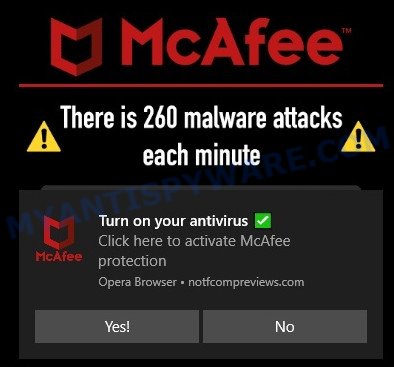
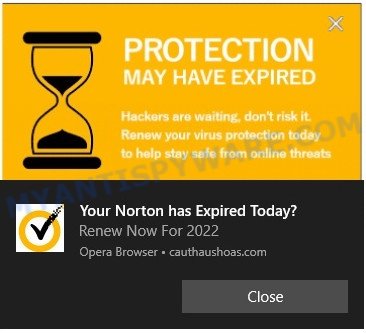
Similar Fake Alerts
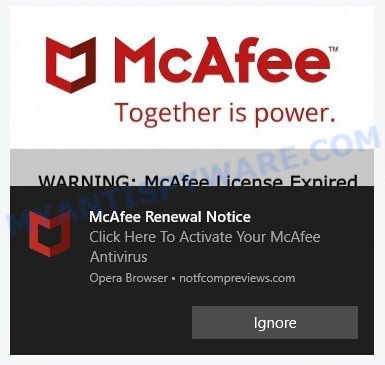
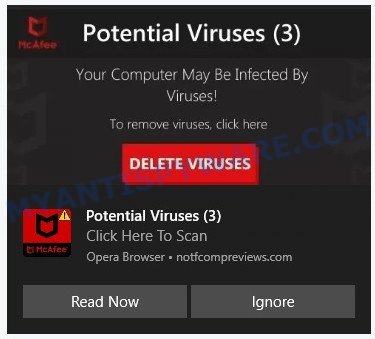
Threat Summary
| Name | Critical Security Alert Pop-Up Scam |
| Type | Tech Support Scam |
| Whois Details | Recently created domain, WHOIS contact information hidden |
| Fake claims | You have visited unsafe site with illegal content, Your PC is infected with 5 viruses, Your McAfee subscription has expired |
| Distribution | Adware, malicious websites, push notifications, social engineering |
| Damage | Misleads users to purchase fake or unnecessary antivirus software, can lead to financial loss and installation of malicious software |
| Symptoms | Pop-up messages and fake scans claiming viruses are detected on the user’s PC |
| Removal | Close pop-up windows, use ad-blockers and anti-malware software, never give out personal or financial information |
Examples of such scams
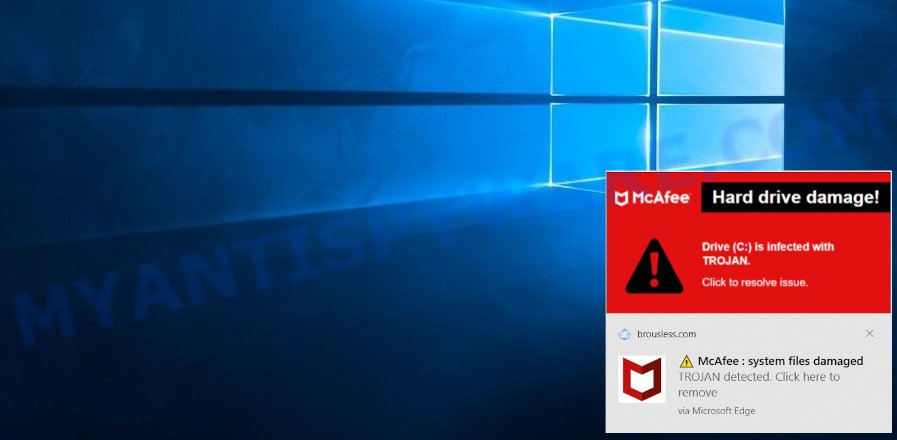
Hard Drive Damage Pop-Up Scam
In this scam, users receive a pop-up warning claiming that their hard drive is damaged or corrupted due to a virus or malware. It often includes technical jargon and error codes to appear authentic. The pop-up typically advises the user to download a ‘repair tool’ or contact a ‘support number’. However, the tool is usually malware, and the support number connects to scammers who try to gain remote access to the user’s computer or sell unnecessary services.
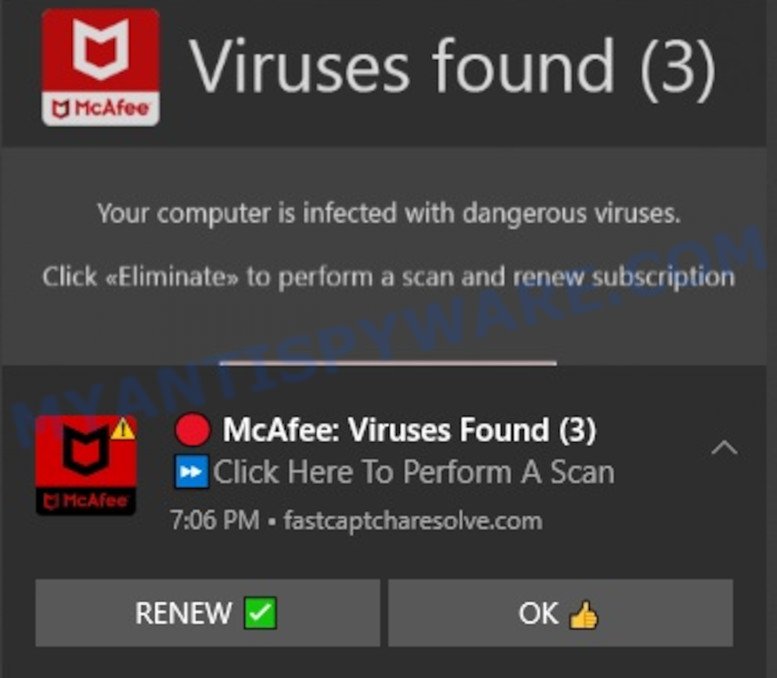
Virus Found (3) Pop-Up Scam
This particular scam involves a pop-up alert claiming that three viruses have been detected on the user’s device. It’s designed to mimic the look and feel of legitimate antivirus software alerts to convince users of its authenticity. The pop-up often includes a timer, adding a sense of urgency to the warning. Users are prompted to click on a button to remove the viruses, which either leads to the download of actual malware or redirects to a site asking for personal information or payment to ‘clean’ the computer.
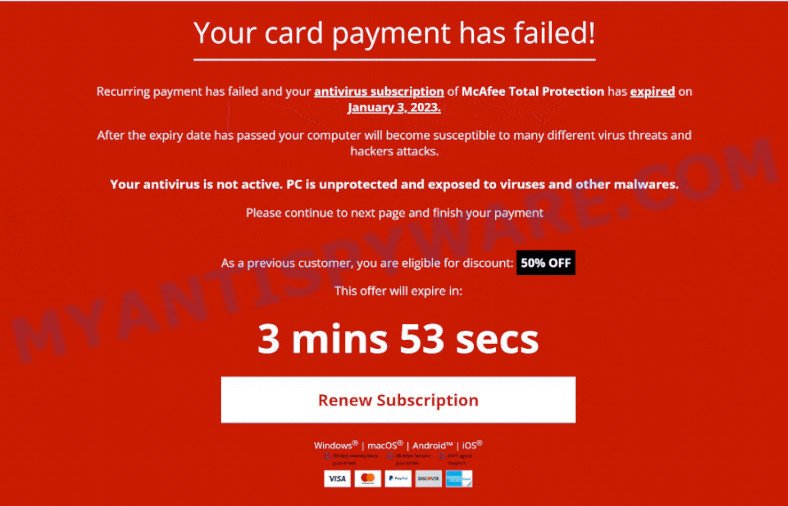
Your Card Payment Has Failed – Renew Subscription Scam
This scam targets users with a false notification that their credit card payment for a subscription service (like antivirus or streaming) has failed. The message prompts immediate action, urging the user to click on a link to ‘renew’ or ‘update’ their payment information. Once clicked, it leads to a fake website where personal and financial details are requested, putting the user at risk of identity theft and financial fraud.
All these scams share a common strategy: they create a sense of urgency and fear to compel the user to take immediate action, which often leads to compromising personal security or financial loss. It’s vital to approach such alerts with skepticism and verify their authenticity before taking any action.
Where did Critical Security Alert scam pop-ups come from?
The Critical Security Alert pop-ups are caused by malicious advertisements on websites you visit, spam push notifications or Adware. Browser (push) notifications are originally developed to alert the user of recently published news. Scammers use push notifications to bypass pop up blockers and display lots of unwanted ads.
Adware is a form of malicious software that displays unwanted advertisements on a personal computer, redirects search queries to scam pages, and collects sensitive information for marketing purposes. Adware may display banner ads, full-screen ads, pop-ups, videos, or other forms of online advertising. You may think that ads or pop-ups are just a small problem. But these intrusive advertisements consume system resources and slow down your PC.
Typically, adware ends up on personal computers bundled with freeware, malicious downloads, fake updates, shared files, and other unsafe software downloaded by users from the Internet. To avoid installing any adware: choose only the option of manual, custom or advanced installation and disable any third-party applications that you are not sure about.
How to Identify Scams That Imitate Security Alerts
As scams continue to evolve and become more sophisticated, it is becoming increasingly difficult to distinguish between genuine antivirus notifications and fake ones. Cybercriminals often use the names and logos of legitimate antivirus software to trick users into installing malware or purchasing fake security software. Therefore, it is important to be able to identify the signs of a fake antivirus notification and take the necessary steps to protect your computer from these types of scams.

In this section, we will discuss how to identify scams that imitate the Norton antivirus. Norton is a well-known and reputable antivirus software that has been targeted by scammers for years. These scams usually involve pop-ups or notifications that claim to have found a virus on your computer and urge you to download or purchase a security solution to fix the problem. By knowing what to look out for, you can avoid falling victim to these types of scams and keep your computer safe and secure.
- Check the URL. Scammers often use URLs that look similar to the real Norton website, but with slight variations. Always check the URL carefully to make sure it is the genuine Norton website.
- Look out for urgent warnings. Scammers often use urgent messages, such as “Your computer is infected with a virus!”, to scare people into taking immediate action. Be wary of urgent messages that require you to download software or take other actions to fix the problem.
- Verify the source. If you receive an email or message claiming to be from McAfee, verify the source before taking any action. Contact McAfee customer support directly to confirm the legitimacy of the message.
- Be wary of unsolicited pop-ups. If you see a pop-up window that appears out of nowhere claiming that your computer is infected, it is likely a scam. Legitimate antivirus software doesn’t use unsolicited pop-ups to promote their products.
- Avoid clicking on suspicious links. If you receive an email or message with a link to download software or update your antivirus, be cautious. Always hover over the link to verify the URL and avoid clicking on suspicious links.
By being aware of these warning signs, you can protect yourself from scams that imitate Norton antivirus and stay safe online.
How to remove Critical Security Alert pop-ups
If you have encountered Critical Security Alert pop-ups, you should not trust the message and refrain from clicking any buttons or links that appear on the page. Instead, follow the steps below to remove the pop-up and any potential malware from your computer:
To remove Critical Security Alert pop ups, complete the steps below:
- Close the pop-up
- Clear your browsing history
- Disable push notifications
- Scan your computer for malware
- Reset your browser settings
Close the pop-up
Closing the pop-up is the first step you should take when dealing with the Critical Security Alert scam. Although it may seem like a simple task, some users may find it challenging, especially if the pop-up is designed to be persistent and difficult to close. This step is crucial because it prevents the user from falling into the trap set by the scammers and clicking on any of the buttons or links that can lead to further harm. In this section, we will provide a detailed guide on how to close the Critical Security Alert pop-up safely and effectively.
- Don’t click on anything within the pop-up as it could lead to further harm.
- Look for a small “X” or “Close” button within the pop-up window. Click on it to close the window.
- If there is no “X” or “Close” button, try pressing the “Esc” key on your keyboard to close the pop-up.
- If the pop-up still won’t close, try opening your computer’s Task Manager by pressing “Ctrl + Shift + Esc” on your keyboard (or “Ctrl + Alt + Delete” and then select “Task Manager”). Find the browser window that the pop-up is in, right-click on it, and select “End Task” to force close the window.
Clear your browsing history
Clearing your browsing history is an important step in removing Critical Security Alert pop-ups. These pop-ups often come from malicious websites that can be stored in your browsing history.
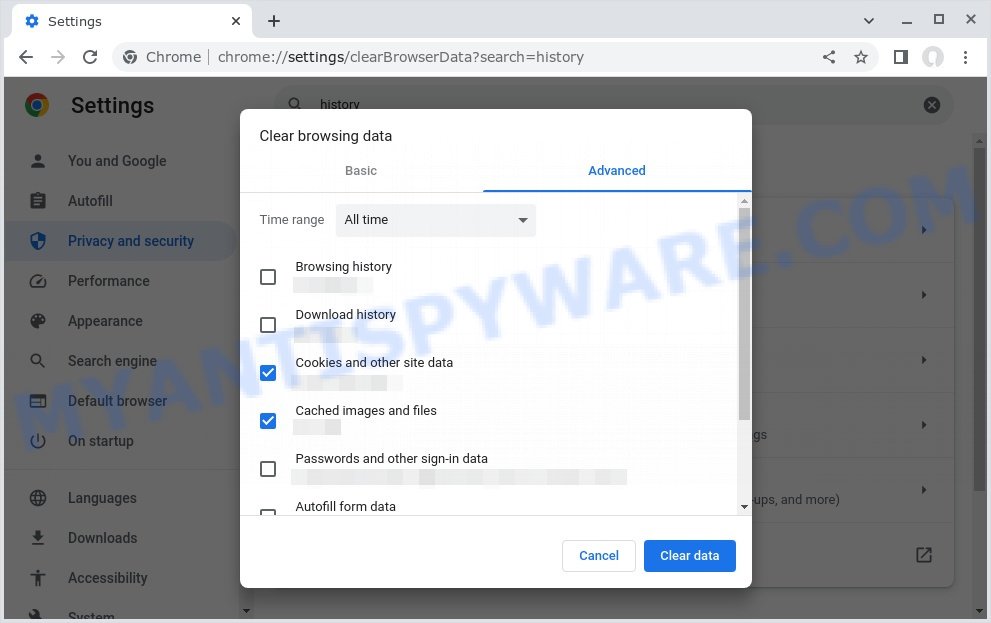
By clearing your browsing history, you can get rid of any traces of these websites and prevent the pop-ups from reappearing. In this step, we will walk you through how to clear your browsing history on different browsers.
- Open your browser’s settings or options menu. This can usually be accessed by clicking on the three dots or lines in the top right or left corner of the browser window.
- Scroll down to the “Privacy & Security” or “History” section of the settings menu.
- Click on “Clear Browsing Data” or “Clear History” (the wording may vary depending on the browser you are using).
- In the pop-up window that appears, choose the time range for which you want to clear your browsing history (e.g. “Last hour,” “Last 24 hours,” “All time,” etc.).
- Make sure that “Browsing history” or “History” is selected as one of the types of data to be cleared.
- Click on the “Clear Data” or “Clear History” button (the wording may vary depending on the browser you are using).
- Wait for the browser to finish clearing your browsing history. This may take a few moments, especially if you have a lot of browsing data stored on your computer.
- Close and restart your browser to ensure that the changes take effect.
Disable push notifications
If you’re experiencing persistent push notifications from websites that are showing Critical Security Alert scams, the best course of action is to disable push notifications altogether. Disabling push notifications prevents malicious websites from showing you unwanted pop-ups and alerts, which can help protect your computer from further harm. In this step, we’ll walk you through the process of disabling push notifications in your web browser.
Google Chrome:
- Click on ‘three dots menu’ button at the top-right corner of the Google Chrome window.
- Select ‘Settings’, scroll down to the bottom and click ‘Advanced’.
- At the ‘Privacy and Security’ section click ‘Site settings’.
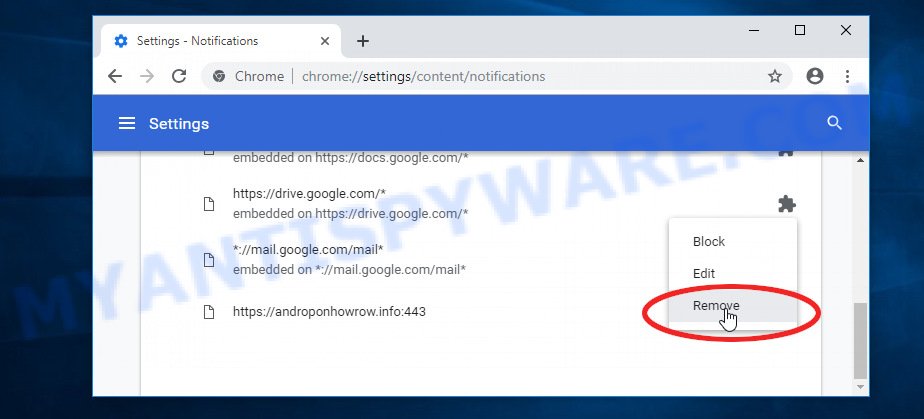
- Click on ‘Notifications’.
- Locate the Critical Security Alert website and click the three vertical dots button next to it, then click on ‘Remove’.
Android:
- Open Chrome.
- Tap on the Menu button (three dots) on the top right corner of the screen.
- In the menu tap ‘Settings’, scroll down to ‘Advanced’.
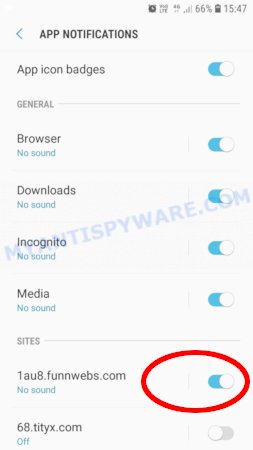
- In the ‘Site Settings’, tap on ‘Notifications’, locate the Critical Security Alert URL and tap on it.
- Tap the ‘Clean & Reset’ button and confirm.
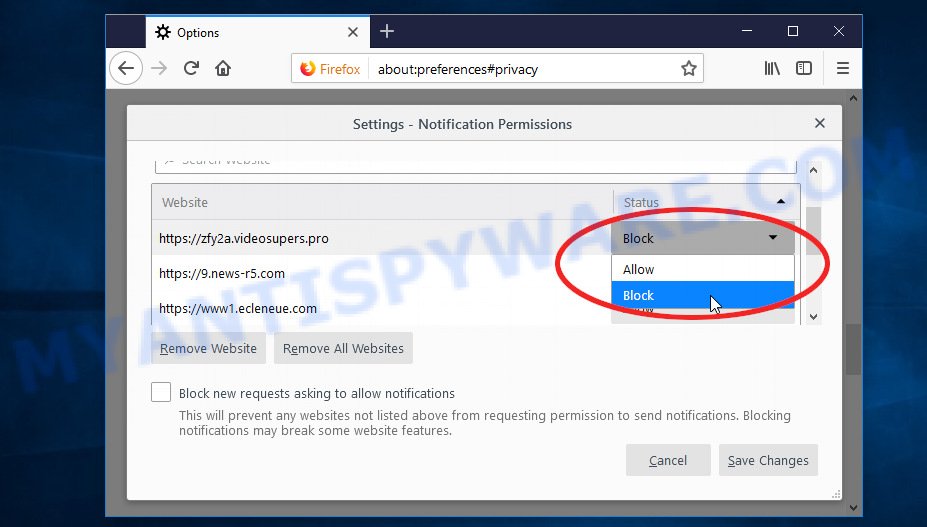
Mozilla Firefox:
- In the top right corner, click the Firefox menu (three bars).
- In the drop-down menu select ‘Options’. In the left side select ‘Privacy & Security’.
- Scroll down to ‘Permissions’ section and click ‘Settings…’ button next to ‘Notifications’.
- Find the Critical Security Alert website address, other suspicious URLs, click the drop-down menu and select ‘Block’.
- Click ‘Save Changes’ button.
Edge:
- Click the More button (three dots) in the top-right corner of the window.
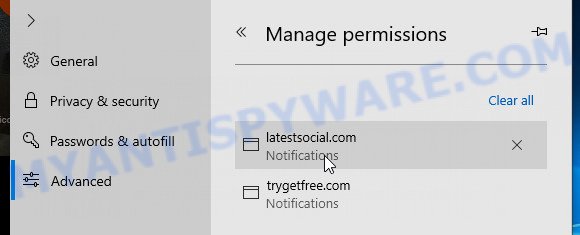
- Scroll down, locate and click ‘Settings’. In the left side select ‘Advanced’.
- In the ‘Website permissions’ section click ‘Manage permissions’.
- Disable the on switch for the Critical Security Alert domain.
Internet Explorer:
- Click the Gear button on the top-right corner of the browser.
- Select ‘Internet options’.
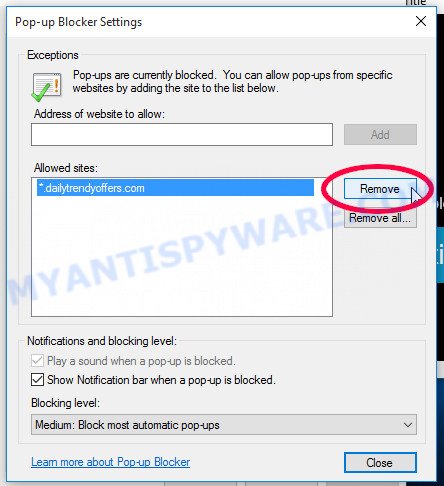
- Click on the ‘Privacy’ tab and select ‘Settings’ in the pop-up blockers section.
- Locate the Critical Security Alert website and click the ‘Remove’ button to delete the site.
Safari:
- Go to ‘Preferences’ in the Safari menu.
- Select the ‘Websites’ tab and then select ‘Notifications’ section on the left panel.
- Find the Critical Security Alert site and select it, click the ‘Deny’ button.
Scan computer for malware
If you have encountered the Critical Security Alert pop-up scam, it is possible that your computer has been infected with malware. In order to ensure that your system is completely clean, it is important to perform a thorough scan for malware. This will help to identify any malicious files or programs that may be hiding on your computer and remove them to prevent further damage. In this step, we will guide you through the process of scanning your computer for malware using trusted antivirus software.
Malwarebytes is a reputable anti-malware program that can effectively detect and remove adware, potentially unwanted programs and malware. It has a user-friendly interface and offers both free and paid versions, with the paid version offering real-time protection and other advanced features. To use Malwarebytes to remove malicious software, you can download and install the program, perform a scan of your system, and follow the prompts to remove any detected threats.
Visit the following link and download the latest version of Malwarebytes. Once the download is complete, run the installer and follow the instructions to install the program on your computer.
328348 downloads
Author: Malwarebytes
Category: Security tools
Update: April 15, 2020
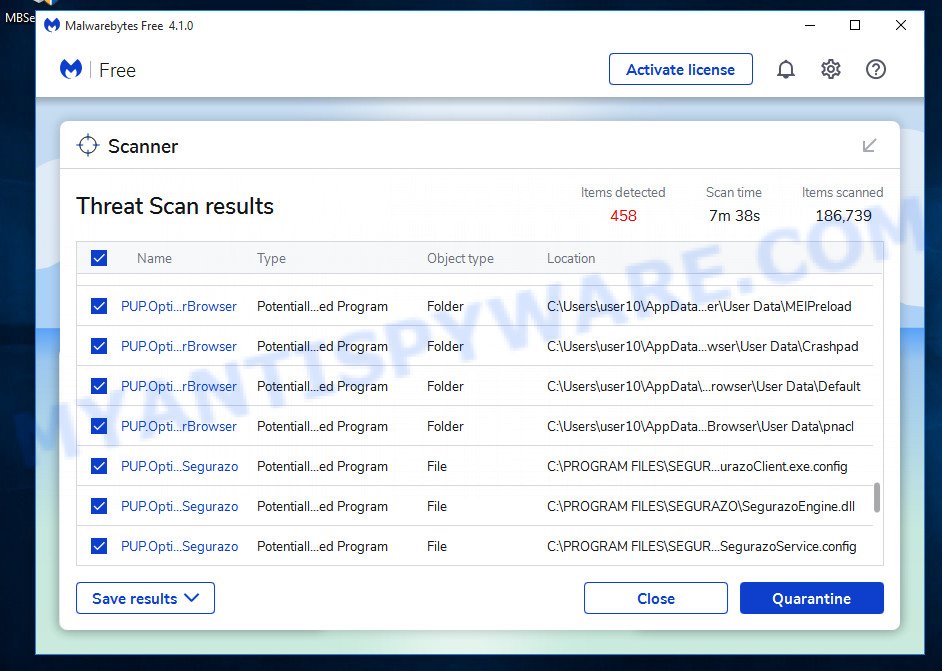
Open Malwarebytes and click on the “Scan” button. The program will start scanning your computer for any malware or potentially unwanted programs. Depending on the size of your hard drive, this may take a few minutes to complete.
Once the scan is complete, Malwarebytes will display a list of any threats it has found. Review the list carefully and make sure that all the items are checked for removal. Then, click on the “Quarantine” button to remove the threats from your computer. After the removal process is complete, you may be prompted to restart your computer to complete the process.
Please follow this step-by-step video tutorial to learn how to use Malwarebytes to scan and remove any potential threats from your computer. The video will guide you through the entire process, from downloading and installing Malwarebytes to running a scan and removing any identified threats.
Reset your browser settings
If the Critical Security Alert pop-ups persist even after clearing your browsing history, disabling push notifications, and scanning your computer for malware, resetting your browser settings might be the next step to take. Resetting your browser settings can remove any unwanted extensions or changes made to your browser that may be causing the pop-ups to appear. In this step, we will guide you through the process of resetting your browser settings in different popular browsers.
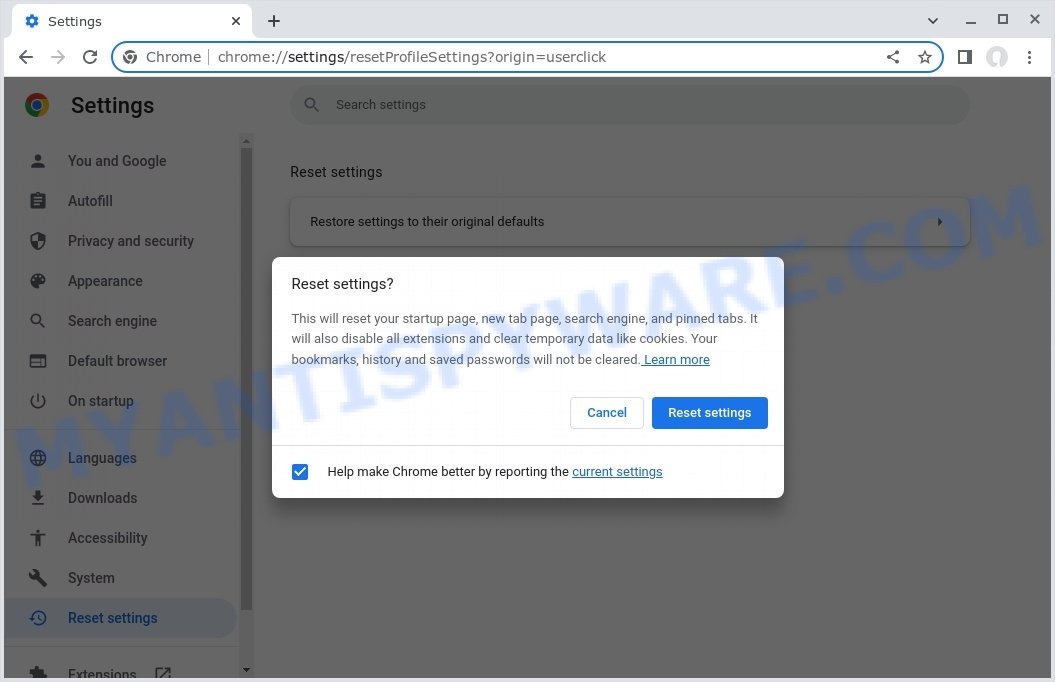
To reset your browser settings in Google Chrome:
- Open Chrome and click on the three-dot icon in the top-right corner.
- Select “Settings” from the drop-down menu.
- Scroll down to the bottom of the page and click on “Advanced.”
- Scroll down to the “Reset and cleanup” section and click on “Restore settings to their original defaults.”
- Click “Reset settings” to confirm.
To reset your browser settings in Mozilla Firefox:
- Open Firefox and click on the three-line icon in the top-right corner.
- Select “Help” from the drop-down menu and then click on “Troubleshooting Information.”
- Click on the “Refresh Firefox” button in the top-right corner.
- Click “Refresh Firefox” again to confirm.
To reset your browser settings in Microsoft Edge:
- Open Edge and click on the three-dot icon in the top-right corner.
- Select “Settings” from the drop-down menu.
- Scroll down and click on “Reset settings.”
- Click “Restore settings to their default values.”
- Click “Reset” to confirm.
After resetting your browser settings, be sure to check for any remaining suspicious extensions and remove them if necessary.
Protecting Yourself from the Critical Security Alert Scam
Now that you know how the Critical Security Alert scam works, how to identify similar scams, and how to remove the pop-ups, it’s important to take steps to protect yourself from falling victim to this or similar scams in the future.
Here are some additional steps you can take to protect yourself:
- Install reputable antivirus software. By installing antivirus software, you can help prevent these types of scams from infecting your computer in the first place. Make sure to keep your antivirus software up to date and run regular scans to ensure your computer remains protected.
- Be wary of emails or links that claim to be from legitimate companies, such as Norton, especially if you didn’t request any information. Don’t click on links in emails from unknown sources or download attachments from them.
- Keeping your software up to date is one of the easiest and most effective ways to prevent security breaches. Software updates often contain security patches that fix vulnerabilities, so make sure to install them as soon as they become available.
- Educate yourself on common scams. Knowledge is power, and being aware of common scams and tactics used by cybercriminals can help you recognize and avoid them. Stay informed by reading up on the latest scams and how to protect yourself against them.
By taking these steps, you can help protect yourself from falling victim to the Critical Security Alert scam or similar scams in the future. Remember, being cautious and aware is key to staying safe online.
Conclusion
The Critical Security Alert is a deceptive pop-up designed to frighten users into purchasing fake antivirus and privacy services. This scam relies on alarming messages, urgent countdown timers, and false claims of virus infections and data leakage to pressure victims into making unnecessary payments.
The scammers behind this fraudulent alert exploit fear by warning of imminent phone lockout and personal data theft, despite no legitimate security issues present on your device. The pop-up mimics official system warnings, using official-sounding language such as “Windows Security” and fabricated notification dates to appear credible.
Bottom Line: Do not trust or interact with such suspicious security pop-ups. Avoid clicking on “Enable Protection” or providing any payment information. Instead, verify your device’s security with trusted antivirus software or consult reputable technical support. Always be cautious of urgent security alerts demanding immediate payment, as these tactics are common in scams aimed at exploiting unsuspecting users. Stay vigilant and protect your personal data by ignoring and closing such fraudulent notifications.