Have you come across a website called ReceiveCodes.com offering a Costco Memorial Day Special Promo Code with huge discounts and shopping credits?
Question: Is this offer from ReceiveCodes.com a real deal from Costco or something else?
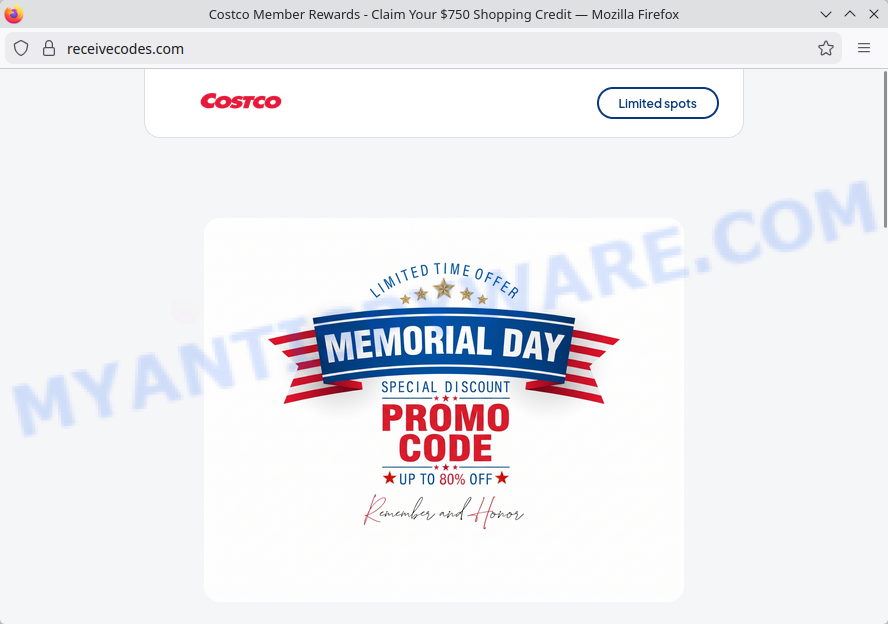
Investigation Findings: The website uses the Costco name and logo but is not connected to the official Costco site. The domain name is different from Costco’s real website. It promises big discounts and promo codes in exchange for completing several sign-up offers, which is a common trick used by scam sites. The language on the site creates false urgency and looks suspicious.
Answer: ReceiveCodes.com is a fraudulent scam pretending to be Costco to trick visitors into completing offers that may lead to spam, unwanted subscriptions, or other risks. 💡 To protect yourself from scams like this, always check that the website’s address matches the official company’s site and be cautious of deals that sound too good to be true. Additionally, avoid entering personal information or completing sign-ups on unfamiliar sites.
💡 Heads-up: Similar Scams Are Everywhere. ReceiveCodes.com is not unique. It is one of many fake supplements, gadgets, and other schemes we expose in our Fact Checks section. All of them aim to grab your personal data or money. The people behind these scams run slick websites, spread bogus promo codes, and even pose as trusted brands or experts. Below are a few recent scams that follow the same playbook as ReceiveCodes.com: CloudTroid, MemoBrew, Claricept, LemonGifted.com, ReduBURN.

Table of Contents
🚨 Is ReceiveCodes.com a Scam?
ReceiveCodes.com promotes an enticing offer of Costco promo codes and large shopping credits, but several red flags suggest this site is a scam designed to trick users into completing unnecessary offers without delivering any real rewards.
Key Red Flags:
- 🌐 Domain Name Discrepancy: ReceiveCodes.com is not affiliated with Costco’s official domain (costco.com). Legitimate companies always use official domains for promotions.
- ⭐ Impersonation of a Known Brand: The website prominently uses Costco’s branding and logos to create false trust and imply endorsement, which Costco has not authorized.
- 💰 Unrealistic Offers: The promise of “$750 Shopping Credit” and “UP TO 80% OFF” promo codes is exaggerated and typical of scams aiming to lure users with too-good-to-be-true deals.
- ⏳ Overused Pressure Tactics: Terms like “Limited Time Offer,” “Limited spots,” and “Memorial Day Special” create a false sense of urgency to rush visitors into action without proper scrutiny.
- 🎨 Professional Design but Suspicious URL: Despite an attractive, holiday-themed website design, the suspicious non-Costco domain and disclaimers make the offer highly questionable.
- 📝 Forced Completion of Multiple Offers: Users must complete 4–5 promotional deals, often involving sign-ups or trials for third-party products, before supposedly unlocking the reward—common in scam schemes to generate affiliate revenue without delivering real value.
In summary, ReceiveCodes.com exhibits multiple typical scam indicators including brand impersonation, unrealistic promises, pressure tactics, and dubious offers designed to harvest personal information and generate commission clicks. It is strongly advised to avoid this site and never provide personal details or complete offers for unverified rewards. For legitimate Costco discounts, always rely on official Costco channels and trusted partners.
🕵️♂️ How ReceiveCodes.com Scam Operates
ReceiveCodes.com is a fraudulent site impersonating Costco promotions to trick users. 🚨 It offers fake Costco promo codes that require users to complete multiple offers, only to deliver no genuine rewards. 🔗 Step-by-Step Breakdown of the Scam:
🛒 Creating Fake Promotional Websites
The scammers set up websites like receivecodes.com which mimic Costco branding and logos to appear legitimate. However, these sites are completely unaffiliated with Costco and use suspicious domain names instead of official ones like costco.com.
🕸️ Using Impersonation to Gain Trust
By prominently using Costco’s name and logo, the site tries to convince visitors they are receiving a legitimate Costco deal. This brand impersonation makes the offer seem trustworthy despite lacking any official endorsement.
📢 Promoting Unrealistic Deals
The website advertises highly enticing incentives such as “$750 Shopping Credit” and “Up to 80% OFF” promo codes. These deals are exaggerated and designed to lure users into participating.
💼 Forcing Completion of Multiple Offers
To unlock the supposed Costco promo code, users must complete 4-5 third-party promotional offers, including free trials, app installs, or sign-ups. These offers often result in marketing spam or unexpected charges rather than the promised rewards.
💸 No Genuine Rewards Delivered
After completing the required offers, users rarely receive any valid promo codes or benefits. The promised rewards are either fake or nonexistent.
🌟 Fake Urgency Tactics
The scam uses phrases like “Limited spots,” “Memorial Day Special,” and “Limited Time Offer” to create a false sense of urgency, pushing users to act quickly without proper caution.
⚖️ Misleading Information on Eligibility
The site falsely claims users do not need a Costco membership to claim or use these codes, misleading visitors into thinking the deal is accessible to everyone.
🔁 Privacy Risks and Spam
Completing the offers often requires submitting personal information, which scammers can misuse for spam emails, unwanted calls, or selling data to third parties.
In summary, ReceiveCodes.com scam deceives users by impersonating Costco and offering fake promo codes in exchange for completing unrelated offers. The site uses fake urgency, fake deals, and brand impersonation to exploit trust and lure people into marketing traps. Consumers should be cautious and verify promotional offers only through official company websites.
😱 What to Do If Scammed
If you find yourself ensnared by the ReceiveCodes.com Scam, immediate action is crucial. Here’s what you should consider doing:
🛑 Stop Further Transactions
The first step is to halt any additional transactions that might be in process. Contact your bank or credit card provider and inform them that you’ve fallen victim to a scam. They can help by blocking the card or reversing any unauthorized transactions.
📞 Report the Fraud
File a report with your local police and provide all the available evidence, such as screenshots, emails, and website URLs. Additionally, report the scam to online portals like the Better Business Bureau (BBB) at www.bbb.org or the Federal Trade Commission (FTC) at reportfraud.ftc.gov. If you’re in another country, reach out to your national consumer protection agency.
💻 Take Screenshots
Before the scam website gets taken down or changes, make sure to capture screenshots of your transactions and communications. These can serve as evidence if you decide to pursue legal action.
⚖️ Consult Legal Advice
Speak to a legal advisor about your situation. While pursuing legal action may be time-consuming and costly, it could be a possible avenue for recovering your lost money.
📢 Share Your Experience
Use social media platforms to share your experience and warn others about the scam. Your story could prevent someone else from falling victim to the same or similar scams.
Conclusion
The ReceiveCodes.com “Costco Rewards” promo code offer is a scam, employing deceptive marketing tactics to trick visitors into completing multiple promotional offers with no real reward. The website falsely impersonates Costco by using its logo and brand name, but the domain “receivecodes.com” is unrelated to the official “costco.com,” indicating fraud.
Instead of providing genuine discounts or shopping credits, ReceiveCodes.com lures users with exaggerated claims like “$750 Shopping Credit” and “UP TO 80% OFF,” which are classic red flags of scams. The requirement to complete 4-5 offers such as free trials or app installs before unlocking the code is designed to benefit third-party marketers, not consumers.
Bottom Line: Avoid ReceiveCodes.com’s Costco promo code offer. Always verify promotional websites by checking official brand domains, and be wary of deals that require multiple sign-ups or personal information to unlock “free” rewards. If an offer seems too good to be true and demands completing unrelated tasks, it’s most likely a scam designed to exploit your data or time. Stay vigilant and protect yourself from these deceptive schemes.