Neo Socket Fuel Saver is a tiny device heavily promoted as an easy fix to slash your car’s gas consumption. Advertised aggressively on social media platforms, this gadget claims to boost fuel efficiency with a simple “plug and drive” setup, promising significant savings without effort. Sounds too good to be true? That’s because it is.
Digging deeper reveals glaring red flags: inconsistent product descriptions (is it an OBD2 plug or a 12-volt dongle?), no credible endorsements, and a product teardown from an independent electronics forum showing just cheap, basic components with zero fuel-saving tech inside. Meanwhile, buyers are left frustrated by poor customer service, difficulties securing refunds, and shady vendor practices masked behind “secure checkout” and “30-day guarantee” badges.
NeoSocket Fuel Saver preys on drivers desperate to save money at the pump but delivers little beyond false hope and empty promises. If you want real fuel economy improvements, don’t fall for slick marketing—look for truth, not tricks.
💡 Heads-up: Similar Scams Are Everywhere. Neo Socket Fuel Saver is not unique. It is one of many fake supplements, gadgets, and other schemes we expose in our Fact Checks section. All of them aim to grab your personal data or money. The people behind these scams run slick websites, spread bogus promo codes, and even pose as trusted brands or experts. Below are a few recent scams that follow the same playbook as Neo Socket Fuel Saver: Diapason GLP-1 9 IN 1 Health Solution, Zepjaro, LottoCash, Your IPhone Is Not Protected, STDEI GLP 1.

Table of Contents
🚨 Is Neo Socket Fuel Saver a Scam?
Neo Socket Fuel Saver is marketed as a small automotive gadget that claims to improve your car’s fuel economy with a simple “plug and drive” method. However, these promises appear deceptive and unsubstantiated, targeting drivers eager to cut fuel costs without real technical proof or customer satisfaction.
Key Red Flags:
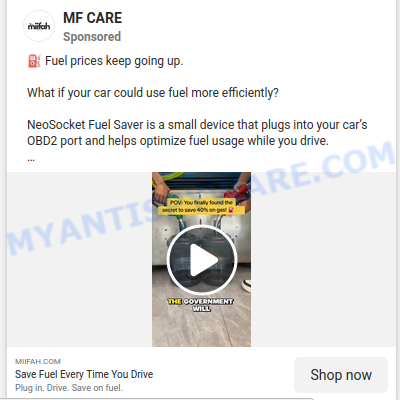
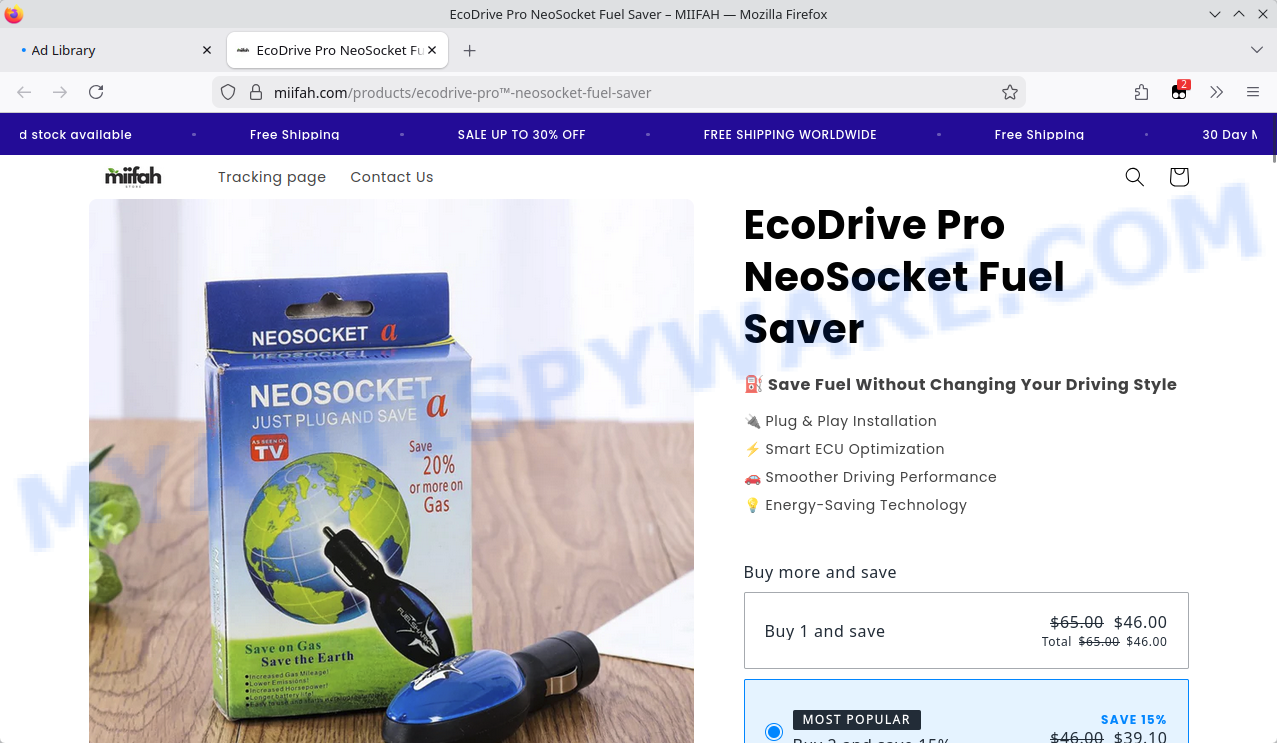
- 🌐 Misleading Advertising: The product is promoted through social media ads directing to MIIFAH.COM using flashy claims like “Save 20% or more on Gas” and “Plug & Play Installation,” but the device does not show any credible validation of effectiveness.
- ❌ Inconsistent Product Description: Ads claim the Neo Socket plugs into the OBD2 port, but the official website instructs users to plug it into a 12-volt port instead, demonstrating contradictory information that casts doubt on legitimacy.
- 🔍 Lack of Technical Evidence: Independent teardowns reveal the device contains only basic electronic parts (capacitors, springs, wiring) with no complex technology to optimize engine control or fuel consumption.
- 🎥 Promotional Videos Without Proof: The short marketing videos focus on driving sales rather than offering reproducible data, certifications, or third-party testing to support their fuel-saving claims.
- ⚠️ Fake Credibility Claims: “As Seen On TV” marks and “30-Day Money Back Guarantee” badges appear on the packaging and site, yet there are no verifiable endorsements from media, automotive experts, or consumer protection agencies.
- 📉 Poor Customer Reviews: Trustpilot ratings are low (1.2), with buyers reporting the product doesn’t work, poor customer service, difficulty contacting support, and challenges obtaining refunds.
- 🛑 Questionable Sales Tactics: The website uses urgency tactics like limited stock alerts and discounted prices to pressure buyers into quick purchases without time to verify product claims.
Summary: Neo Socket Fuel Saver’s claims to significantly improve fuel efficiency lack credible technical backing and are contradicted by detailed product teardowns and unhappy customer reports. The contradictory product descriptions, fake credibility badges, and problematic refund experiences strongly suggest this is a scam. Potential buyers should avoid this device and seek proven, expert-backed solutions for automotive fuel savings.
🕵️♂️ How the Neo Socket Fuel Saver Scam Operates
Neo Socket is a fuel saver scam. 🚨 It’s a type of fraud where a simple electronic device is marketed as a high-tech fuel-saving tool when it delivers no real benefits. 🔗 Step-by-Step Breakdown of the Scam:
🛒 Selling Basic Gadgets as Advanced Devices
Fraudsters market Neo Socket Fuel Saver as a sophisticated device that plugs into your car’s OBD2 or 12-volt port and supposedly optimizes fuel consumption. In reality, the product contains only basic electronic components like capacitors and springs that do nothing to improve fuel economy.
🕸️ Setting Up Misleading Websites
They create professional-looking yet fraudulent sites such as miifah.com, which lack solid contact information or credible presence. These websites use generic emails, no verifiable social media, and avoid transparent customer service channels to confuse and trap buyers.
📢 Aggressive Promotion via Misleading Ads
Scammers distribute enticing video ads on social media channels, promising “Save 20% or More on Gas,” “Plug & Play Installation,” and “Smart ECU Optimization.” These ads show the device plugged into different ports, creating contradictory and confusing claims.
💼 Making False Technical Claims
The product is advertised with bogus features like “Energy-Saving Technology” and “ECU Optimization” with no legitimate proof or independent testing. The promotional material uses vague terms and glossy marketing but lacks any scientific validation.
💸 Using Fake Discounts to Pressure Buyers
The product page shows inflated original prices (e.g., $65.00) slashed to “sale” prices (e.g., $38.00) alongside limited stock warnings and free shipping to create a false sense of urgency.
🌟 Featuring Fabricated Positive Reviews
Websites push fake customer testimonials and screenshot reviews with near-perfect ratings to convince buyers, hiding real consumer frustration and complaints.
⚖️ False Guarantees and Legal Claims
They promote “30 Day Money Back Guarantee” and “Easy Returns” without the company honoring these promises. There is no real consumer protection offered.
🛍️ Simple Checkout Designed to Rush Decisions
The checkout often involves paying upfront via generic “Secure Checkout” interfaces, with unclear payment processor details and inconsistent vendor names (e.g., Novarihome), offering little buyer protection.
🔁 Refusing or Complicating Returns
Customers find it nearly impossible to get refunds or have returns accepted, despite promises of guarantees.
📦 Delivering Ineffective, Low-Quality Products
Buyers receive a cheaply made electronic device that cannot deliver the promised fuel efficiency improvements.
🚫 Providing Poor Customer Support
Post-purchase support is virtually non-existent. Emails go unanswered or receive unhelpful responses, leaving customers stranded.
In summary, the Neo Socket Fuel Saver 🚫 scam deceives consumers into buying a basic, ineffective gadget by falsely advertising it as an advanced fuel-saving device. Using fake websites, misleading advertisements, unattainable guarantees, and fabricated reviews, scammers lure buyers who end up with useless products and minimal recourse. Always research thoroughly before purchasing automotive tech online to avoid falling victim to such schemes.
😱 What to Do If Scammed
If you find yourself ensnared by the Neo Socket Fuel Saver Scam, immediate action is crucial. Here’s what you should consider doing:
🛑 Stop Further Transactions
The first step is to halt any additional transactions that might be in process. Contact your bank or credit card provider and inform them that you’ve fallen victim to a scam. They can help by blocking the card or reversing any unauthorized transactions.
📞 Report the Fraud
File a report with your local police and provide all the available evidence, such as screenshots, emails, and website URLs. Additionally, report the scam to online portals like the Better Business Bureau (BBB) at www.bbb.org or the Federal Trade Commission (FTC) at reportfraud.ftc.gov. If you’re in another country, reach out to your national consumer protection agency.
💻 Take Screenshots
Before the scam website gets taken down or changes, make sure to capture screenshots of your transactions and communications. These can serve as evidence if you decide to pursue legal action.
⚖️ Consult Legal Advice
Speak to a legal advisor about your situation. While pursuing legal action may be time-consuming and costly, it could be a possible avenue for recovering your lost money.
📢 Share Your Experience
Use social media platforms to share your experience and warn others about the scam. Your story could prevent someone else from falling victim to the same or similar scams.
Summary Table
| Factor | Observations | Impact on Legitimacy |
|---|---|---|
| Product Description | Neo Socket Fuel Saver is promoted as a small device that improves fuel economy by plugging into a car’s OBD2 or 12-volt port. It claims easy installation and large fuel savings using smart technology, but the ads and product page give conflicting information about how it works and where to plug it in. | Negative (Conflicting descriptions and unproven performance claims) |
| Reviews | Customer reviews on independent platforms like Trustpilot show very low ratings and complaints about the product not working, poor customer service, and difficulties in getting refunds. The feedback strongly suggests dissatisfaction and possible scam behavior. | Negative (Poor reviews and customer complaint reports) |
| Marketing Channels | The device is promoted heavily on social media with paid vertical video ads that use urgent language and direct users to a product landing page. The ads and website use sales tactics like limited stock warnings and large discounts to pressure quick purchases. | Negative (Misleading advertising and high-pressure marketing) |
| Price | The product price is shown with steep discounts from $65 to $38 and offers multi-buy savings. The aggressive discounting may create a false sense of value while the product effectiveness is not proven. | Negative (High-pressure discount pricing with questionable value) |
| Real Functionality | Technical teardown photos from independent forums show simple electronics inside the device with no complex components that could improve fuel efficiency. This directly contradicts the claims made in ads and product descriptions. | Negative (No technical proof or real fuel-saving function) |
| Company Contacts | The website offers limited company information. The seller name differs in customer reviews, and domain registration details are unclear, which raises doubts about transparency and accountability. | Negative (Lack of clear company identity and poor transparency) |
| Product Source | The product page uses “As Seen On TV” style branding and guarantees, but there is no evidence of actual TV endorsements or credible third-party certifications backing the product or its claims. | Negative (False credibility claims and misleading branding) |
| Safety Claims | No information is provided on potential risks or side effects, and since this is a car electronic device, safety concerns might arise but remain unaddressed by the seller. | Negative (No safety or risk information given) |
| Website Transparency | The landing page uses high-pressure sales strategies such as limited stock messages, urgent banners, and a “30 Day Money Back Guarantee,” but customer feedback shows the refund process is difficult or impossible, indicating deceptive practices. | Negative (Deceptive sales tactics and unclear refund policies) |
| Refund Policy | While a 30-day money-back guarantee is advertised, multiple buyer reports indicate problems with returns and refunds, suggesting the policy is not enforced fairly or effectively. | Negative (Refund policy appears misleading and hard to use) |
Conclusion
The Neo Socket Fuel Saver is a scam that uses misleading advertising, false endorsements, and inconsistent product claims to deceive consumers. This device, marketed as a simple “plug and play” solution to significantly improve fuel economy, lacks any credible scientific evidence or technical validation to support these assertions. The conflicting information about whether it plugs into an OBD2 port or a 12-volt socket further highlights the deceptive nature of the product.
Promotional tactics include fake “As Seen On TV” badges, unrealistic savings promises, and urgent sales language such as “Limited stock available” and “30 Day Money Back Guarantee,” none of which are backed by legitimate testing or reputable endorsements. Independent user reviews and forum teardowns reveal the device contains only basic electronic components that cannot optimize vehicle ECU settings or deliver genuine fuel savings.
Bottom Line: Avoid the EcoDrive Pro NeoSocket Fuel Saver. Buyers have reported poor customer service, difficulties obtaining refunds, and no improvement in fuel efficiency. Always research thoroughly and be skeptical of automotive products that make extraordinary claims without clear, verifiable evidence. If an offer relies heavily on fake endorsements, manipulated content, and aggressive marketing, it’s almost certainly a scam.