SugarBoost is a dietary supplement that supposedly reverses Type 2 diabetes using an “Holy Oil Protocol,” a flashy claim centered on an olive oil compound called oleocanthal. The entire pitch unfolds through a slick online funnel starting with sponsored ads, followed by a fake news-style article filled with bogus testimonials, fabricated scientific endorsements, and high-pressure sales tactics urging quick purchases.
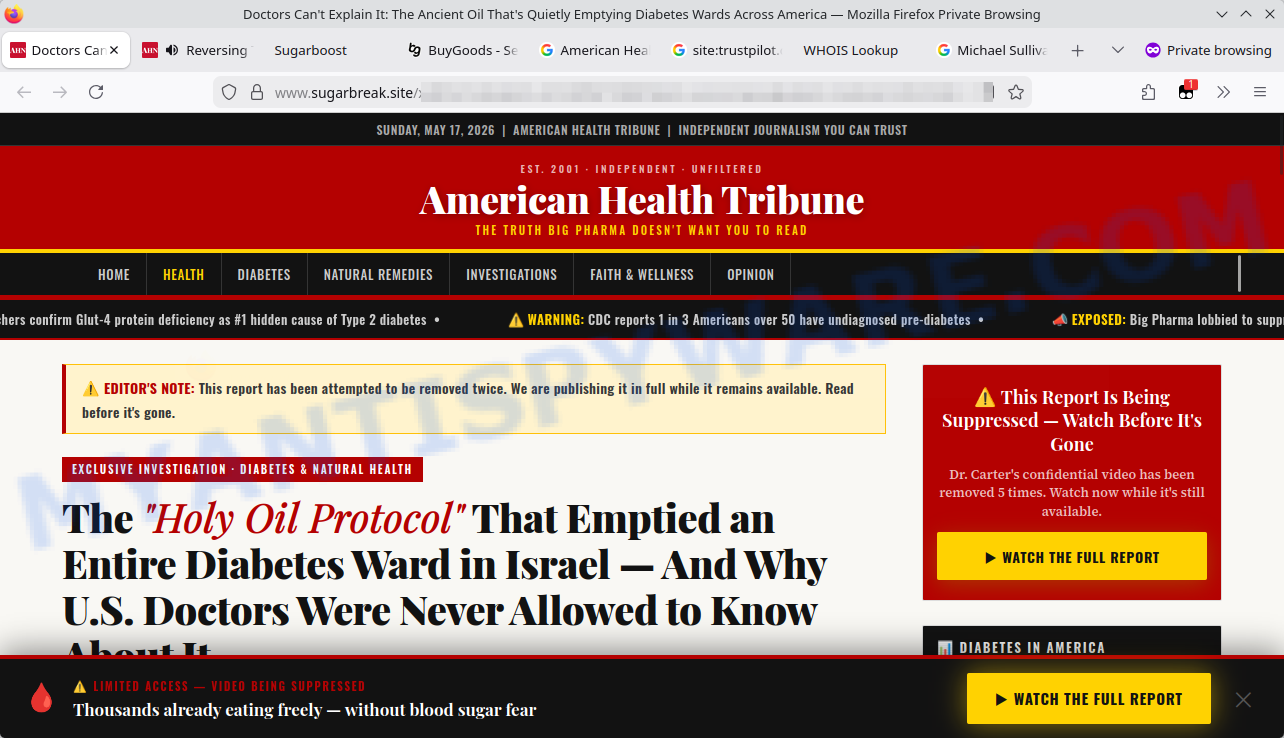
At its core, SugarBoost promises that this single oil compound can restore a key protein and eliminate diabetes symptoms—yet no credible medical evidence supports any of these extraordinary claims. Instead, what you get is a textbook example of manipulative marketing: phony editorial layouts, fake expert endorsements, countdown timers creating false urgency, and suspicious “money-back guarantees” that rarely pan out.
Before you consider buying SugarBoost, remember: if a health product sounds too good to be true—especially when it comes with Hollywood-style pitches and “exclusive” insider secrets—it probably is. Real diabetes management demands scientific validation and professional advice, not smoke-and-mirrors funnels pushing overpriced supplements loaded with empty promises. Stay critical and dig deeper before handing over your money.
💡 Heads-up: Similar Scams Are Everywhere. The “Holy Oil Protocol” Scam is not unique. It is one of many fake supplements, gadgets, and other schemes we expose in our Fact Checks section. All of them aim to grab your personal data or money. The people behind these scams run slick websites, spread bogus promo codes, and even pose as trusted brands or experts. Below are a few recent scams that follow the same playbook: MemoMaster, GLORENDA Berberine Metabolic Patch, Glyco Ultra, All Star Keto Gummies, FuelPhase.

Table of Contents
🚨 Is SugarBoost a Scam?
SugarBoost is promoted as a dietary supplement intended to support blood sugar and glucose balance. However, the marketing tactics behind this product raise significant concerns about its legitimacy and safety. The product’s promotion centers around a sensational “Holy Oil Protocol” claim that an olive oil compound, oleocanthal, can restore the Glut-4 protein and reverse Type 2 diabetes — claims that lack credible scientific evidence.
Key Red Flags:
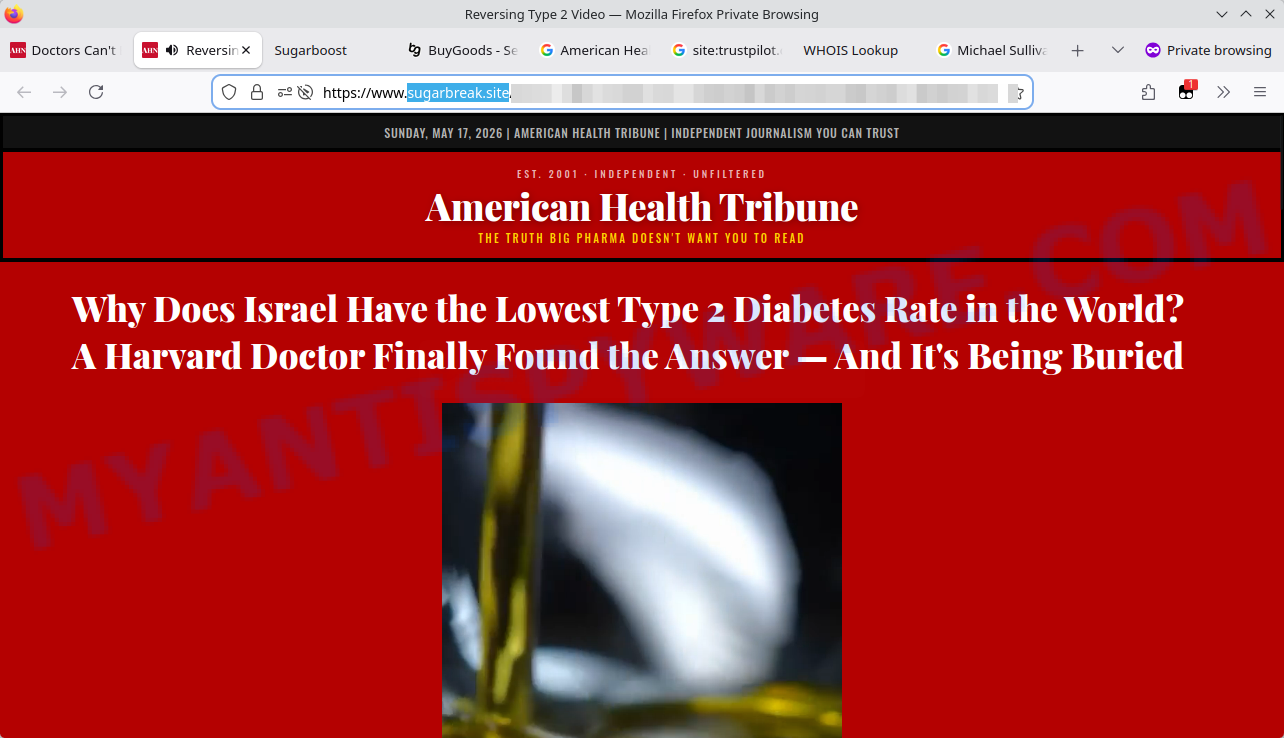
- 🌐 Deceptive Marketing Funnel: SugarBoost is pushed through a suspicious online funnel starting with a clickbait-style ad linking to a faux journalism-style site branded as the “American Health Tribune,” which is not a recognized or credible news source.
- 🎥 Manipulative Content Presentation: The landing page includes an embedded “investigative” video and fabricated urgency cues like live viewer counts and countdown timers designed to rush visitors into buying without thorough consideration.
- 🔬 Unsupported Health Claims: The claim that oleocanthal reverses Type 2 diabetes by restoring Glut-4 protein levels is presented without verifiable medical studies or endorsements, relying instead on misused references to prestigious institutions and scientific journals which are explicitly disclaimed as non-affiliated.
- ⭐ Fake Testimonials and Ratings: Customer reviews and star ratings appear overwhelmingly positive but are unverifiable and likely manufactured to create a false sense of trust.
- 🔒 Questionable Website and Domain Info: The product is sold through a newly registered domain with hidden ownership details — a common feature of short-term scam sites — and the sales checkout uses a third-party processor, which may complicate refund processes.
- 💳 High-Pressure Sales Tactics: Urgency is pushed via steep discounts, limited stock alerts, and time-limited offers to coerce quick purchases and discourage consumers from researching or questioning claims.
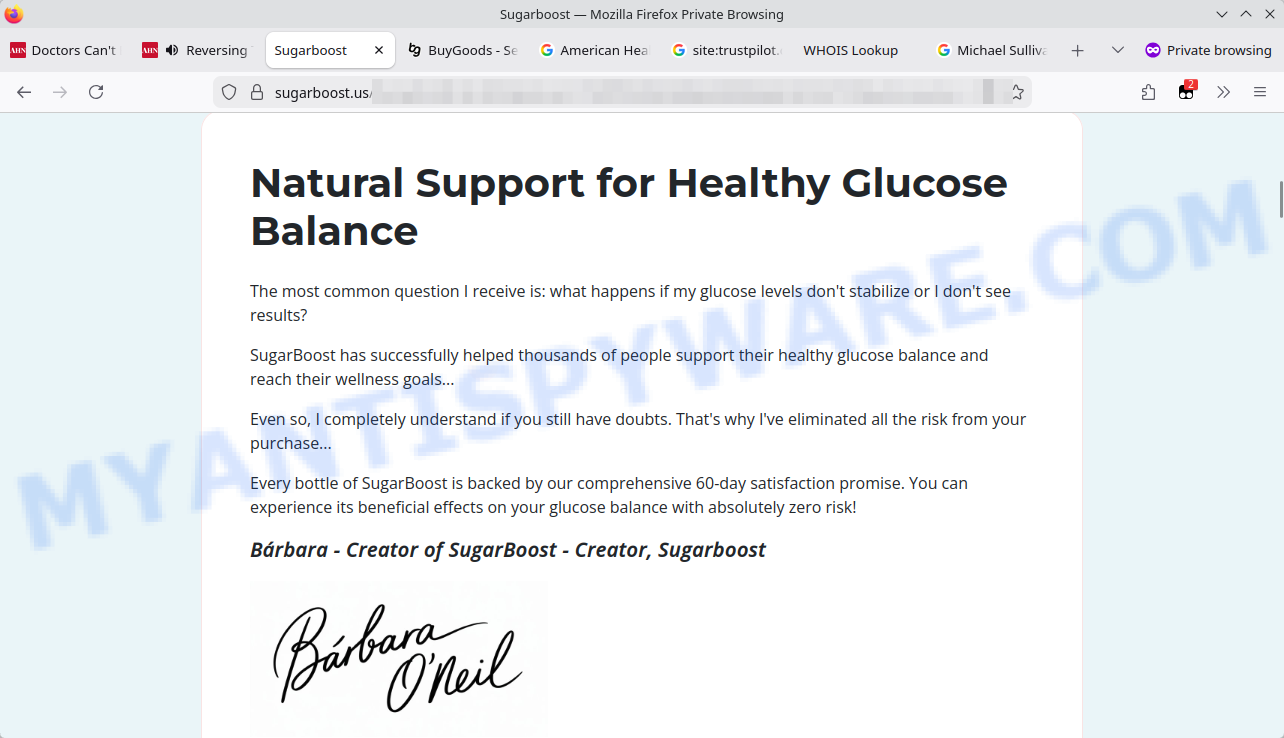
- 👥 Manufactured Credibility: The site uses medical-sounding credentials like “FDA Inspected Facility” and “cGMP” badges without evidence of regulatory approval or clinical validation, and vague creator endorsements from “Barbara O’Neill” which cannot be independently verified.
In summary, SugarBoost employs numerous deceptive tactics including fake editorial framing, exaggerated health promises, manufactured social proof, and aggressive sales strategies indicative of a likely scam. Consumers should avoid SugarBoost and consult licensed healthcare professionals for evidence-based treatments related to diabetes management and blood sugar control.
🕵️♂️ How the Scam Operates
🚨 It uses misleading health claims and a high-pressure marketing funnel to sell dietary supplement capsules purported to reverse Type 2 diabetes via an unproven “Holy Oil Protocol.” 🔗 Step-by-Step Breakdown of the Scam:
🛒 Sponsored Web Ads
The scam begins with sponsored ads promoting “Ways to Lower Blood Sugar” on sites like sugarbreak.site. These ads use catchy phrases like “Glucose Reset Ritual Works?” and “Real People, Real Results” to attract clicks from vulnerable consumers looking for simple solutions.
🕸️ Fake News-Style Landing Pages
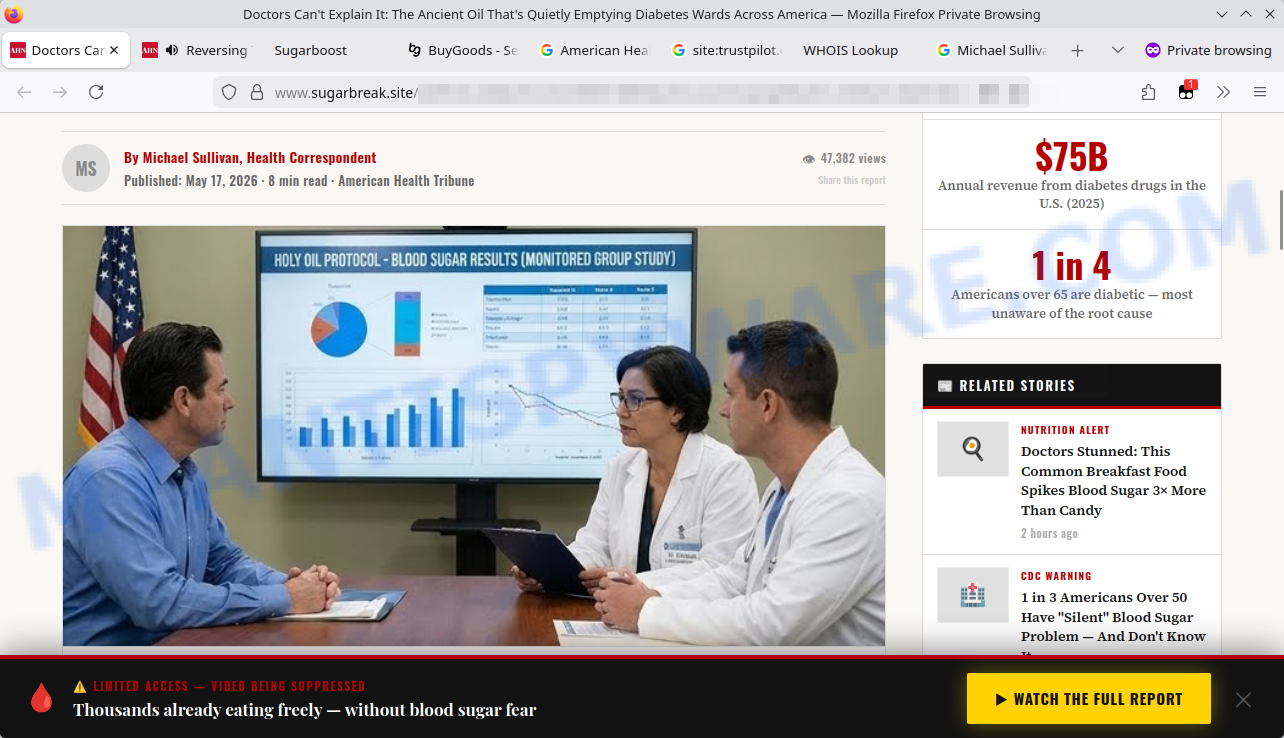
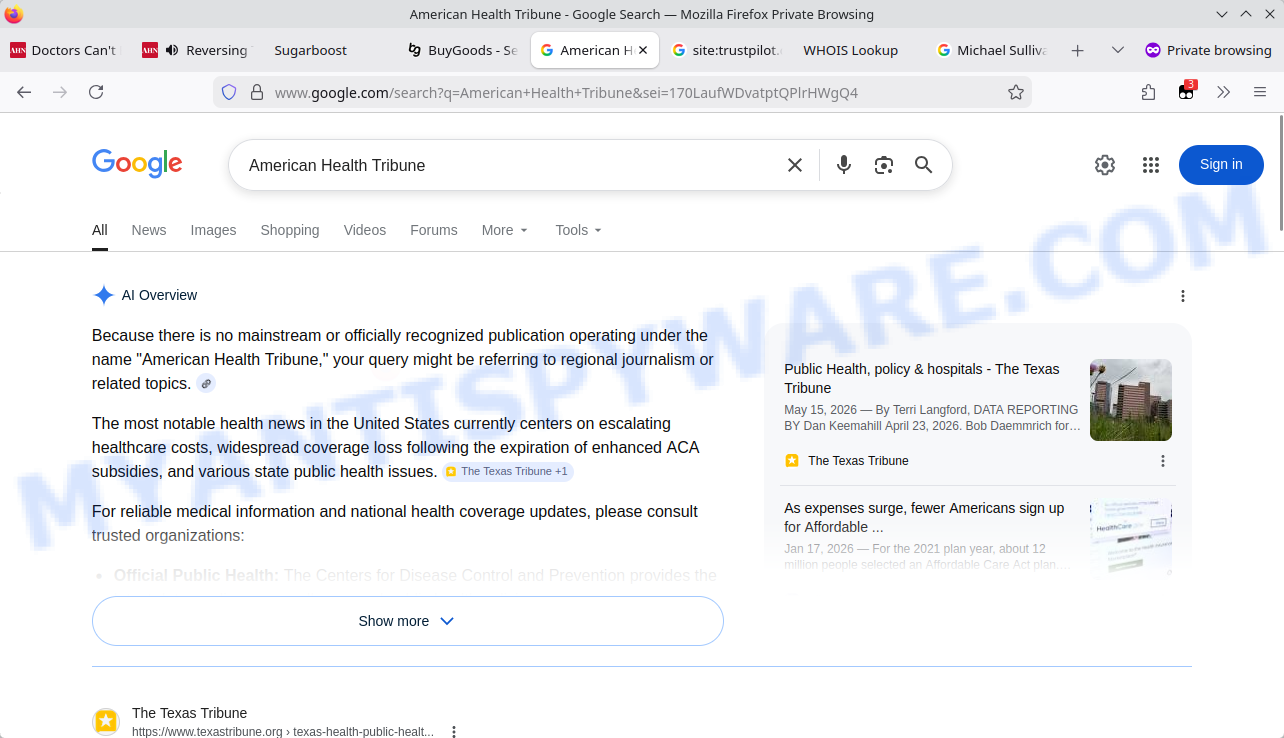
Clicking the ad directs users to a page mimicking a journalism outlet called “American Health Tribune,” featuring a long article with an official-looking byline (“Michael Sullivan, Health Correspondent”), editorial styling, and fake statistics. The article falsely claims that an olive oil compound called oleocanthal can cure diabetes by restoring a protein named Glut-4.
📢 Misleading Video and Urgent Sales Pitch
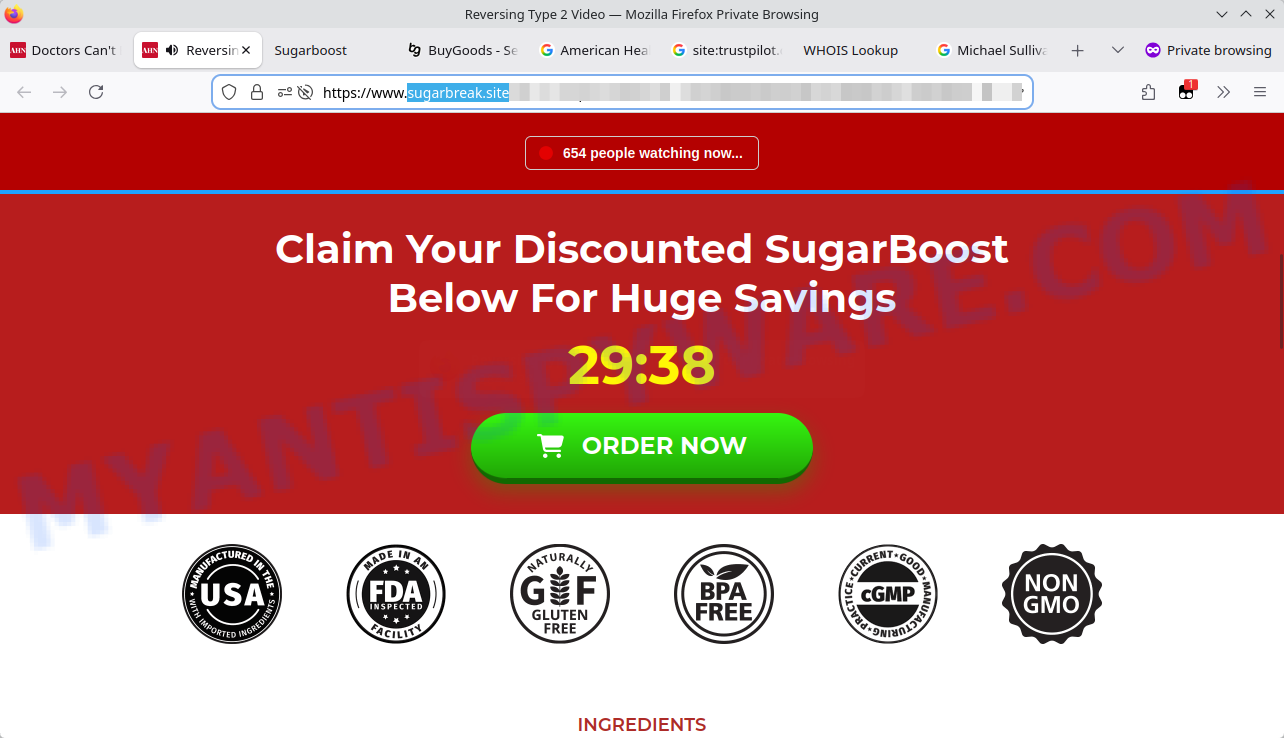
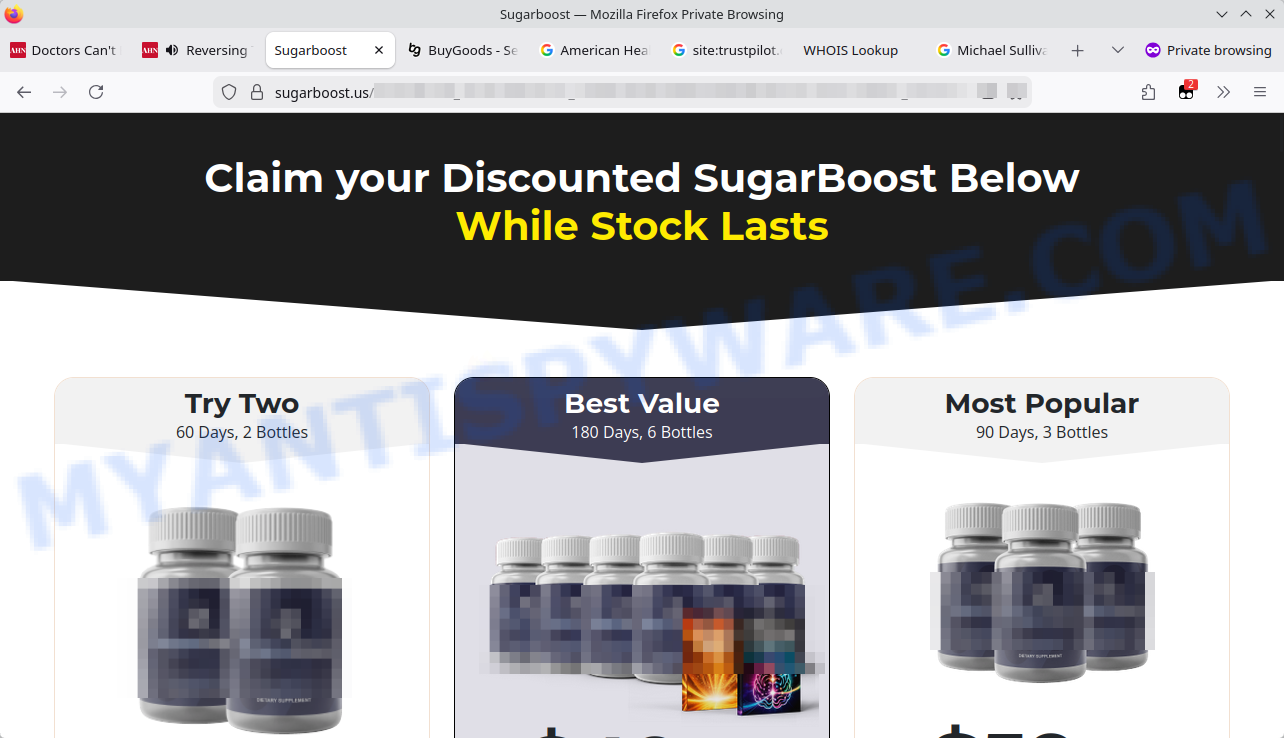
The page includes a staged video thumbnail with a “PLAY 60 MINUTES” overlay and fake live viewer counts to create urgency. Immediately below, customers are pushed to “Claim Your Discounted SugarBoost” via a countdown timer and large order buttons, funneling visitors rapidly toward the sales site sugarboost.us.
💼 Fictitious Credibility Markers
The site displays fabricated scientific logos (e.g., University of Leicester, PubMed), pseudo-certifications (“FDA Inspected Facility,” “NON GMO”), and boasts of high customer ratings (4.98/5 stars from 2300+ reviews). These elements are manufactured trust signals with no independent validation.
💸 Deep Discounts on Multi-Bottle Bundles
SugarBoost is offered in expensive multi-bottle packages with steep discounts (e.g., $294 for 6 bottles down from $1,074), designed to pressure buyers into committing large sums quickly, often coupled with additional “bonus” digital guides and “FREE VIP COACHING CALL” offers.
🌟 Fake Testimonials and Social Proof
The website fabricates glowing reviews with detailed but unverifiable customer stories attributed to fictional users from various U.S. states, aiming to convince buyers of the product’s effectiveness.
⚖️ False Medical Claims and Suppression Narratives
SugarBoost’s marketing pushes the false narrative that U.S. doctors suppress this “Holy Oil Protocol” treatment, stoking distrust while misrepresenting the product as a legitimate, doctor-endorsed remedy.
🛍️ Risky Checkout on Third-Party Platforms
Purchases must be made upfront through third-party processors like BuyGoods, requiring personal and payment information. Despite advertised money-back guarantees, refunds are often difficult or impossible to obtain.
In summary, the scam deceives consumers by posing as a groundbreaking medical discovery while selling a dietary supplement through fake news pages, invented endorsements, and high-pressure sales tactics. Its false claims and manufactured trust elements aim to mislead vulnerable customers seeking diabetes relief. Buyers should exercise extreme caution and conduct independent research before purchasing supplements marketed online, especially those making unsupported health claims and using aggressive marketing funnels.
😱 What to Do If Scammed
If you find yourself ensnared by the SugarBoost Scam, immediate action is crucial. Here’s what you should consider doing:
🛑 Stop Further Transactions
The first step is to halt any additional transactions that might be in process. Contact your bank or credit card provider and inform them that you’ve fallen victim to a scam. They can help by blocking the card or reversing any unauthorized transactions.
📞 Report the Fraud
File a report with your local police and provide all the available evidence, such as screenshots, emails, and website URLs. Additionally, report the scam to online portals like the Better Business Bureau (BBB) at www.bbb.org or the Federal Trade Commission (FTC) at reportfraud.ftc.gov. If you’re in another country, reach out to your national consumer protection agency.
💻 Take Screenshots
Before the scam website gets taken down or changes, make sure to capture screenshots of your transactions and communications. These can serve as evidence if you decide to pursue legal action.
⚖️ Consult Legal Advice
Speak to a legal advisor about your situation. While pursuing legal action may be time-consuming and costly, it could be a possible avenue for recovering your lost money.
📢 Share Your Experience
Use social media platforms to share your experience and warn others about the scam. Your story could prevent someone else from falling victim to the same or similar scams.
Summary Table
| Factor | Observations | Impact on Legitimacy |
|---|---|---|
| Product Description | SugarBoost is sold as a supplement to help with blood sugar and glucose levels. It is linked to a “Holy Oil Protocol” story claiming an olive oil compound can reverse Type 2 diabetes. These claims are made without solid medical proof and rely on dramatic language to attract attention. | Negative (Unproven health claims and misleading story) |
| Marketing Channels | The product is promoted using sponsored ads leading to a fake news-style website called “American Health Tribune.” This site looks like a trusted health source but is not recognized as legitimate. It uses countdown timers, urgent messages, and high viewer counts to pressure visitors. | Negative (Deceptive marketing tactics and fake editorial styling) |
| Reviews and Testimonials | The site shows very high review scores, many glowing testimonials with personal names and locations, and claims the report was “suppressed” multiple times to add urgency. There is no proof these reviews or user stories are real or independently verified. | Negative (Fabricated social proof and testimonials) |
| Credibility Claims | Many scientific logos and university names are displayed (for example, Harvard, University of Leicester), but the site itself states it is not affiliated with these organizations. Searches find no genuine health publication named “American Health Tribune.” | Negative (False associations and misuse of trusted names) |
| Product Pricing and Offers | Multiple bottle bundles are sold with steep discounts and “limited-time” offers. Bonuses and coaching calls are promised. Urgency is created with countdowns and “stock limited” notices to rush buyers. | Negative (Pressure selling and suspicious pricing tactics) |
| Website and Domain Details | The main sites involved are sugarbreak.site (created recently with hidden ownership) and sugarboost.us, both lacking transparency about who runs them. Hidden domain information is typical of short-term scam sites. | Negative (Lack of transparency and suspicious domain registration) |
| Checkout Process | Payments are handled through a third-party platform called BuyGoods, which collects personal and payment info. Although a “60-day money-back guarantee” is mentioned, refund processes are often difficult. | Negative (Potential risk to personal data and refund issues) |
| Creator Identity | The product lists names like Michael Sullivan and Barbara O’Neill as creators or correspondents, but these identities cannot be verified and may be invented to build false trust. | Negative (Unverifiable creator information) |
| Safety and Ingredient Information | Detailed ingredient lists and clinical evidence are missing. Certifications like FDA approval and GMP are claimed but not proven. Safety information is vague or absent. | Negative (Lack of transparent product details and safety data) |
| Overall Risk to Consumers | Buyers risk losing money to a product with unproven benefits, potential difficulties getting refunds, and exposure of personal information. The marketing aims to rush consumers into buying without proper research. | Negative (High risk of fraud and consumer harm) |
Conclusion
The SugarBoost supplement and the so-called “Holy Oil Protocol” are part of a scam that relies heavily on fabricated claims, dubious marketing tactics, and fake testimonials to convince consumers of its legitimacy. The promoters use misleading editorial-style content, false endorsements by prestigious academic institutions, and pressure-driven sales funnels to lure unsuspecting buyers with promises of curing or reversing Type 2 diabetes naturally through an olive oil compound.
Instead of delivering genuine health benefits, SugarBoost presents unsubstantiated assertions about restoring Glut‑4 protein levels and reversing diabetes without any credible medical evidence or approval. The website mimics trustworthy health sources but includes disclaimers revealing no real affiliation with featured universities or medical centers. Claims of “FDA inspected,” “Made in USA,” “GMP certified,” and high customer ratings are marketing fabrications with no independent verification.
Bottom Line: Avoid SugarBoost and any related “Holy Oil Protocol” offerings. Always approach health supplements with caution, especially those making extraordinary claims supported only by vague testimonials and aggressive sales tactics. Verify all medical claims through legitimate scientific channels and recognized health authorities before considering purchase. If an offer uses countdown timers, unverifiable expert endorsements, and newly created domains with hidden registrations, it is most likely a deceptive scheme designed to exploit consumers. Stay informed and protect your health and finances by researching thoroughly and steering clear of such scams.