SynGas is a flashy “plug‑and‑play” OBD2 gadget claiming to slash your fuel use by up to 55%. It’s promoted through slick social media ads and slickly designed websites boasting fake reviews, fake endorsement badges, and buzzy tech jargon about AI-driven engine hacks. But the truth? There’s zero proof it works — just a tiny device packed with empty promises and no real technical backing.
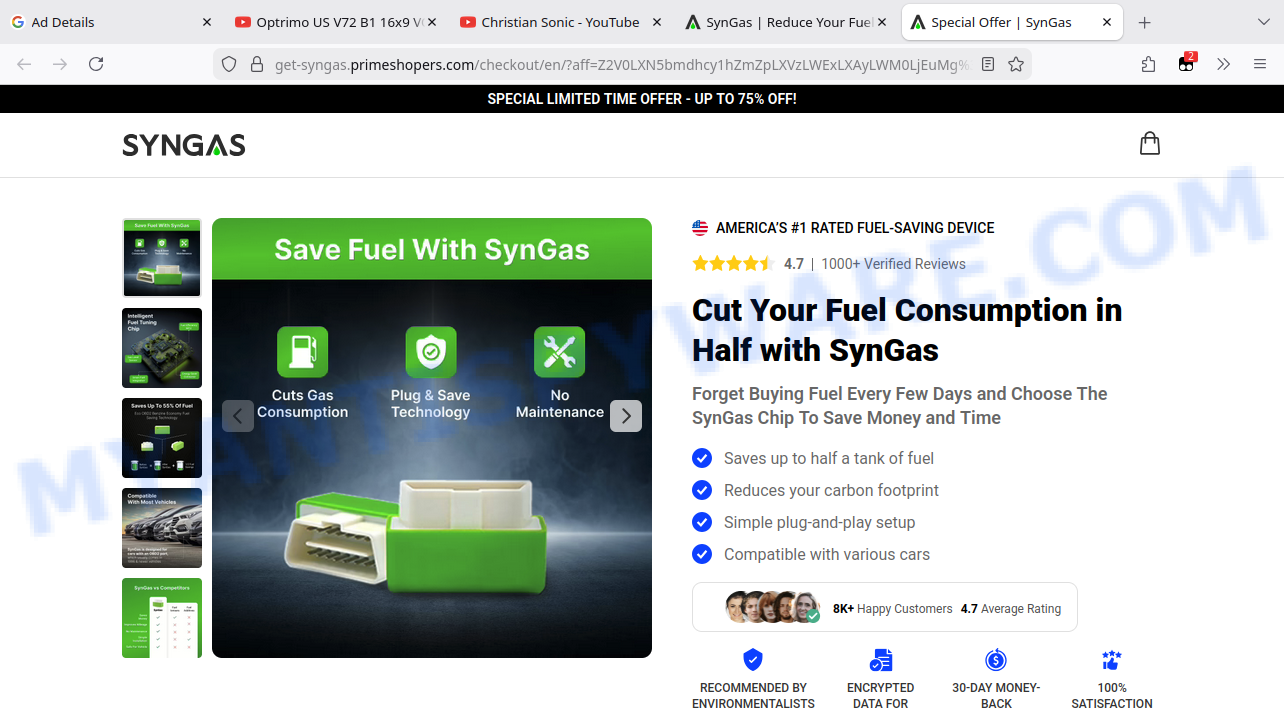
Behind the scenes, SynGas deploys all the classic scam tricks: fake media logos, inflated customer ratings, urgent “limited stock” alerts, and a 30-day money-back guarantee that’s likely more smoke than substance. Users report the unit doesn’t communicate with car systems at all, and independent reviews call it out as a no-show for actual fuel savings. In reality, SynGas is a textbook example of hype over hardware — a costly gadget that won’t cut your gas bill but might cost you headaches and wasted cash. Keep scrolling and we’ll unpack the scam step by step so you’re armed to spot the red flags before you buy.
💡 Heads-up: Similar Scams Are Everywhere. SynGas is not unique. It is one of many fake supplements, gadgets, and other schemes we expose in our Fact Checks section. All of them aim to grab your personal data or money. The people behind these scams run slick websites, spread bogus promo codes, and even pose as trusted brands or experts. Below are a few recent scams that follow the same playbook as SynGas: MemoGold, Tarreward.com, Qinux BreezaMax, EarnWithGod.


Table of Contents
🚨 Is SynGas a Scam?
SynGas is promoted as a plug-in OBD2 fuel-saving device, touted as a simple hardware fix that can instantly reduce fuel consumption by up to 30–55%. However, this product is heavily marketed through misleading social media ads and dubious promotional tactics, raising serious concerns about its legitimacy and effectiveness.

Key Red Flags:
- 🌐 Misleading Social Media Ads: Ads showcase a small green device claiming drastic fuel savings, accompanied by a fabricated whistleblower story about a “Christian” engineer and mysterious “Optimo/Optrimo” technology, none of which have credible verification.
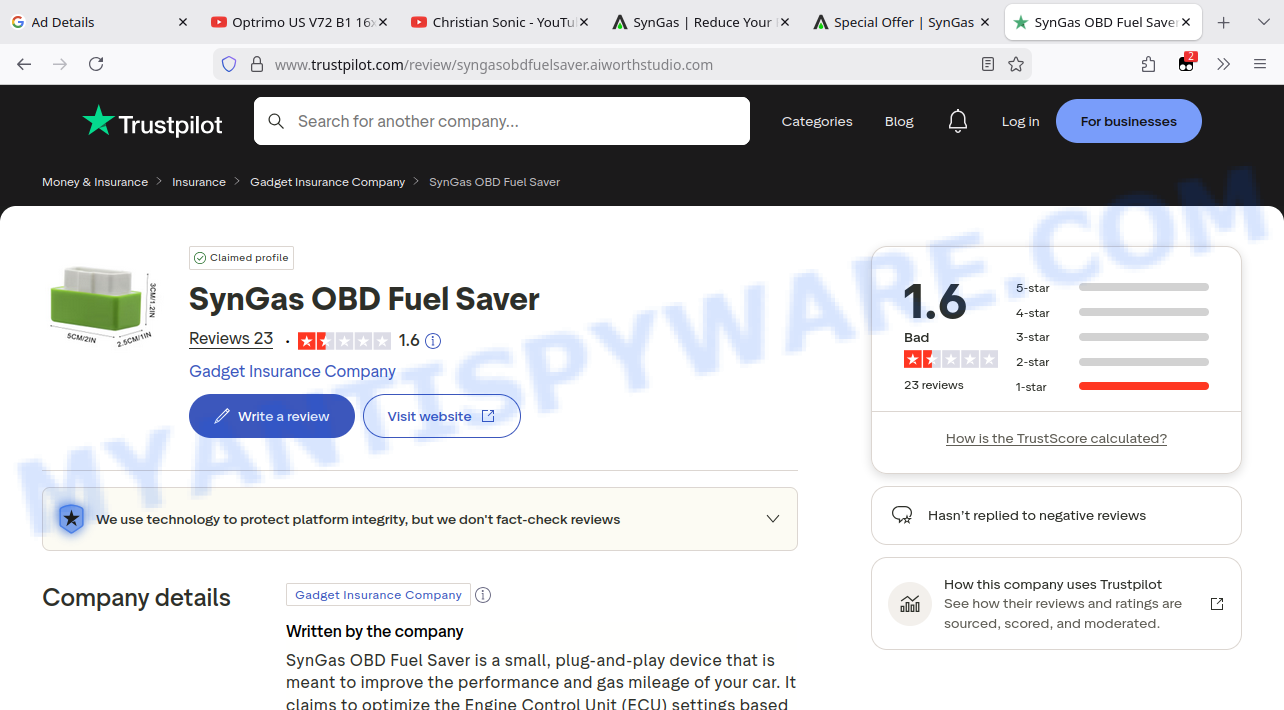
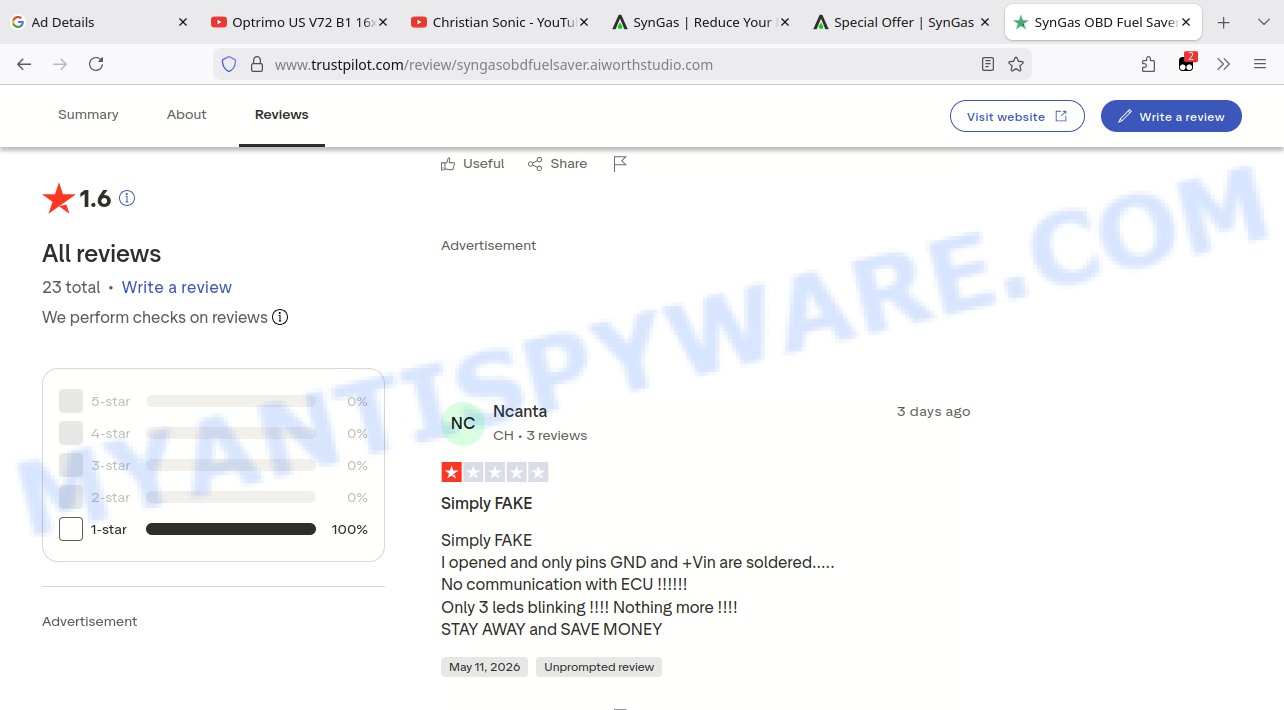
- ⭐ Fake Testimonials and Inflated Ratings: The sales pages display glowing customer reviews and high TrustRate scores, contrasting sharply with poor Trustpilot reviews calling SynGas “Simply FAKE” and reporting nonfunctional devices.
- 🔒 False Credibility Markers: The website features counterfeit logos of respected tech outlets (TechRadar, FOX, Gizmodo, etc.) and unsubstantiated claims like “America’s #1 Rated Fuel‑Saving Device” and “Recommended by Environmentalists” without any real endorsements.
- ⚠️ Exaggerated Fuel Savings Claims: Promises such as “Cut Your Fuel Consumption in Half” and “$3,000 in savings” per year lack any credible technical evidence or independent lab results.
- 📉 Questionable Purchase Process: The checkout occurs on a suspicious domain (get-syngas.primeshopers.com), with tiered discount pricing designed to upsell, alongside pressuring countdowns and “only few left” scarcity tactics.
- 👤 Unclear Product Details: The device images show a simple plug with blinking LEDs and no proof of interaction with car ECU systems, perfectly matching customer complaints of the device being nonfunctional.
- 🔗 Risky Payment & Refund Practices: Despite claims of a “30-Day Money-Back Guarantee,” customers report difficulties in obtaining refunds, and the provided payment portals lack verified merchant accountability beyond generic SSL and PayPal icons.
In summary, SynGas exhibits all classic features of a scam product: it pushes unproven extraordinary claims using fake stories and fabricated endorsements; uses fake media logos and misleading customer reviews to create a false sense of trust; and employs aggressive sales tactics to encourage impulsive buying. Independent testing and user feedback suggest the device does not work and may waste your money. We strongly advise against purchasing SynGas. Instead, consult qualified automotive professionals for legitimate fuel-saving advice and solutions.
🕵️♂️ How the SynGas Scam Operates
SynGas is a fake OBD2 fuel saver device. 🚨 It claims to be a miracle plug‑and‑play chip that drastically cuts your car’s fuel consumption, but this is a false promise. 🔗 Step-by-Step Breakdown of the Scam:
🛒 Social Media Ads Promote the Device
The scammers run ads across social media platforms showcasing a small green box labeled “SYNGAS” with headlines like “Reduce Your Fuel” and “Cut Fuel Consumption up to 55%.” Videos tell fabricated stories about engineers discovering hidden software bugs and offer miracle mileage boosts that sound too good to be true.
🕸️ Fake Landing Pages
The ads lead to slick-looking but fraudulent websites such as get-syngas.com and get-syngas.primeshopers.com, designed to resemble legitimate product pages. These feature misleading sections on FEATURES, HOW IT WORKS, TESTIMONIALS, and FAQs — all full of exaggerated claims and fake trust signals.
📢 Misleading Promotional Videos and Claims
Videos narrate stories of whistleblowers and “cutting edge AI technology” that reprogram your car’s ECU for massive fuel savings. However, these videos contain no real proof or credible demonstrations, and the product names (Optimo, Optrimo, SynGas) are inconsistent, signaling deception.
💼 Fabricated Credibility and Trust Badges
The websites display fabricated logos from well-known tech media outlets like TechRadar, TechCrunch, and FOX, plus fake endorsements such as “America’s #1 Rated Fuel‑Saving Device” and “Recommended by Environmentalists.” These claims are unsubstantiated and meant to fool buyers.
💸 Discounted Pricing Tricks
SynGas’s pricing strategy uses fake “original” prices slashed significantly to create urgency, offering tiered discounts and “30-Day Money-Back Guarantees” to entice quick purchases. The actual device costs $39.99 or more, with added shipping fees, but the discount claims are deceptive.
🌟 Bogus Customer Reviews
The scam sites flood pages with overly positive, fabricated reviews boasting high ratings (4.7/5) and praised effectiveness. But external sites like Trustpilot reveal poor ratings (1.6) and customer reports of non-functioning devices that do nothing.
⚖️ False Legal and Safety Assurances
SynGas sites guarantee satisfaction and safety, yet provide no real proof that their device is legal, effective, or endorsed by automotive experts or regulators.
🛍️ Simplified Checkout With Risky Payment Options
The checkout accepts credit cards and PayPal via suspicious domains, offering “SSL Secure” badges but lacking verifiable merchant details, increasing risk of payment fraud or data misuse.
🔁 Unfulfilled Money-Back Guarantees
Although money-back offers appear on sites, customers widely report being unable to get refunds, facing unresponsive or evasive customer service.
📦 Product Delivered Fails to Work
Those who buy SynGas receive a cheap, simple device with basic circuits and blinking LEDs that do not interface properly with vehicles or deliver any fuel savings.
🚫 Nonexistent Customer Support
Once purchased, attempts to contact support often go unanswered or the responses are unhelpful, leaving buyers stuck with useless hardware.
In summary, the SynGas scam tricks drivers into buying a low-quality OBD2 device by making wildly false fuel-saving claims and using fake endorsements, misleading ads, and false discounts. Buyers typically receive a useless product and struggle to obtain refunds or support. This scam is a cautionary tale: always research automotive gadgets thoroughly and beware of too-good-to-be-true offers online.
😱 What to Do If Scammed
If you find yourself ensnared by the SynGas Scam, immediate action is crucial. Here’s what you should consider doing:
🛑 Stop Further Transactions
The first step is to halt any additional transactions that might be in process. Contact your bank or credit card provider and inform them that you’ve fallen victim to a scam. They can help by blocking the card or reversing any unauthorized transactions.
📞 Report the Fraud
File a report with your local police and provide all the available evidence, such as screenshots, emails, and website URLs. Additionally, report the scam to online portals like the Better Business Bureau (BBB) at www.bbb.org or the Federal Trade Commission (FTC) at reportfraud.ftc.gov. If you’re in another country, reach out to your national consumer protection agency.
💻 Take Screenshots
Before the scam website gets taken down or changes, make sure to capture screenshots of your transactions and communications. These can serve as evidence if you decide to pursue legal action.
⚖️ Consult Legal Advice
Speak to a legal advisor about your situation. While pursuing legal action may be time-consuming and costly, it could be a possible avenue for recovering your lost money.
📢 Share Your Experience
Use social media platforms to share your experience and warn others about the scam. Your story could prevent someone else from falling victim to the same or similar scams.
Summary Table
| Factor | Observations | Impact on Legitimacy |
|---|---|---|
| Product Description | SynGas is sold as a small OBD2 device that plugs into a car to lower fuel use. It promises big fuel savings, up to 30–55% less fuel or even cutting fuel use in half, claiming to fix a software bug in cars using AI technology. However, no real proof or independent tests are shown to support these claims. | Negative (Unproven technical claims with no reliable evidence) |
| Advertising | Social media ads and videos tell a story about a former engineer who created the device to save fuel. They use strong claims and urgent offers but do not show real demonstrations or verifiable data. The product name is inconsistent between ads and the website. | Negative (Misleading promotion with inconsistent information) |
| Website and Landing Pages | The sales sites offer big discounts, countdown timers, and claim thousands of happy customers and top ratings. The pages show logos of known media brands and trust badges meant to look official but no proof is given that these endorsements are real. Review widgets conflict with independent site reviews showing poor ratings. | Negative (Deceptive website tactics and fake trust indicators) |
| Customer Reviews | On the product pages, reviews are mostly positive and high-rated, but independent reviews on sites like Trustpilot show low ratings and complaints that the device is fake, nonfunctional, and does not communicate with cars’ systems. | Negative (False or misleading testimonials and negative external feedback) |
| Price and Offers | SynGas is sold with discounted prices that encourage bulk buying. Shipping fees add to the cost. The site pushes consumers to buy quickly with limited stock warnings and special deals. | Negative (Pressure selling and upselling tactics) |
| Payment and Security | The checkout accepts PayPal and credit cards, claiming secure and encrypted transactions. However, merchant details are unclear, and no guarantee exists that personal and payment information is fully protected or refunds will be honored. | Negative (Unclear payment reliability and refund assurance) |
| Company Transparency | The site uses different domains for sales and checkout and has no clear contact or company information, making it hard to verify the seller or resolve issues. | Negative (Lack of transparency and customer support) |
| Safety and Performance | No evidence is provided to show that the device works safely or effectively. User reports suggest it has no real function and is just a small circuit board with lights. | Negative (Unproven safety and nonfunctional product) |
| False Associations | The product claims endorsements from major media outlets and environmentalists but shows no verified proof. These appear as images on the site only, with no real connection to trusted experts or brands. | Negative (Fake endorsements and misleading credibility) |
| Return Policy | A 30-day money-back guarantee is displayed, but customer feedback and site information indicate that getting a refund could be difficult or impossible. | Negative (Misleading refund promises and poor consumer protection) |
Conclusion
The SynGas OBD2 Fuel Saver is a scam that uses deceptive advertising, fake reviews, and misleading marketing tactics to trick drivers into buying a useless device promising unrealistic fuel savings. The product’s claims of cutting fuel consumption by up to 55% or “cutting your fuel consumption in half” are entirely unsubstantiated, with no credible scientific or technical evidence to back them up.
The scammers behind SynGas deploy fake testimonials, fabricated ratings, and false associations with major tech and automotive media outlets (such as TechRadar, FOX, and Wired) to create a false sense of legitimacy. The website mimics reputable sites and shows fabricated badges like “AMERICA’S #1 RATED FUEL-SAVING DEVICE” and “RECOMMENDED BY ENVIRONMENTALISTS” to lure unsuspecting buyers.
Bottom Line: Avoid SynGas OBD2 Fuel Saver. The device does not work, and customer feedback clearly shows it is nonfunctional, with some user reviews confirming it has no real connection to the vehicle’s ECU or fuel system. Trustpilot reviews rate it poorly, highlighting a high risk of wasted money and difficulty obtaining refunds despite the advertised “30-day money-back guarantee.”