LipoTrine is the latest “miracle” weight‑loss gummy being pushed across the internet with a too‑good‑to‑be‑true baking‑soda trick, fake authority badges, and what appears to be hijacked celebrity images. On the surface, it looks like a simple home recipe that helped “23,000 Americans” melt fat every morning. In reality, the recipe is just bait to drag you through a carefully staged sales machine.
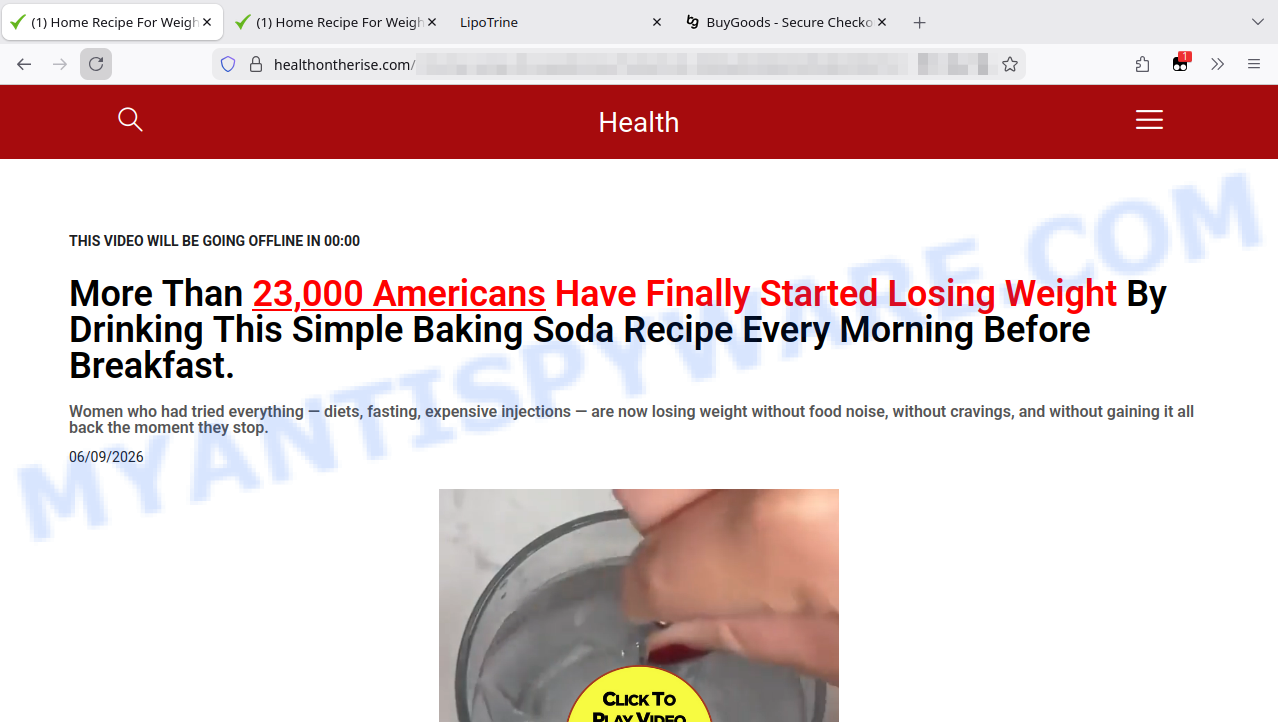
Our review focuses on how this operation really works: a social‑media video ad sends you to a page dressed up like a health article, which then quietly flips into a hard sell for overpriced gummies on a third‑party checkout site. Along the way, you’re hit with major media logos, staged comments, urgency timers, and a money‑back “guarantee” that has no independent proof behind it. In one sentence: this is a textbook case of weaponized “health advice” used as a cover to harvest your trust, your data, and your credit card.
What matters here isn’t just one sketchy product, but the pattern. The same layout, the same fake credibility tricks, the same pressure tactics keep reappearing around supplements, crypto schemes, and “secret hacks” of every kind. This investigation breaks down how the LipoTrine setup works step by step, why the claims collapse under basic fact‑checking, and how to recognize this style of scam the next time it shows up in your feed.
💡 Heads-up: Similar Scams Are Everywhere. LipoTrine is not unique. It is one of many fake supplements, gadgets, and other schemes we expose in our Fact Checks section. All of them aim to grab your personal data or money. The people behind these scams run slick websites, spread bogus promo codes, and even pose as trusted brands or experts. Below are a few recent scams that follow the same playbook as LipoTrine: CartPerk.com, Memo Clarity , Automatic Cash Machine, LipoBurn, Echozen.
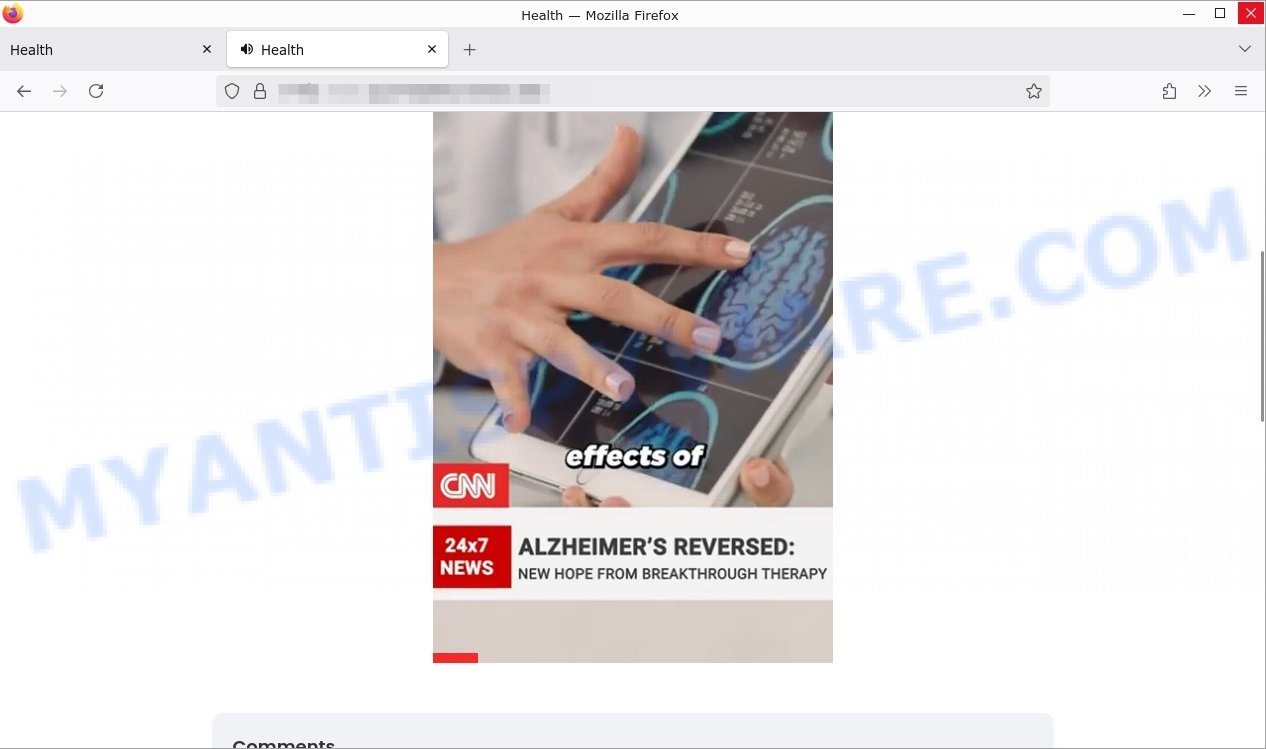
Table of Contents
🚨 Is LipoTrine a Scam?
LipoTrine is promoted using deceptive tactics centered around a supposed “baking soda recipe” weight-loss hack, which is part of an orchestrated online sales funnel designed to mislead consumers. This marketing ploy preys on individuals looking for effortless weight loss solutions by falsely linking a simple home remedy to the purchase of LipoTrine gummies.
Key Red Flags:
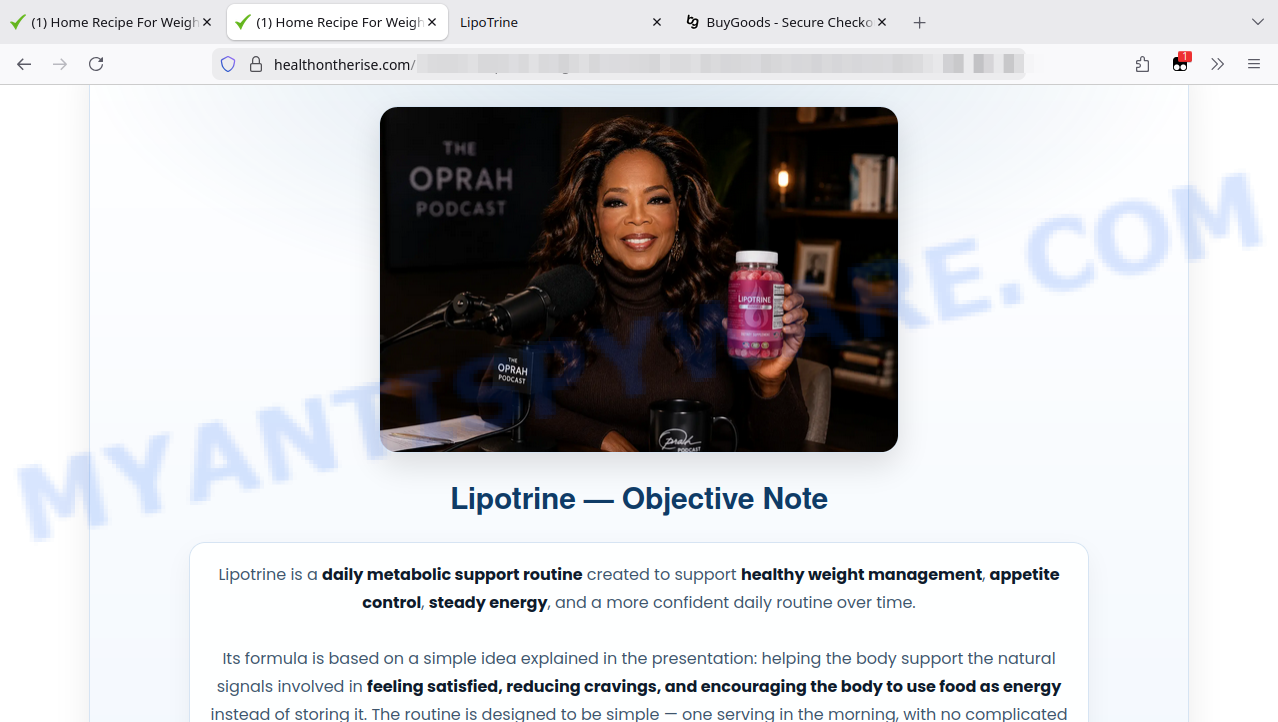
- 🌐 Suspicious Website & Funnel Path: The promotion starts with a video ad on social media, directing users to a cloned editorial-style article on an unrelated domain (healthontherise.com), before funneling visitors to lipotrine.com and then a buygoods.com payment page. This multi-step redirection is common in scam setups aiming to confuse and pressure buyers.
- ⭐ Fabricated “Baking Soda Recipe” Hook: The campaign’s core claim revolves around an unverified baking soda recipe that allegedly helps thousands of Americans lose weight. Yet no medical evidence or clear recipe instructions are provided, highlighting the use of a false narrative as a sales gimmick.
- 🔒 Fake Celebrity Endorsements and Media Associations: Images and references to Oprah Winfrey, “The Oprah Podcast,” and major media logos (CBS, ABC, CNN, FOX, New York Times) are used without authorization, giving a false impression of legitimacy and expert endorsement.
- ⚠️ Misleading Credibility Badges: Visual badges claiming “GMP Certified,” “FDA Registered Facility,” “100% Natural Ingredients,” and “Made in USA” are displayed but lack verification. Such badges are commonly faked to build trust unjustifiably.
- 📉 Aggressive Sales and Pressure Tactics: Urgency messages like countdown timers, limited stock warnings, and seemingly urgent “Tap Here and Buy Now” calls push consumers into rushed purchases before they can fully evaluate the product or seller.
- 👤 Lack of Genuine Reviews and Social Proof: Facebook-style comment blocks and user likes are artificially generated, and products like LipoTrine currently have no verified reviews on platforms like Trustpilot.
- 🔗 Risky Payment Processing: Checkout is handled through buygoods.com, which does not guarantee a reputable seller or reliable refund handling. Users risk exposing sensitive payment and personal info to potentially untrustworthy operators.
In summary, LipoTrine’s marketing strategy is built on false claims—leveraging fake baking soda weight-loss stories, bogus celebrity endorsements, unverified product badges, and high-pressure sales tactics—to trick consumers into buying expensive supplements with no proven benefits. Prospective buyers should avoid this suspicious funnel and instead rely on verified, professional guidance for weight management and health.
🕵️♂️ How the Scam Operates
🚨 It’s a scam centered around a fake “baking soda recipe” that tricks people into buying “weight-loss” gummies. 🔗 Step-by-Step Breakdown of the Scam:


📱 Social Media Ad Hook
The scam begins with a viral-style video ad on platforms like Facebook and Instagram promising a “simple baking soda recipe” that supposedly helps thousands lose weight quickly.
🕸️ Creating Fake Editorial Landing Pages
Users are directed to professional-looking but fake editorial pages, such as healthontherise.com, which mimic genuine health news sites but exist solely to funnel visitors toward the Lipotrine product sales page.
🎥 Misleading Video Presentation
The landing page includes a staged video featuring fictional testimonials and pseudo-expert claims about how the baking soda recipe flips your metabolism into “burn mode” by restoring hormones and silencing “food noise.” No real recipe or medical proof is provided.
🌟 Fake Celebrity Endorsements and Media Logos
The scam uses unauthorized images of celebrities like Oprah and fake logos from major media outlets (e.g., CNN, FOX, ABC) to create false credibility and trust, implying endorsements that do not exist.
⚠️ High-Pressure Sales Tactics
After the video, users see urgent buy-now buttons and countdown timers to pressure immediate purchases. The product—Lipotrine gummies—is marketed with exaggerated claims and “limited stock” warnings to rush buyers.
💰 Inflated Pricing and Bundle Offers
The supplements are sold in expensive bundles (e.g., multiple bottles at $49 to $89 each), with fake promises like “free shipping” and a “60-day money-back guarantee” that are rarely honored.
📝 Fabricated Customer Reviews and Social Proof
The sales sites display fake Facebook-style comments and positive testimonials with high likes and glowing stories designed to mislead buyers into trusting the product’s effectiveness.
🚫 No Real Refunds or Support
Despite advertised guarantees, customers typically find it impossible to receive refunds or effective customer service after purchase, confronting unresponsive or nonexistent support teams.
In summary, the Lipotrine “Baking Soda Recipe” scam uses fake editorial pages, misleading videos, counterfeit celebrity endorsements, and pressure sales tactics to sell ineffective weight-loss gummies. Buyers end up wasting money on unproven supplements with no guaranteed results and face difficulties obtaining refunds or support. Always research thoroughly and be skeptical of weight-loss claims that rely on staged stories or fake endorsements before sharing your personal or financial information online.
😱 What to Do If Scammed
If you find yourself ensnared by the LipoTrine Scam, immediate action is crucial. Here’s what you should consider doing:
🛑 Stop Further Transactions
The first step is to halt any additional transactions that might be in process. Contact your bank or credit card provider and inform them that you’ve fallen victim to a scam. They can help by blocking the card or reversing any unauthorized transactions.
📞 Report the Fraud
File a report with your local police and provide all the available evidence, such as screenshots, emails, and website URLs. Additionally, report the scam to online portals like the Better Business Bureau (BBB) at www.bbb.org or the Federal Trade Commission (FTC) at reportfraud.ftc.gov. If you’re in another country, reach out to your national consumer protection agency.
💻 Take Screenshots
Before the scam website gets taken down or changes, make sure to capture screenshots of your transactions and communications. These can serve as evidence if you decide to pursue legal action.
⚖️ Consult Legal Advice
Speak to a legal advisor about your situation. While pursuing legal action may be time-consuming and costly, it could be a possible avenue for recovering your lost money.
📢 Share Your Experience
Use social media platforms to share your experience and warn others about the scam. Your story could prevent someone else from falling victim to the same or similar scams.
Summary Table
| Factor | Observations | Impact on Legitimacy |
|---|---|---|
| Product Description | Lipotrine is a dietary weight-loss gummy supplement promoted through a fake “baking soda recipe” story. It claims this simple recipe helps thousands lose weight, but no real recipe or medical proof is provided. The product uses misleading health claims to attract buyers. | Negative (Unproven claims and deceptive product promotion) |
| Reviews | The campaign shows Facebook-style comments and likes on the sales pages, but independent platforms like Trustpilot have no reviews for Lipotrine. The comments are likely fake to create false social proof. | Negative (Fake reviews and lack of independent feedback) |
| Marketing Channels | The scheme starts with video ads on social media, then leads users to a cloned health website and finally to the Lipotrine sales site and checkout. The ads use celebrity images and fake endorsements to trick people. | Negative (Misleading advertising and fake celebrity use) |
| Price | Multiple purchase options are offered with high prices per bottle, combined with pressure tactics like limited stock and countdown timers, pushing consumers to buy quickly without enough information. | Negative (Pressure selling with expensive pricing) |
| Real Functionality | No real baking soda recipe or proven weight loss method is given. The product itself lacks scientific or medical evidence supporting its effectiveness. | Negative (No verified health benefits) |
| Company Contacts | The sales pages and checkout do not provide clear company details or contact information. The use of third-party checkout processors hides the seller’s identity, making it hard to verify legitimacy. | Negative (Lack of transparency and unclear company info) |
| Product Source | The product badges like “GMP Certified,” “FDA Registered Facility,” and “Made in USA” are shown but without proof. Celebrity endorsements are fake, and media logos are misused to create false trust. | Negative (False or unverified product claims and endorsements) |
| Safety Claims | No clear information about possible side effects or safety is offered. Claims of natural ingredients do not guarantee the product is safe or effective. | Negative (Insufficient safety details) |
| Website Transparency | The promotional sites use generic designs, fake media logos, celebrity pictures, and urgency tactics to rush buyers, while hiding important information like company registration or refund procedures. | Negative (Deceptive and opaque website practices) |
| Refund Policy | Although a 60-day money-back guarantee is stated, such refunds are often hard to get in practice. No independent verification of refund reliability is available. | Negative (Unclear and potentially ineffective refund process) |
The Lipotrine “Baking Soda Recipe” weight loss claim is a scam, built on fake endorsements, fabricated media logos, misleading presentation, and urgent sales tactics that create a false sense of legitimacy. The marketing heavily relies on an unproven “baking soda recipe” trick to lure consumers, but no verifiable scientific evidence or genuine medical validation supports these promises.
The promotion falsely implies celebrity endorsements (such as Oprah), utilizes manipulated images and fake presenter tags, and displays unsubstantiated badges like “GMP Certified,” “FDA Registered Facility,” and “100% Natural Ingredients” to appear credible. Meanwhile, the product—Lipotrine gummies—is pushed aggressively through cloned editorial pages and scripted social media ads, funneling visitors toward a checkout page that collects sensitive personal and payment data without independent consumer trust verification.
Bottom Line: Avoid Lipotrine and any weight loss offers tied to the “simple baking soda recipe” narrative. Always approach online health and diet products skeptically, especially when promotions use deceptive endorsements, urgency tactics, and unverifiable credentials. Protect your personal information and do thorough research before considering purchases; offers that seem too good to be true usually are scams designed to exploit consumers.