The wrong number text scam is a sneaky form of social engineering that begins with what looks like a harmless, mistyped message sent to your phone. It starts simple — someone texting you by mistake, asking if you’re “Mary” or another random name, apologizing, and casually trying to strike up a conversation. But behind this innocent facade lies a manipulative tactic designed to lower your guard.
What makes this scam so dangerous is its subtlety. The scammer acts “accidentally” friendly, offering small talk or even fake apologies, all to build trust. Before you realize it, you’re engaged in back-and-forth texts with a stranger who may try to extract personal information, sneak in links to malware, or lure you into phishing schemes. It may seem like just a wrong number — but it’s actually a clever bait to reel you into a potential scam.
Stay alert and don’t get drawn into these “accidental” messages. Remember: scammers often exploit the most mundane interactions to trick you into sharing more than you should. The best defense is skepticism — don’t respond to suspicious texts, especially if they push for personal details or favors. Keep reading to learn how to spot these traps before they catch you off guard.
🕵️♂️ How the Wrong Number Text Scam Operates
The Wrong Number Text Scam is a type of social engineering fraud that tricks recipients through seemingly accidental messages. 🚨 It starts with scammers sending unsolicited “wrong number” texts to lure people into conversation, aiming to gain trust or personal information. 🔗 Step-by-Step Breakdown of the Scam:
💬 Initiating with an “Accidental” Message
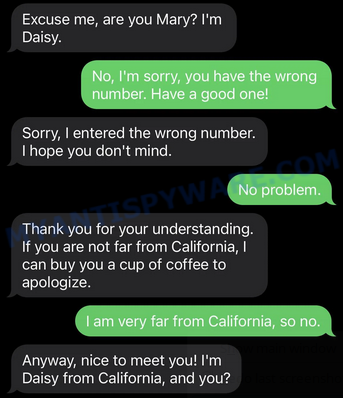
Scammers send a message that appears to be intended for someone else, such as: “Excuse me, are you Mary? I’m Daisy.” This creates a sense of harmless mistake and invites a reply.
🤝 Engaging the Target
Once the recipient responds, the scammer continues the chat, maintaining the pretense of a wrong number while building rapport through polite and friendly conversation.
☕ Offering a Gesture to Gain Trust
The scammer may offer a seemingly generous gesture, like buying a cup of coffee if the recipient is nearby, to further lower suspicion and encourage interaction.
🕵️♂️ Extracting Information or Manipulating Emotion
Using this friendly engagement, scammers attempt to gather personal details, such as location or name, or leverage empathy and goodwill to guide the conversation toward a more exploitative goal.
📵 Potential Follow-up Scams
After establishing contact, scammers may try to send malicious links, request sensitive info, or push for financial favors under various pretexts.
⚠️ Red Flags to Watch For
Unexpected texts from strangers asking questions that seem out of context, offers that don’t quite add up, or attempts to prolong the conversation without a clear reason can all indicate this scam.
🚫 Avoiding Engagement
It’s best not to respond to suspicious “wrong number” texts. Ignoring and blocking unknown contacts can help prevent falling victim.
🛡️ Protecting Yourself
Never share personal information with unknown contacts, and be wary of unsolicited messages that try to build fast rapport.
In summary, the Wrong Number Text Scam deceives individuals by initiating casual conversation through “accidental” messages. The scammer’s goal is to manipulate targets into revealing personal details or taking actions that compromise their security. Staying vigilant and cautious with unexpected texts is key to avoiding this social engineering fraud.
📱 What to Do When You Receive the “Wrong Number Text” Scam Text Message
We advise everyone who receives this message to follow these simple steps to protect themselves from potential scams:
- ❌ Do not believe this message.
- 🔒 NEVER share your personal information or passwords via text.
- 🚫 Do not click on any links in suspicious messages.
- 🔍 Verify any phone numbers or links by checking the official website or contacting customer support directly.
- 📣 Report the scam text to your carrier by forwarding it to 7726 (SPAM).
If you accidentally clicked on a link in the “Wrong Number Text” text, suspect that your device may be compromised, or just want to check for threats, use one of the free malware removal tools. Additionally, consider taking the following steps:
- 🔑 Change your passwords: Update passwords for your email, banking, and other important accounts.
- 🛡️ Enable two-factor authentication (2FA): Add an extra layer of security to your accounts.
- 📞 Contact your financial institutions: Inform them of any suspicious activity.
- 🔄 Monitor your accounts: Keep an eye on your bank statements and credit reports for any unusual activity.
🔍 How to Spot a Scam Text Message
Scam messages often share common characteristics. By learning these signs, you can detect and avoid text scams:

💡 Here Are Some Ways to Recognize a Scam Text
- 📞 Unknown or Suspicious Numbers: Scam texts often come from unknown or very generic numbers, not official customer service numbers.
- 🔠 Misspelled Brand Names: Look carefully for any misspellings in the brand or company names, as scammers often try to mimic real companies.
- 👋 Generic Greetings: Messages starting with vague greetings like “Dear Customer” may not be from trusted companies.
- 🔗 Suspicious Links: Do not click on any links in suspicious messages. Instead, visit the company’s official website directly.
- ⏰ Sense of Urgency: Messages that demand immediate action or else a penalty will apply are often scams.
- 📝 Spelling and Grammar Errors: Scam texts may contain spelling mistakes or grammatical errors. Legitimate companies usually ensure proper language use.
- 🔒 Requests for Sensitive Information: Trustworthy organizations do not ask for passwords, credit card numbers, or Social Security numbers through text.
Conclusion
The Wrong Number Text Scam is a deceptive social engineering tactic that uses seemingly innocent messages to manipulate victims into engaging with scammers. These “accidental” text exchanges are designed to build false trust and prompt recipients to respond, often leading to attempts at extracting personal information or financial details.
Scammers initiate a conversation with casual, relatable messages to lower your guard, pretending to have sent a message to the wrong number. They may offer harmless gestures like buying coffee or try to make small talk to keep you engaged. However, these interactions can quickly escalate to requests for sensitive data or links leading to malware or phishing sites.
Bottom Line: Be cautious when you receive unexpected texts from unknown numbers, especially if the messages seem overly friendly or attempt to prolong the conversation without a clear purpose. Avoid sharing any personal information, clicking on suspicious links, or engaging beyond brief, non-committal replies. If an offer or message feels off or too good to be true, it’s most likely a scam. Always trust your instincts and verify unknown contacts before responding. Stay vigilant to protect yourself from the wrong number text scam.