FuelSync is a tiny plug-in device that supposedly cuts gasoline use and supercharges your car’s engine. Behind the slick ads lies a deceptive sales funnel relying on social media shares and fake editorial-style websites designed to mislead buyers. The sales pages, found at fuelsyncdevice.com with checkout hosted on bestoffersfinder.com, push an unproven “electromagnetic realignment” method claiming up to 35% or even 56% better mileage.
No credible evidence supports the claim that this “electromagnetic realignment” device saves fuel or improves mileage. There are no endorsements from engineers, or trusted media outlets. The glowing testimonials and guarantees are fabricated marketing tactics intended to lure unsuspecting buyers.
This scam collects personal and payment information but offers little recourse if problems arise. Customer reports highlight unauthorized charges, poor communication, and refusal of refunds. The “money-back guarantee” and security badges displayed are meaningless without transparent, trustworthy sellers.
Do not fall for fake endorsements or flashy sales pages claiming miraculous fuel savings. Anyone interested in genuine automotive improvements should consult qualified mechanics and avoid suspicious plug-in gadgets making extraordinary promises without proof. FuelSync is a classic example of a well-polished scam preying on consumers eager to save money on gas. Stay alert and protect your wallet from these deceptive schemes.
💡 Heads-up: Similar Scams Are Everywhere. FuelSync Gas Saver is not unique. It is one of many fake supplements, gadgets, and other schemes we expose in our Fact Checks section. All of them aim to grab your personal data or money. The people behind these scams run slick websites, spread bogus promo codes, and even pose as trusted brands or experts. Below are a few recent scams that follow the same playbook as FuelSync Gas Saver: Zepjaro, EarnWithGod, HTC NE20 Bluetooth 5.4 Earphones, Henrys-Watches.com, Your IPhone Is Not Protected.
Table of Contents
🚨 Is FuelSync Gas Saver a Scam?
FuelSync Gas Saver is being promoted using misleading tactics designed to entice consumers looking for an easy way to reduce fuel costs and boost engine performance. These strategies are typical of scam operations that exploit individuals hoping for quick fixes without scientific validation or reliable proof.
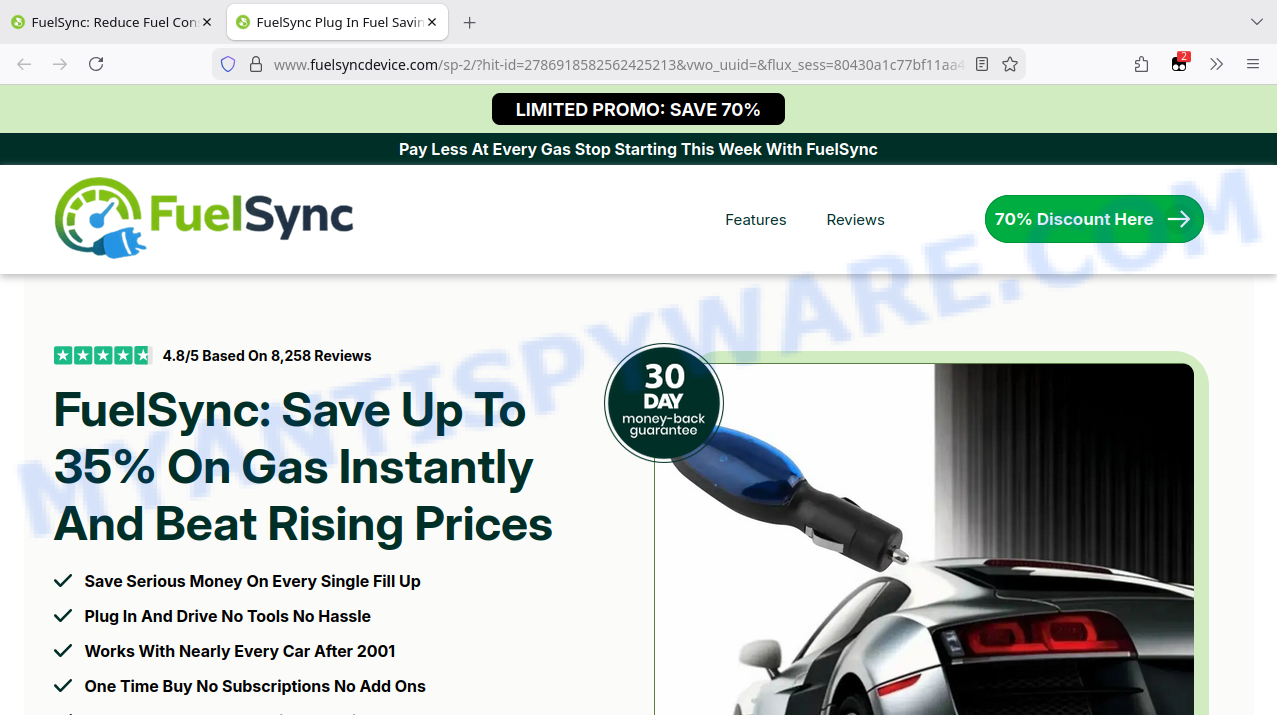
Key Red Flags:
- 🌐 Suspicious Advertising Channels: FuelSync ads frequently appear via social media shares and fake editorial-style landing pages, funneling users to fuelsyncdevice.com and completing purchases through unrelated checkout domains like bestoffersfinder.com, raising questions about legitimacy.
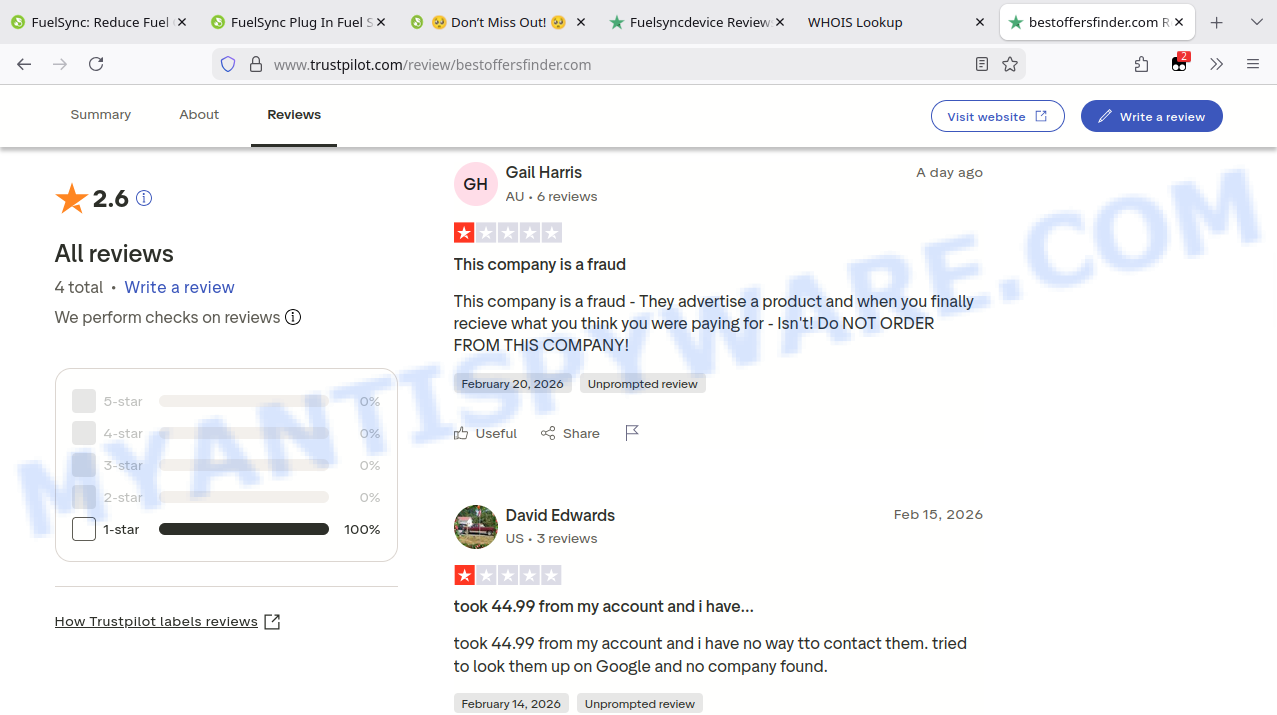
- ⭐ Fabricated Reviews and Testimonials: The product claims over 8,000 reviews with near-perfect ratings on the sales page, but independent platforms such as Trustpilot show no verified reviews and a poor overall reputation, indicating these testimonials are likely fake or manipulated.
- 🔒 Misleading Website Disclaimers: Although the landing page mimics a news article, it includes a small disclaimer admitting it is an advertisement, not genuine editorial content. No credible expert endorsements or verifiable scientific backing are provided.
- ⚠️ Exaggerated “Electromagnetic Realignment” Claims: The device is promoted as an “engineering miracle” that can improve mileage by up to 35%-56%, yet there is no independent data, scientific explanation, or video demonstration verifying these extraordinary fuel-saving effects.
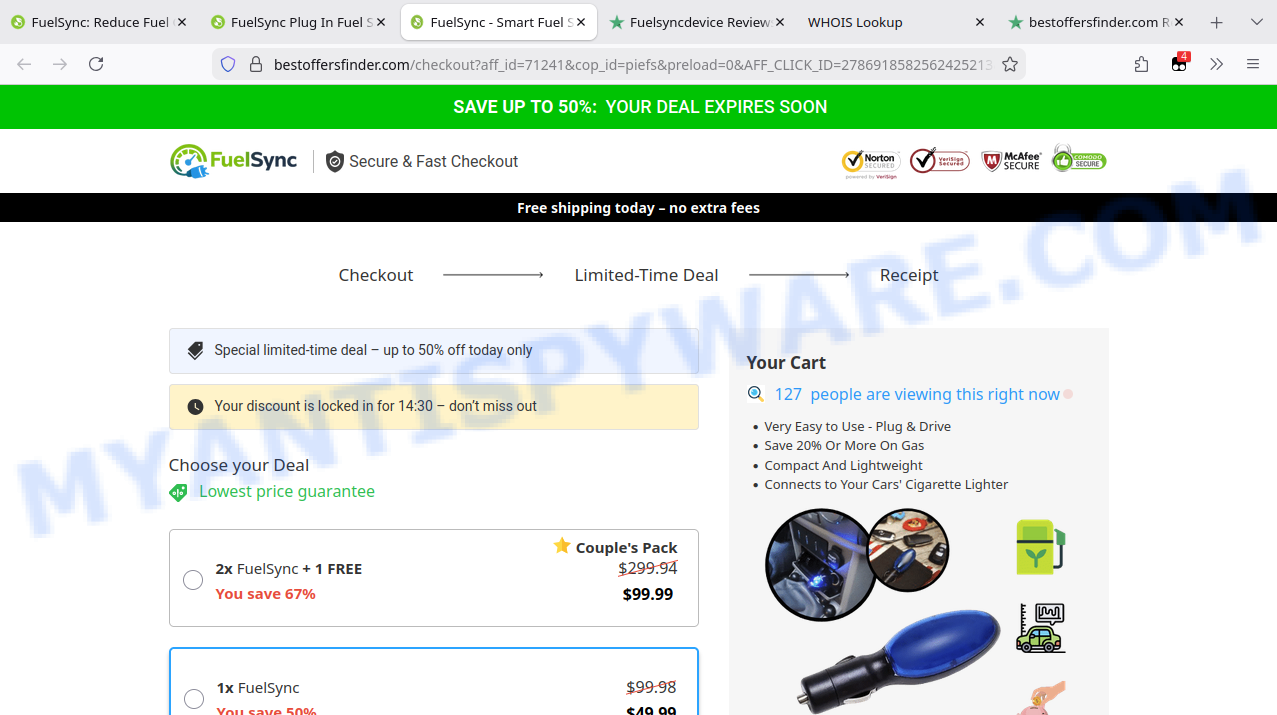
- 📉 Questionable Credibility Badges: Security seals (Norton, McAfee), money-back guarantees, and scarcity tactics (“discount locked in for 14:25”) are prominently used, but these badges and urgency overlays are uncorroborated and commonly employed to rush consumers into impulsive purchases.
- 👤 Fake Social Proof Elements: On-page notifications like “Alicia H. in Edmonds just bought 3 FuelSync” appear repeatedly alongside suspicious real-time viewer counts (sometimes exceeding 100,000), which are likely fabricated to create a false sense of demand and trust.
- 🔗 Dubious Purchase Process and Pricing: The checkout at bestoffersfinder.com offers steep discounts and bundle deals, but Trustpilot reviews describe unauthorized charges, poor customer service, and difficulties obtaining refunds, indicating unreliable post-purchase experiences.
In summary, FuelSync Gas Saver exhibits numerous warning signs of a scam. The product’s inflated claims, fake review metrics, lack of credible scientific evidence, misleading promotional tactics, and reported customer complaints highlight that FuelSync is not a trustworthy solution for fuel saving. Consumers are strongly advised to avoid purchasing FuelSync and instead seek reputable, proven methods to improve vehicle efficiency, consulting with qualified automotive professionals or trusted sources.
🕵️♂️ How the FuelSync Gas Saver Scam Operates
FuelSync is a gas saver scam. 🚨 It’s a type of fraud where a cheap plug-in device is sold as a revolutionary fuel-saving technology using misleading claims and fake endorsements. 🔗 Step-by-Step Breakdown of the Scam:
🛒 Selling a Basic Plug Gadget
The product is a small, simple blue device that plugs into a car’s 12V cigarette lighter socket. Manufactured cheaply and lacking any true scientific mechanism, it’s marketed as a high-tech “electromagnetic realignment” device that can drastically reduce gasoline consumption and increase mileage by up to 35% or more.
🕸️ Creating Fake, Editorial-Style Websites
Scammers set up professional-looking but fake news-style landing pages on domains like fuelsyncdevice.com. These sites mimic the appearance of trustworthy reviews or health articles but contain no credible author information, third-party verification, or scientific data. They prominently show phony “4.8/5 based on 8,258 reviews” ratings to appear trustworthy.
📢 Promoting Through Social Media Ads
FuelSync devices are heavily promoted through social media ads shared on platforms like Facebook, X (formerly Twitter), WhatsApp, and Pinterest. The ads promise outrageous benefits like “Reduce fuel consumption by 35%” and “Save hundreds at the pump,” enticing buyers with catchy headlines and fake urgency messages (“Only 127 people viewing this deal right now!”).
💼 Falsifying Technology Claims
The scam hinges on bogus technical jargon like “electromagnetic realignment” without any scientific evidence. The product pages lack any video demonstration, independent lab tests, or expert endorsements that prove the device works as claimed.
💸 Offering Fake Discounts and Urgency
The checkout funnel, hosted on sites such as bestoffersfinder.com, advertises steep discounts and “limited time” deals to pressure consumers into impulse buying. For example, prices are “slashed” from $299.94 down to $49.99 or $99.99, along with additional offers like “1 Year Extended Warranty” for a small extra fee.
🌟 Using Fabricated Reviews and Social Proof
The sales pages display fake buyer notifications (“Alicia H. just bought 3 FuelSync devices”) and glowing customer testimonials that are not verifiable. Trustpilot pages related to these domains actually show very low scores, unclaimed profiles, or complaints, contradicting the claimed 4.8/5 star ratings.
⚖️ Misleading Legal and Safety Claims
FuelSync marketing includes badges like “Norton Secure Checkout” and “30 Day Money Back Guarantee” meant to reassure buyers, but these claims are unreliable since the vendor operates anonymously with privacy-protected WHOIS information, and refund requests often go unanswered.
🛍️ Straightforward but Risky Purchasing Process
Customers are asked to pay upfront via credit cards, PayPal, or Google Pay through checkout pages that promise “secure payment” but provide little protection against fraud. The contact info is minimal or non-responsive, with no reliable customer service.
🔁 Returns and Refunds Not Honored
Despite “money back” badges, customers report extreme difficulty obtaining refunds once they realize the device delivers no actual benefit. The seller often ignores refund requests, and the official support channels are unresponsive.
📦 Receiving an Ineffective Product
Buyers do receive a physical device—a basic plug with no functional electronics capable of real “electromagnetic realignment” or improved fuel efficiency. The product fails completely to meet advertised claims.
🚫 Lack of Genuine Customer Support
Post-purchase support is effectively nonexistent. Attempts to contact the company via email or phone are ignored or met with vague responses, leaving customers stuck with a useless product.
In summary, the FuelSync 🚫 scam tricks consumers into buying a cheap, ineffective gadget sold under false pretenses of groundbreaking fuel-saving technology. The scammers use fake websites, fabricated reviews, misleading discounts, and false technical claims to generate sales. Buyers typically end up with a worthless item, no customer support, and difficulty getting refunds. This scam highlights the need to be cautious and verify scientific claims before purchasing automotive gadgets online.
😱 What to Do If Scammed
If you find yourself ensnared by the FuelSync Gas Saver Scam, immediate action is crucial. Here’s what you should consider doing:
🛑 Stop Further Transactions
The first step is to halt any additional transactions that might be in process. Contact your bank or credit card provider and inform them that you’ve fallen victim to a scam. They can help by blocking the card or reversing any unauthorized transactions.
📞 Report the Fraud
File a report with your local police and provide all the available evidence, such as screenshots, emails, and website URLs. Additionally, report the scam to online portals like the Better Business Bureau (BBB) at www.bbb.org or the Federal Trade Commission (FTC) at reportfraud.ftc.gov. If you’re in another country, reach out to your national consumer protection agency.
💻 Take Screenshots
Before the scam website gets taken down or changes, make sure to capture screenshots of your transactions and communications. These can serve as evidence if you decide to pursue legal action.
⚖️ Consult Legal Advice
Speak to a legal advisor about your situation. While pursuing legal action may be time-consuming and costly, it could be a possible avenue for recovering your lost money.
📢 Share Your Experience
Use social media platforms to share your experience and warn others about the scam. Your story could prevent someone else from falling victim to the same or similar scams.
Summary Table
| Factor | Observations | Impact on Legitimacy |
|---|---|---|
| Product Description | FuelSync is a small device that plugs into a car’s 12V outlet and claims to save up to 35-56% on fuel by using an “electromagnetic realignment” technique. The product is promoted with big promises but lacks real scientific evidence or tests to support these claims. | Negative (Unproven technical claims without evidence) |
| Marketing Methods | The product is marketed through social media ads and fake editorial-style pages that look like news articles but are actually ads. The sales pages show urgent messages, social share buttons, and pressure to buy quickly. | Negative (Misleading advertising and high-pressure sales tactics) |
| Customer Reviews | The website claims over 8,000 reviews with a high rating, but independent review sites like Trustpilot show no real reviews or low scores with complaints. The social proof on the website is likely fake. | Negative (Fabricated reviews and lack of real customer feedback) |
| Website and Purchase Process | The official site fuelsyncdevice.com uses disclaimers like “This is an advertisement,” but hides real company information. Purchases go through bestoffersfinder.com, which has poor reviews and customer complaints concerning unauthorized charges and poor support. | Negative (Lack of transparency and poor reputation of checkout site) |
| Pricing and Discounts | The device is sold with large discounts and bundle offers that create a sense of urgency. Prices seem inflated and the discounts are likely a tactic to push quick purchases. | Negative (Use of misleading pricing and urgency tactics) |
| Claims of Safety and Guarantees | Sales pages show badges like “30-day money-back guarantee” and security seals from Norton and McAfee. However, complaints indicate difficulties with refunds and no proof that data is securely handled. | Negative (Misleading safety claims and unreliable refund policy) |
| Company Transparency | Domain registration is hidden behind privacy protection, founded recently in late 2025 with no traceable company info. No real experts or media endorsements are shown, and social proof is fabricated. | Negative (Hidden ownership and no credible endorsements) |
| Risk to Consumers | Customers must provide personal info and payment details with no guarantees of product effectiveness or refunds. Trustpilot reviews report fraud and poor customer support, putting buyers at risk of losing money and data. | Negative (Potential financial loss and data exposure) |
| Evidence of Effectiveness | No scientific proof, videos, or third-party tests are available to verify the fuel-saving claims. The product relies on unclear jargon and promotional language without facts. | Negative (No credible evidence supporting function) |
Conclusion
The FuelSync Gas Saver is a scam that uses deceptive marketing tactics, fabricated reviews, and false claims about “electromagnetic realignment” to lure consumers into buying a worthless plug-in device. Despite promises of drastically reduced gas consumption and enhanced engine performance, there is no credible evidence, scientific data, or independent verification proving that FuelSync delivers any real fuel savings or technical benefits.
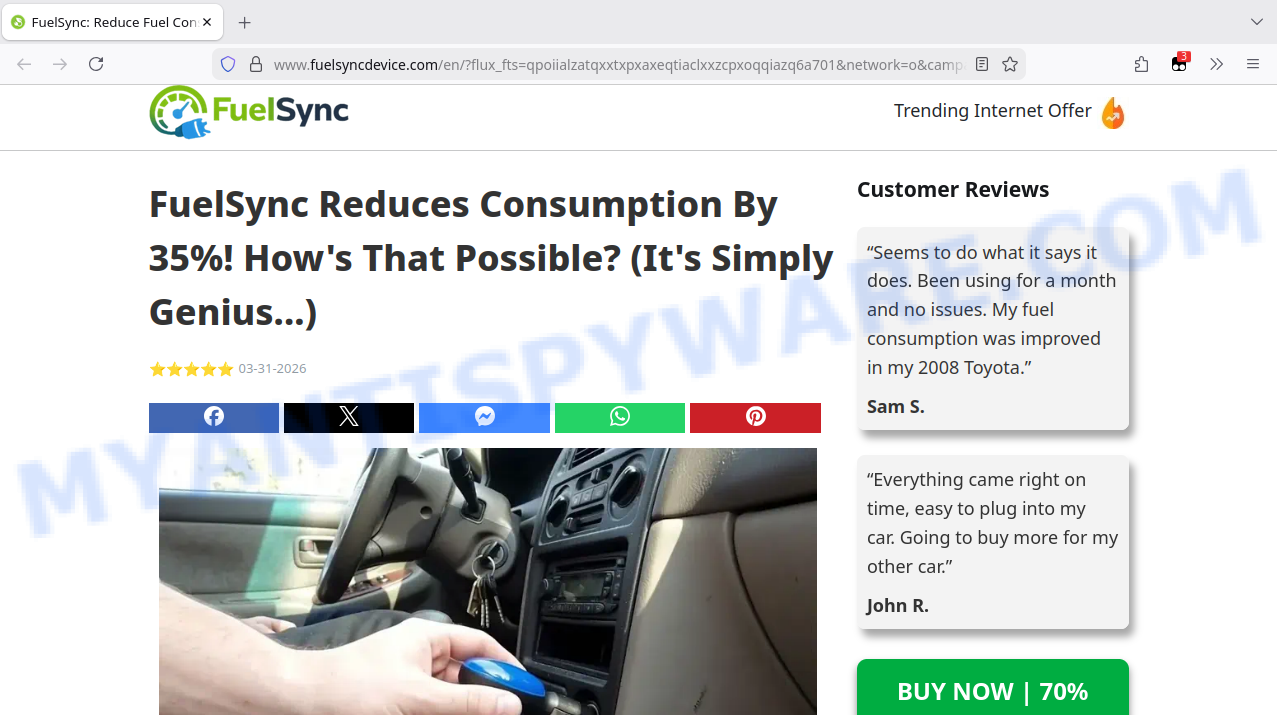
The promotional sales funnel relies heavily on fake social proof, including bogus five-star ratings, fabricated buyer testimonials, and urgent countdown timers designed to pressure visitors into quick purchases. The use of supposed “security badges” and “money-back guarantees” on sites like fuelsyncdevice.com and bestoffersfinder.com are misleading and not backed by reputable sources or consumer protections.
Bottom Line: Avoid FuelSync Gas Saver at all costs. The product is nothing more than a small plug device with no scientific basis for its claims, and the entire sales process is fraught with red flags such as unverifiable reviews, suspicious domain registrations, and negative customer reports about unauthorized charges and poor customer service. Always research thoroughly and be skeptical of products that appear too good to be true, especially when they employ high-pressure sales tactics and lack credible endorsements.