HaloClear Glasses are the latest “miracle” night-driving fix being pushed hard across the internet — hyped social ads, advertorial-style pages, and urgency-loaded checkout screens all promise a secret “Glarecut” trick that supposedly slashes headlight glare and eye strain in seconds. Our investigation looks past the glossy screenshots to see what really happens once people click through and start trusting the claims.
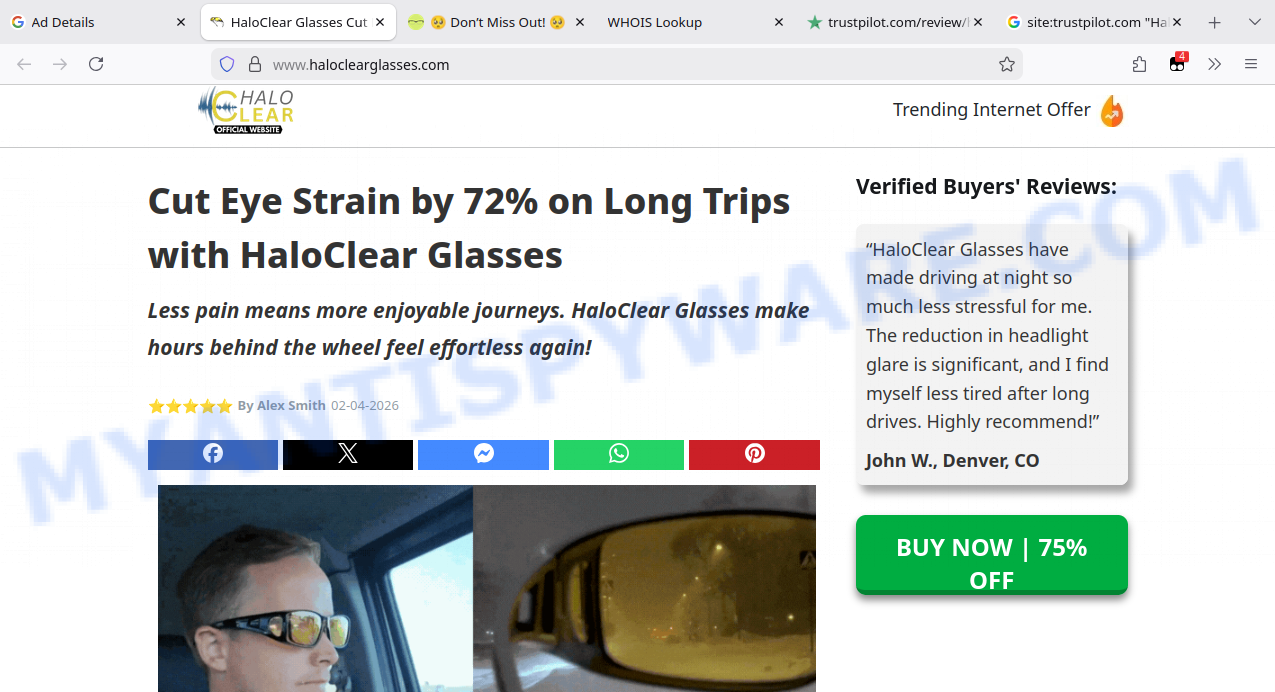
What we found is a textbook example of modern deception: a generic, ultra-cheap product dressed up as a breakthrough invention, sold on a freshly registered, privacy-shielded domain, and propped up by fake urgency, unverifiable “verified buyer” quotes, and trust badges that look official but prove nothing. In essence, this case shows how scammers combine emotional promises, staged social proof, and anonymous websites to turn a low-cost commodity into an overpriced “must-have” fix.
This review breaks down how the HaloClear scheme works step by step — from the first ad that hooks worried drivers to the checkout page designed to separate them from their money — and why the missing facts, lack of real testing, and hidden identities behind the site are all major red flags.
💡 Heads-up: Similar Scams Are Everywhere. HaloClear Glasses is not unique. It is one of many fake supplements, gadgets, and other schemes we expose in our Fact Checks section. All of them aim to grab your personal data or money. The people behind these scams run slick websites, spread bogus promo codes, and even pose as trusted brands or experts. Below are a few recent scams that follow the same playbook as HaloClear Glasses: Hunnylink.com, GLORENDA Moringa Patch, WatcherJobs.com, SonusZen, BrainClear.
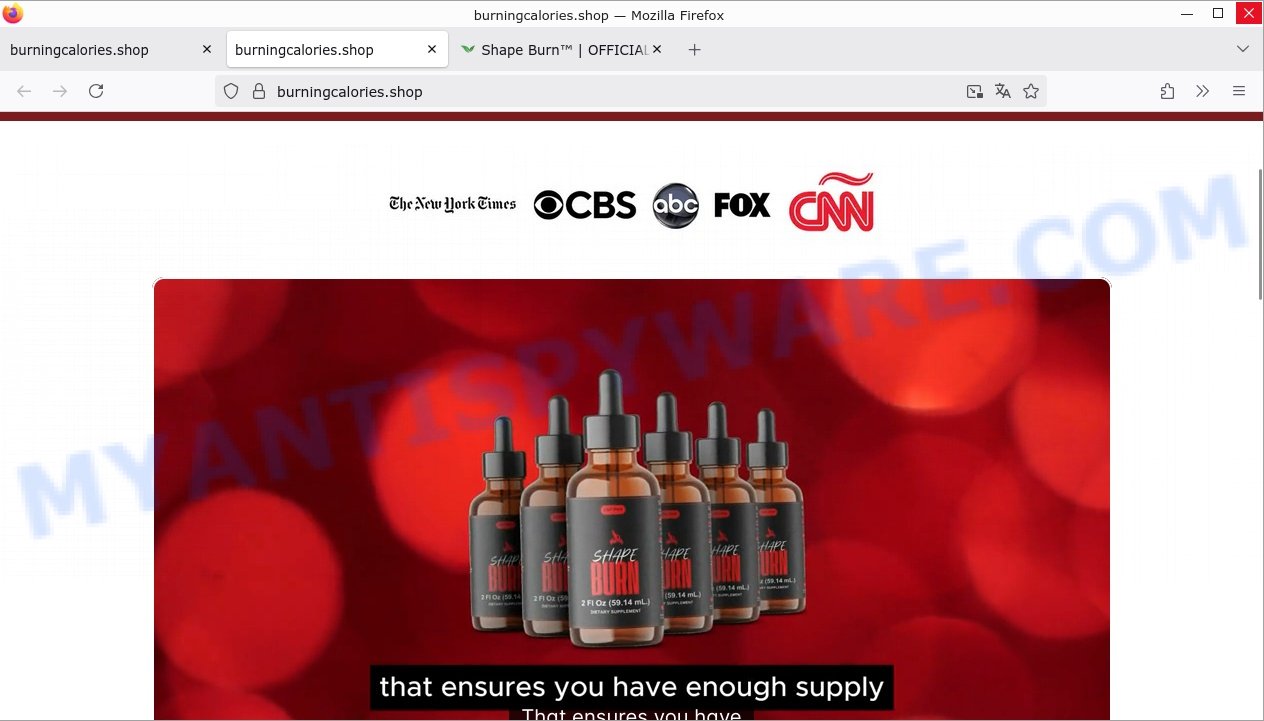
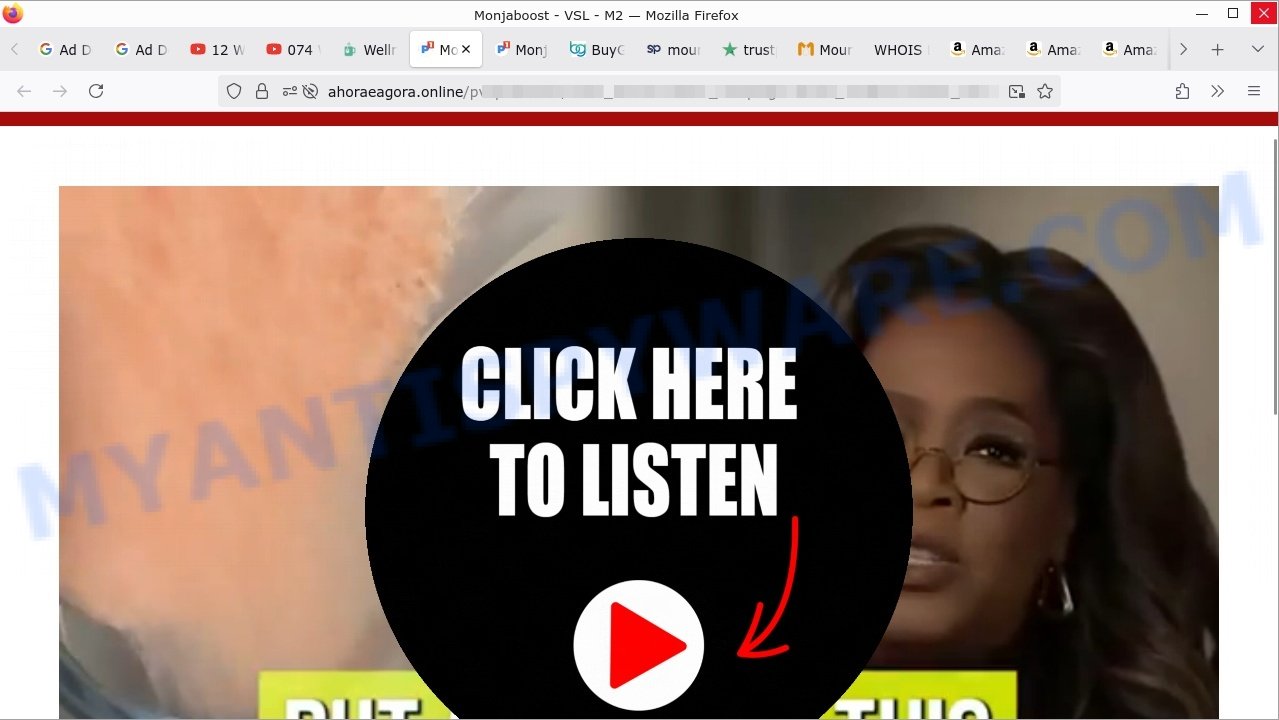
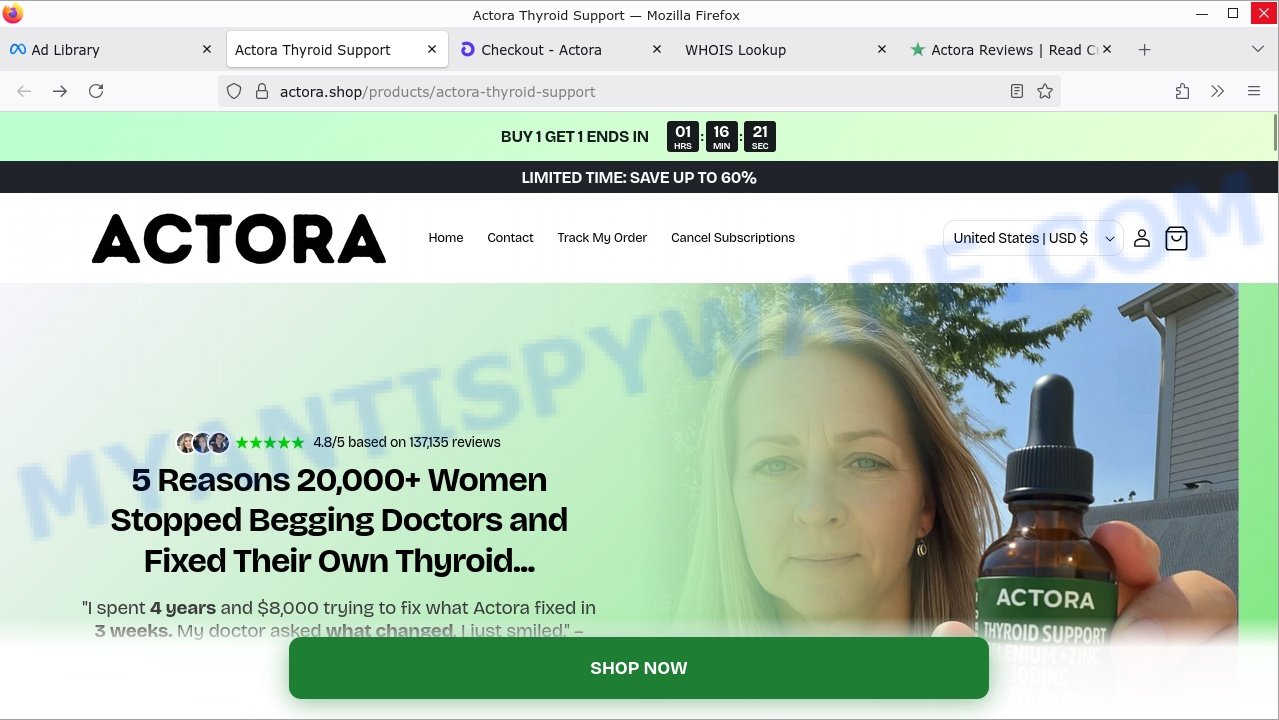
Table of Contents
🚨 Are HaloClear Glasses a Scam?
HaloClear Glasses are aggressively marketed as anti-glare, night-driving eyewear using a yellow-tinted “Glarecut” lens technology that supposedly reduces headlight glare and cuts eye strain by 72%. However, a closer investigation reveals multiple warning signs often associated with deceptive marketing schemes targeting consumers seeking quick fixes for driving comfort.
Key Red Flags:
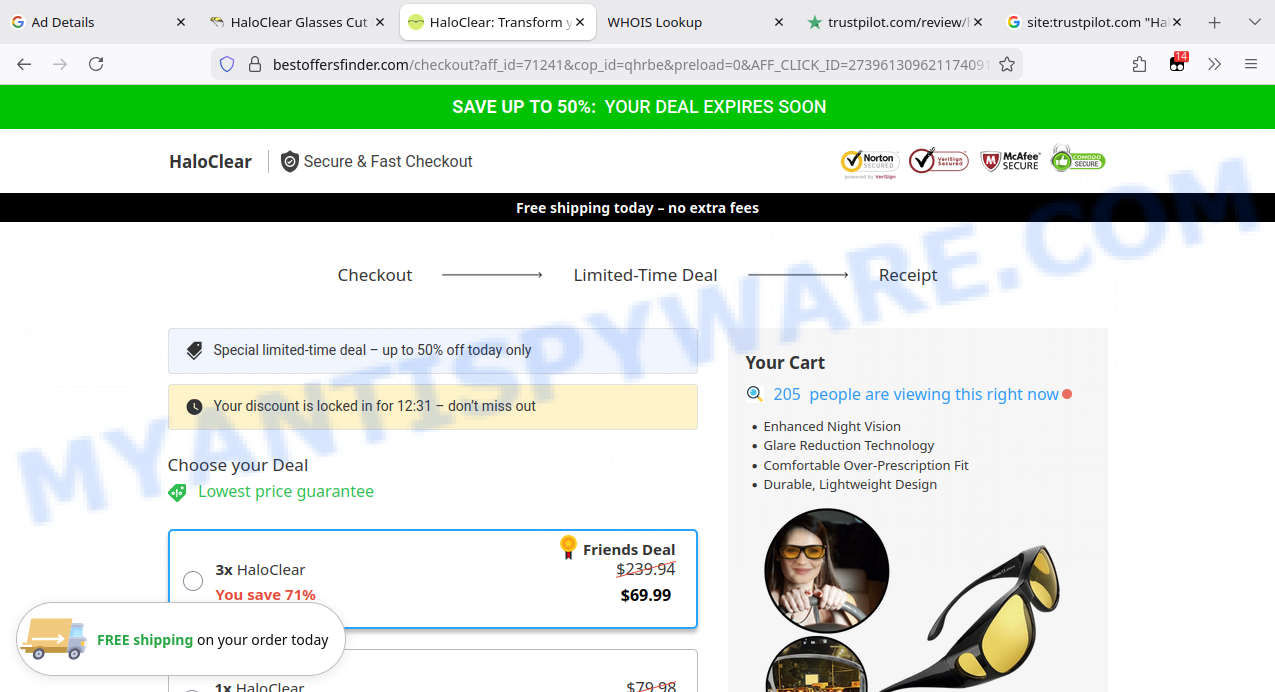
- 🌐 Suspicious Marketing Funnel: The product is promoted extensively through social media ads linking to haloclearglasses.com, a promotional landing page, then to a checkout hosted on bestoffersfinder.com. This fragmented setup is typical of sales funnels designed more to push conversions than to educate or inform.
- ⭐ Fabricated or Unverifiable Testimonials: The landing page shows “Verified Buyers’ Reviews” with glowing customer quotes, but these cannot be independently verified and often resemble generic or stock testimonial formats to artificially boost credibility.
- 🔒 Misleading Website Disclaimers: Though styled like a health news article, the page carries small disclaimers stating “THIS IS AN ADVERTISEMENT AND NOT AN ACTUAL NEWS ARTICLE” and notes that the site owner is paid for leads and disclaims responsibility for returns or product support, signaling a lack of transparency and accountability.
- ⚠️ Unsubstantiated “Glarecut” Technology Claims: The central promise of a “72% reduction in eye strain” due to proprietary lens tech is not accompanied by any clinical studies, endorsements from medical experts, or authoritative testing data.
- 📉 Newly Registered, Privacy-Guarded Domain: The haloclearglasses.com domain was registered very recently (January 2026) with hidden registrant information, making it hard to verify the legitimacy behind the product’s source or manufacturer.
- 👤 Use of Trust and Security Badges Without Verification: Prominent logos from Norton, VeriSign, and McAfee appear on payment pages to imply safety, but these do not guarantee secure transactions or refunds, especially since the actual seller remains anonymous and independent reviews are lacking.
- 🔗 Aggressive Sales Tactics and Artificial Urgency: Countdown timers, live buyer counters, and “limited-time” steep discounts pressure visitors into quick purchases, a common tactic to reduce consumer due diligence.
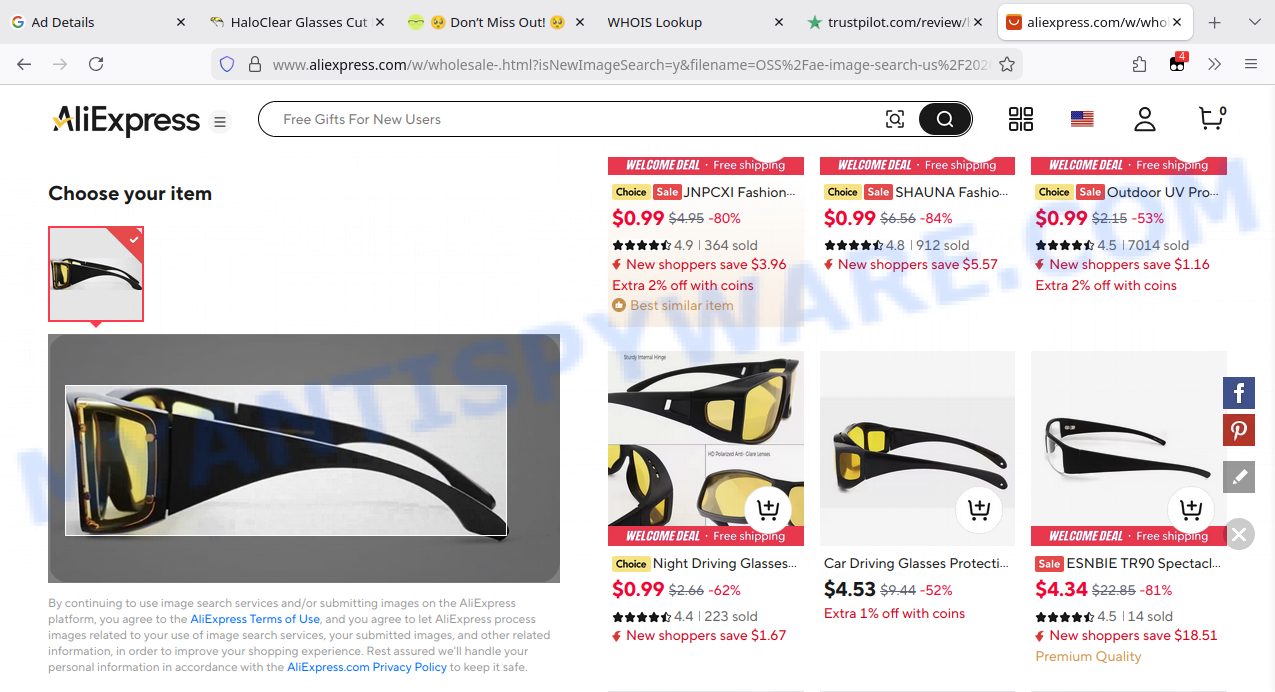
- 📉 Evidence of a Generic, Low-Cost Product Resold: Nearly identical yellow-tinted driving glasses are widely available on platforms like AliExpress for under $5, indicating that the marketed “HaloClear” glasses are likely inexpensive generic items sold at a highly inflated price.
In summary, the HaloClear Glasses offer is surrounded by numerous warning signs consistent with a scam or at least a heavily misleading sales pitch. The lack of credible clinical evidence, unverifiable testimonials, recent hidden domain registration, dubious marketing disclosures, and aggressive sales funnel strongly suggest that the “Glarecut” trick is unproven and the product may not deliver the promised benefits. Consumers are strongly advised to avoid purchasing from these sites and to seek trusted eyewear solutions recommended by qualified professionals.
🕵️♂️ How HaloClear Glasses Scam Operates
HaloClear Glasses are a deceptive product. 🚨 This is a type of fraud where cheap, generic yellow-tinted glasses are marketed as high-tech anti-glare eyewear with unproven “Glarecut” technology that supposedly reduces eye strain by 72%. 🔗 Step-by-Step Breakdown of the Scam:
🛒 Buying Cheap Generic Glasses
Scammers source basic yellow-tinted glasses cheaply from bulk suppliers on platforms like AliExpress, often priced under $1 each. These glasses are generic and do not include any proprietary lens technology or clinically validated features, contrary to the advanced “Glarecut” claims.
🕸️ Creating Fake Promotional Websites
They develop professional-looking, but fake, websites such as haloclearglasses.com and bestoffersfinder.com to sell the product. These sites resemble editorial health articles and feature fabricated customer testimonials, limited or no verifiable contact information, and no credible social media presence.
📢 Promoting Through Misleading Ads
The scammers use eye-catching ads on social media platforms like Facebook, TikTok, Instagram, YouTube, and Google. Ads boast “Up to 75% OFF,” “Best Anti-Glare Glasses,” and “Confident Night Driving,” pushing urgency with countdown timers and live-viewer counters to pressure quick purchases.
💼 Falsifying Technology Claims
Ad copy falsely asserts patented “Glarecut” lenses reduce eye strain drastically, enhance night vision, and provide safety benefits. There is no independent, clinical, or scientific evidence supporting these claims, and no expert endorsements or verifiable testing is provided.
💸 Offering Misleading Discounts
The scam uses inflated “regular” prices slashed down to create a false sense of urgency and savings. For example, a supposedly “regular” price of $239.94 is discounted to $69.99 for a 3-glasses bundle, encouraging impulse buying.
🌟 Using Fake Reviews and Testimonials
The sites display overly positive “verified buyer” reviews with fake names and locations. These reviews claim miraculous improvements in night driving, but searches on independent review platforms like Trustpilot show no genuine feedback or even active pages.
⚖️ Misleading Legal and Safety Claims
The websites include disclaimers admitting the content is an advertisement, but still try to imply legitimacy with “Norton Secure,” “McAfee Secure,” and other trust badges. They disclaim responsibility for returns, contradicting the impression of a safe and reliable product.
🛍️ Easy, High-Pressure Buying Process
The purchase flow is simple but designed for rapid checkout, often implying limited-time stock or deals. Payment methods accepted include credit cards, PayPal, and Google Pay, but buyers receive little buyer protection.
🔁 Not Honoring Returns or Guarantees
Despite advertised 30-day satisfaction guarantees and optional warranties, customers report difficulty obtaining refunds or exchanges. The vendors rarely respond to support requests and often ignore complaints.
📦 Delivering Low-Quality, Ineffective Products
Customers receive plain yellow-tinted glasses that lack any special “Glarecut” technology or measurable benefits. The product performs no better than inexpensive generic driving glasses available elsewhere.
In summary, the HaloClear Glasses scam tricks consumers into paying high prices for cheap generic glasses by making false technological and health claims, using fake websites, deceptive marketing, fabricated reviews, and misleading discount tactics. Buyers end up with ineffective products and poor customer service, with no real benefits to night driving comfort or glare reduction. This scam highlights the importance of researching online eyewear products thoroughly and avoiding offers that seem too good to be true.
😱 What to Do If Scammed
If you find yourself ensnared by the HaloClear Glasses Scam, immediate action is crucial. Here’s what you should consider doing:
🛑 Stop Further Transactions
The first step is to halt any additional transactions that might be in process. Contact your bank or credit card provider and inform them that you’ve fallen victim to a scam. They can help by blocking the card or reversing any unauthorized transactions.
📞 Report the Fraud
File a report with your local police and provide all the available evidence, such as screenshots, emails, and website URLs. Additionally, report the scam to online portals like the Better Business Bureau (BBB) at www.bbb.org or the Federal Trade Commission (FTC) at reportfraud.ftc.gov. If you’re in another country, reach out to your national consumer protection agency.
💻 Take Screenshots
Before the scam website gets taken down or changes, make sure to capture screenshots of your transactions and communications. These can serve as evidence if you decide to pursue legal action.
⚖️ Consult Legal Advice
Speak to a legal advisor about your situation. While pursuing legal action may be time-consuming and costly, it could be a possible avenue for recovering your lost money.
📢 Share Your Experience
Use social media platforms to share your experience and warn others about the scam. Your story could prevent someone else from falling victim to the same or similar scams.
Summary Table
| Factor | Observations | Impact on Legitimacy |
|---|---|---|
| Product Description | HaloClear Glasses are promoted as anti-glare, night-driving eyewear using a yellow “Glarecut” lens that claims to reduce headlight glare and eye strain by 72%. The product is sold through a promotional website that uses a sales funnel but does not provide any clinical proof or technical details for these claims. | Negative (Unproven claims with no scientific evidence) |
| Marketing Methods | Marketing starts with social media ads featuring urgent calls to action and large discounts. The landing page mimics a news article and uses customer quotes, trust badges, countdown timers, and live purchase notifications to encourage quick buying decisions. | Negative (High-pressure sales tactics and potential deception) |
| Customer Reviews | The site shows many short “verified buyer” testimonials but no real independent reviews on platforms like Trustpilot. Attempts to find outside feedback failed, suggesting that reviews might be fake or biased. | Negative (Lack of authentic customer feedback) |
| Pricing and Offers | The product is offered in bundles with large discounts from a high “regular price” to a lower sale price. Additional fees for extended warranties are pushed, and free shipping is used as an incentive. These offers are designed to rush customers into buying. | Negative (Potentially misleading pricing and sales pressure) |
| Product Source and Quality | The advertised HaloClear Glasses appear to be inexpensive generic yellow glasses sold cheaply on sites like AliExpress. The domain is newly created with privacy protection, and the seller information is hidden, making the origin unclear and suspicious. | Negative (Likely resold cheap generic product with unclear origin) |
| Website Transparency | The site disclaimer reveals it is an advertisement, and the owner is paid for leads without responsibility for product returns or support. The domain information is private, and no legitimate media or expert endorsements are provided. | Negative (Opaque business practices and lack of accountability) |
| Security Claims | Security logos like Norton, VeriSign, and McAfee secure are displayed, but these do not guarantee product quality or refund guarantees, especially given the anonymous seller and lack of independent reviews. | Negative (Security badges used as marketing tools, not proof of legitimacy) |
| Refund Policy and Customer Support | The sales pages promise a 30-day satisfaction guarantee, but disclaimers suggest that refunds and support might be difficult due to the site owner not handling returns or shipping. | Negative (Complicated refund process and limited customer support) |
| Overall Trustworthiness | The combination of high-pressure marketing, fake or missing reviews, a newly registered anonymous domain, and the likely generic nature of the product all point to a scam or unreliable offer. | Negative (Strong indicators of a deceptive sales scheme) |
Conclusion
The HaloClear Glasses and their so-called “Glarecut” trick are a scam, aggressively promoted through misleading ads, fabricated customer testimonials, and deceptive sales tactics designed to pressure you into buying quickly. Despite the flashy marketing claiming to reduce glare by 72% and improve night driving comfort, there is no credible scientific evidence or expert validation to support these promises.
The product pages and checkout heavily rely on fake credibility signals like security badges (Norton, McAfee, VeriSign), “verified buyer” labels, countdown timers, and urgent language to create a false sense of trust and scarcity. The glasses themselves appear to be generic yellow-tinted lenses widely sold online at a fraction of the advertised price, repackaged and sold at inflated costs. The brand’s domain is newly registered with privacy protection, lacking any trustworthy background.
Bottom Line: Avoid purchasing HaloClear Glasses. The marketing is built on unproven claims, fake endorsements, and sales tactics typical of online scams. Always research products carefully, verify independent reviews, and be wary if a product’s only “evidence” is in slick ads without any scientific or medical backing. If an offer looks too good or relies on fake social proof and urgency triggers, it’s almost certainly a scam. Stay cautious and protect your personal and payment information.