Nerve Action is the latest “miracle nerve cure” being pushed across Facebook and shady health sites, wrapped in a fake medical story about a Japanese “Red Vitamin” ritual. On the surface it looks like a serious neuropathy breakthrough: Kenji Satoh “white‑coat doctor” , Boston “institute,” clinical‑sounding numbers, and a dramatic promise to expose three big “lies” about nerve damage. The core of this investigation is simple: the supposed home remedy is never actually given — it’s bait to sell capsules.

Once you click the ad, you’re dragged through a long video that pretends to reveal a simple mix of a Japanese spice and apple cider vinegar that “flushes hidden toxins” and regenerates nerves. Instead, the video quietly pivots into a product pitch, hiding the order form until the very end. Around it, you see all the usual props: TV network logos with no proof of coverage, sky‑high review scores rendered as images, badges claiming FDA registration and GMP quality, and a fake countdown insisting there are only “89 bottles left” while “42 people are checking out.” The checkout then moves you to a different domain, collecting full personal and card details behind a 60‑day guarantee that may exist only on paper.
Taken together, these patterns match a common scam structure we see in deceptive supplement marketing: an invented doctor, recycled “secret ritual” script, fabricated authority symbols, and aggressive pressure to buy before you can verify anything. What’s really being sold isn’t a Japanese nerve cure — it’s your trust, your credit card number, and your medical desperation.
💡 Heads-up: Similar Scams Are Everywhere. Nerve Action is not unique. It is one of many fake supplements, gadgets, and other schemes we expose in our Fact Checks section. All of them aim to grab your personal data or money. The people behind these scams run slick websites, spread bogus promo codes, and even pose as trusted brands or experts. Below are a few recent scams that follow the same playbook as Nerve Action: Slim Boost Tea, GLPro, McAfee Your PC Is Transmitting Malicious Files, Memory Lift, Orivelle Nail Fungus Pen.

Table of Contents
🚨 Is Nerve Action a Scam?
Nerve Action is marketed through deceptive online tactics as a natural supplement that supposedly reverses neuropathy using a so-called “Japanese Red Vitamin Ritual” — a combination of a Japanese spice and apple cider vinegar. However, this product and its sales funnel raise numerous red flags typical of scam operations aimed at consumers seeking easy remedies for nerve pain without scientific proof.
Key Red Flags:
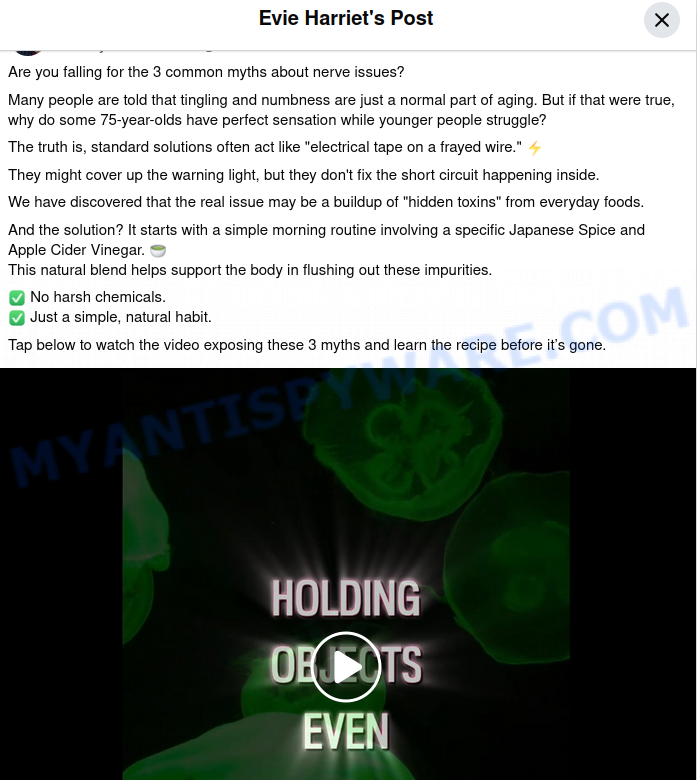
- 🌐 Suspicious Social Media Ads: The campaign originates from Facebook ads under dubious profiles promoting a dramatic “three myths” narrative about nerve pain and toxins, enticing viewers with a vague morning routine instead of clear, verifiable medical advice.
- ⭐ Fabricated Authority and Testimonials: Landing pages feature a fictitious “Dr. Kenji Satoh,” complete with fake credentials, unverifiable institutional claims, and staged patient portals. Customer reviews and media logos are presented as images without any external verification, indicating likely fabrication.
- 🔒 Misleading Website Content: The official site steps up the illusion of legitimacy with clinical-sounding protocols and dramatic success rates but fails to provide any peer-reviewed research or legitimate medical endorsements.
- ⚠️ Unrealistic Health Claims: Assertions that a simple mixture of a Japanese spice and apple cider vinegar can detoxify nerves and regenerate myelin lack any scientific support, rendering these claims untrustworthy and potentially exploitative.
- 📉 High-Pressure Sales Tactics: The checkout pages employ scarcity timers, limited stock alerts, and urgent prompts to push buyers into immediate purchase decisions, common strategies in scam sales funnels.
- 🔗 Opaque Merchant Information: The domains involved were recently registered and conceal owner identities, with payment processed through less credible third parties. Refund guarantees are questionable, and enforcing them can be difficult.
- 👤 No Verifiable Third-Party Endorsements: Searches show no listings on major consumer review sites like Trustpilot, and claims of media coverage are unsupported by actual links or details, exposing attempts to deceive consumers about legitimacy.
Summary: Nerve Action is promoted via a classic online scam funnel promising a miracle “Japanese Red Vitamin Ritual” that has no credible medical validation. The fake doctor persona, unverifiable testimonials, misleading site content, and aggressive sales pressure all strongly suggest this product is not a trustworthy or effective treatment for neuropathy. Consumers are advised to avoid Nerve Action and consult licensed healthcare professionals for evidence-based solutions.
🕵️♂️ How the Scam Operates
🚨 It markets a fake “Japanese Red Vitamin Ritual” that supposedly reverses neuropathy using a mix of a Japanese spice and apple cider vinegar — claims that lack any scientific backing. 🔗 Step-by-Step Breakdown of the Scam:


🛒 Social Media Ads Trick You
The scam begins with Facebook and other social media ads inviting you to watch a video exposing “3 myths” about nerve pain. These ads hype a miracle morning ritual using a mysterious Japanese spice and apple cider vinegar to cure neuropathy. They hook you with phrases like “hidden toxins in everyday foods” causing nerve damage.
🕸️ Fake, Professional-Looking Landing Pages
Clicking the ads leads to sites such as stepfreewellness.com, which mimic credible medical sites. They use fake credentials for “Dr. Kenji Satoh,” boast a “Boston, MA Headquarters,” and show fabricated board certifications. These pages include lengthy sales videos and verbose medical-sounding language designed to gain your trust.
📢 Misleading Video Presentations
The embedded videos feature purported clinical studies, dramatic success stories, and personal tragedies allegedly linked to the “doctor” to provoke an emotional response. They promise to reveal a secret recipe but instead funnel you toward buying Nerve Action capsules.
💼 False Credibility Signals
The sites display numerous fake badges and endorsements like “FDA Registered,” “GMP Certified,” and “100% Natural.” They also show fabricated media logos (NBC, CBS, ABC, FOX News), fake customer review scores (4.9/5 from thousands of reviews), and stock photos of “happy customers.”
💸 High-Pressure Sales and Scarcity Tactics
To push you into buying, the scam uses countdown timers, limited-stock warnings (“Only 89 bottles left!”), and claims that “other customers are checking out right now.” Prices for Nerve Action are steep — for example, $294 for six bottles — and the checkout offers multiple expensive bundle options.
📦 Delivering Worthless Products
If you buy the capsules, you receive a product that is unlikely to have any effect on nerve health. There is no credible evidence that its ingredients can reverse neuropathy as advertised.
😱 What to Do If Scammed
If you find yourself ensnared by the Nerve Action Scam, immediate action is crucial. Here’s what you should consider doing:
🛑 Stop Further Transactions
The first step is to halt any additional transactions that might be in process. Contact your bank or credit card provider and inform them that you’ve fallen victim to a scam. They can help by blocking the card or reversing any unauthorized transactions.
📞 Report the Fraud
File a report with your local police and provide all the available evidence, such as screenshots, emails, and website URLs. Additionally, report the scam to online portals like the Better Business Bureau (BBB) at www.bbb.org or the Federal Trade Commission (FTC) at reportfraud.ftc.gov. If you’re in another country, reach out to your national consumer protection agency.
💻 Take Screenshots
Before the scam website gets taken down or changes, make sure to capture screenshots of your transactions and communications. These can serve as evidence if you decide to pursue legal action.
⚖️ Consult Legal Advice
Speak to a legal advisor about your situation. While pursuing legal action may be time-consuming and costly, it could be a possible avenue for recovering your lost money.
📢 Share Your Experience
Use social media platforms to share your experience and warn others about the scam. Your story could prevent someone else from falling victim to the same or similar scams.
Summary Table
| Factor | Observations | Impact on Legitimacy |
|---|---|---|
| Product Description | Nerve Action is promoted as a natural supplement using a “Japanese Red Vitamin Ritual” that claims to reverse nerve pain and neuropathy with a mix of a Japanese spice and apple cider vinegar. The product claims fast nerve healing and toxin removal but offers no proof or scientific studies to back these statements. | Negative (Unproven health claims and lack of scientific support) |
| Marketing Channels | The sales start with Facebook ads posting dramatic claims about hidden toxins causing nerve pain and encourage watching a video revealing a secret recipe. These ads link to landing pages that use fake expert profiles and medical-style presentations to appear credible. | Negative (Misleading ads and false authority use) |
| Landing Page & Video | The landing page pretends a doctor named “Kenji Satoh” or “Sato” discovered the treatment. It shows fake certifications, medical titles, and a Boston address but no real credentials or verifiable information. The video presents a personal story and invented studies, ending with a sales offer rather than a free recipe. | Negative (Fake expert persona and deceptive content) |
| Credibility Signals | The site displays logos of well-known media and high customer review ratings, but these are images and not linked to real news or reviews. Customer quotes seem staged, and third-party checks find no real reviews or endorsements. The domain is newly created with hidden owner information. | Negative (False endorsements and review manipulation) |
| Pricing & Sales Tactics | Nerve Action is sold in multiple pack options with high prices per bottle. The pages use timers, low-stock warnings, and messages about others buying to push quick decisions. Refund guarantees are stated but no evidence shows these are easy to claim. | Negative (High cost and pressure selling tactics) |
| Payment & Checkout | Checkout is handled by a third-party platform with basic payment methods and pressure messages about reserved orders. The seller’s identity and refund process lack transparency, and no independent reviews of the payment experience exist. | Negative (Opaque checkout and risky purchase conditions) |
| Company Transparency | The domain used was registered recently and shows private registration, hiding the real operator. No real contact or company details are provided, reducing trustworthiness. | Negative (Lack of company info and hidden ownership) |
| Safety & Effectiveness | No scientific evidence or trusted medical advice supports the product’s nerve pain claims. The offered “Japanese Red Vitamin Ritual” is not proven or recognized by experts. | Negative (Unverified safety and effectiveness) |
| Refund & Customer Support | While the site claims a 60-day money-back guarantee, buyers may face difficulties getting refunds because of unclear policies and hidden seller details. No third-party reviews confirm customer satisfaction or support quality. | Negative (Unclear refund policy and poor customer support) |
Conclusion
The Nerve Action supplement and its so-called “Japanese Red Vitamin Ritual” are part of a deceptive scheme designed to exploit individuals suffering from neuropathy. This campaign uses fabricated stories, fake endorsements, and manipulated marketing tactics to create a false sense of legitimacy. The named “Dr. Kenji Satoh” appears to be a fabricated persona used to add credibility, while the presented research and clinical claims are unsubstantiated and lack any independent verification.
Nerve Action’s marketing relies heavily on urgency and scarcity tactics, including fake countdown timers, fabricated customer reviews, and unproven health claims about reversing nerve damage simply by using a mixture of a Japanese spice and apple cider vinegar. The product badges such as “FDA Registered,” “GMP Certified,” and “100% Money-Back Guarantee” are purely cosmetic and unsupported by verifiable evidence.
Bottom Line: Avoid purchasing Nerve Action or engaging with the “Japanese Red Vitamin Ritual” sales funnel. Always approach health supplements with skepticism, especially when pressured by urgent sales tactics and unverifiable endorsements. Confirm any nerve health treatment claims through licensed medical professionals and trusted medical literature. If you encounter offers that make miraculous promises but lack transparent information, it’s safest to consider them scams aimed at profiting from vulnerable consumers. Stay vigilant and protect your personal and financial information from such fraudulent schemes.