Glycopezil Drops is aggressively promoted on platforms like Facebook as a natural liquid supplement claiming to “stabilize blood sugar” and “reverse type 2 diabetes”. Presented through a staged online video designed to mimic a breaking news broadcast, the product promises an easy at-home “glucose reset ritual” that allegedly works like expensive prescription drugs—without injections or side effects. However, these sweeping claims are nothing more than a cleverly constructed sales pitch riddled with lies and deceptive tactics.
Glycopezil’s campaign also abuses recognizable names such as Dr. Phil, Dr. Oz, and celebrities like Halle Berry, implying an endorsement that simply does not exist. These references are used solely to build false credibility, with no permission or association from the parties mentioned. There are no real news reports or medical studies backing the claims made on the site.
In short, the “Glucose Reset Ritual” is a textbook example of an online health scam. If you encounter ads for this “glucose reset ritual” or its related products, be skeptical. Genuine medical conditions require advice from licensed healthcare professionals—never rely on flashy internet marketing schemes masquerading as credible news. Avoid this scam and protect your health and your wallet.
💡 Heads-up: Similar Scams Are Everywhere. Glycopezil is not unique. It is one of many supplements, gadgets, and other schemes we expose in our Fact Checks section. All of them aim to grab your personal data or money. The people behind these scams run slick websites, spread bogus promo codes, and even pose as trusted brands or experts. Below are a few recent scams that follow the same playbook: Laellium Weight Loss Support, NerveSync, Your System Is Locked Due To Detected Threats, BrainClear, DropFit.
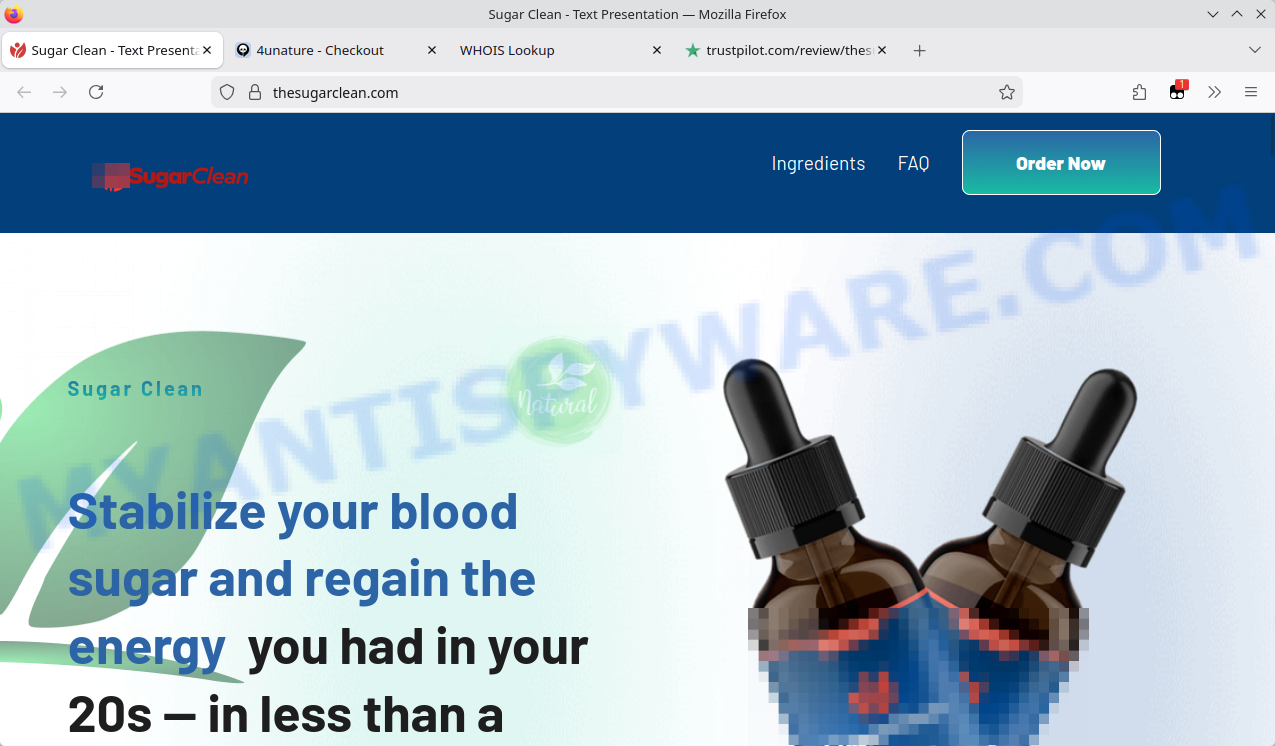
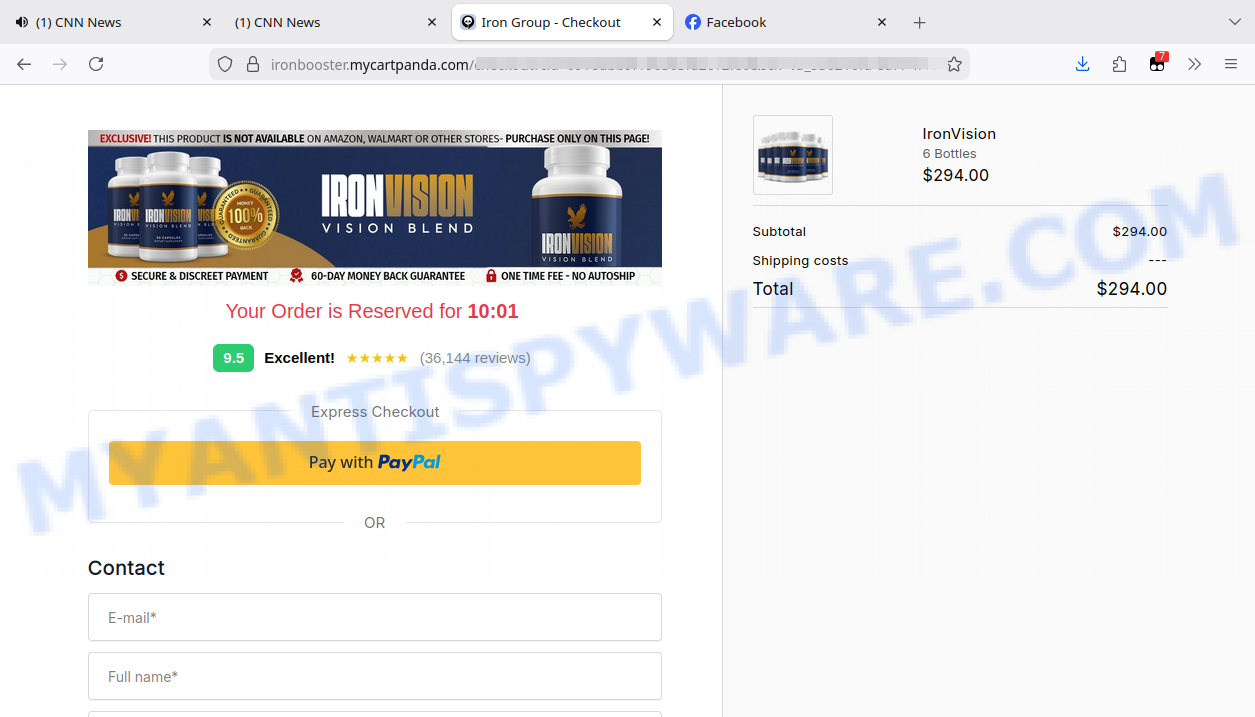
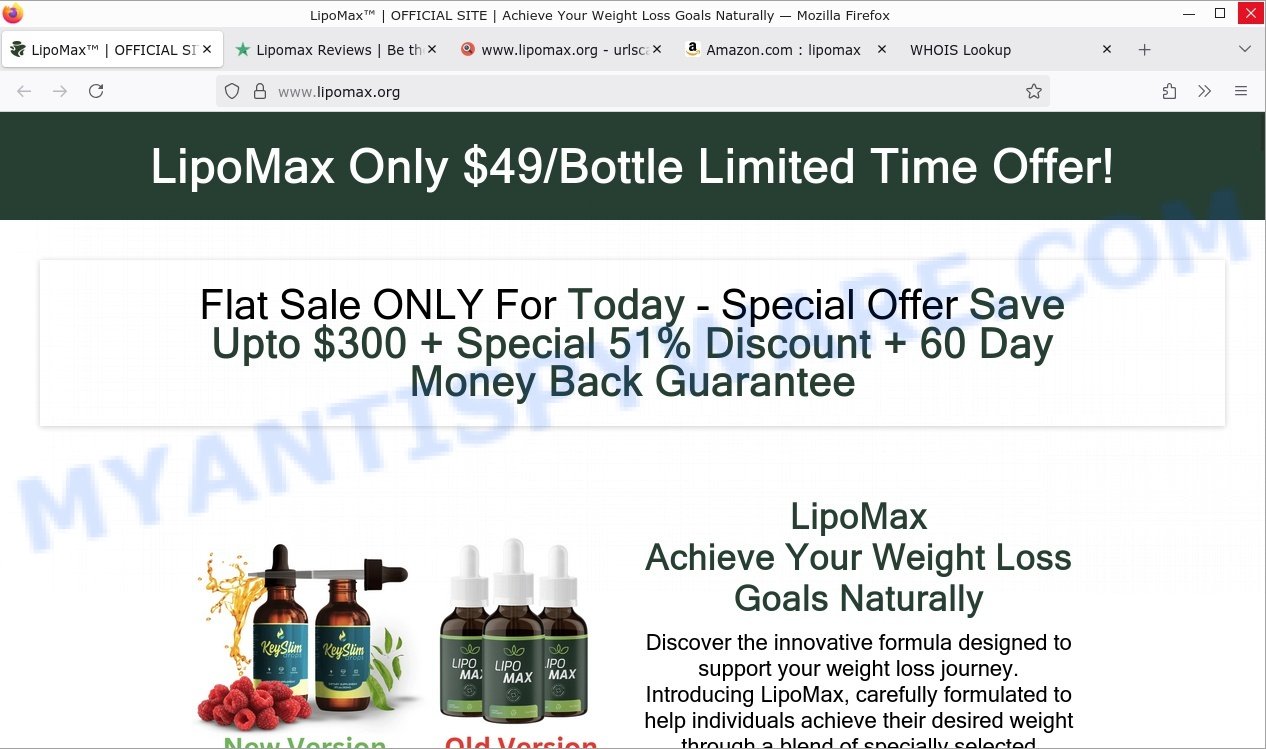

Table of Contents
🚨 Is Glycopezil a Scam?
Glycopezil is aggressively promoted on social media using deceptive and manipulative tactics designed to lure individuals seeking solutions to manage blood sugar and reverse type 2 diabetes. The marketing presents an unproven “glucose reset ritual” that is falsely linked to reputable media outlets and celebrities to create a misleading image of legitimacy.
Key Red Flags:
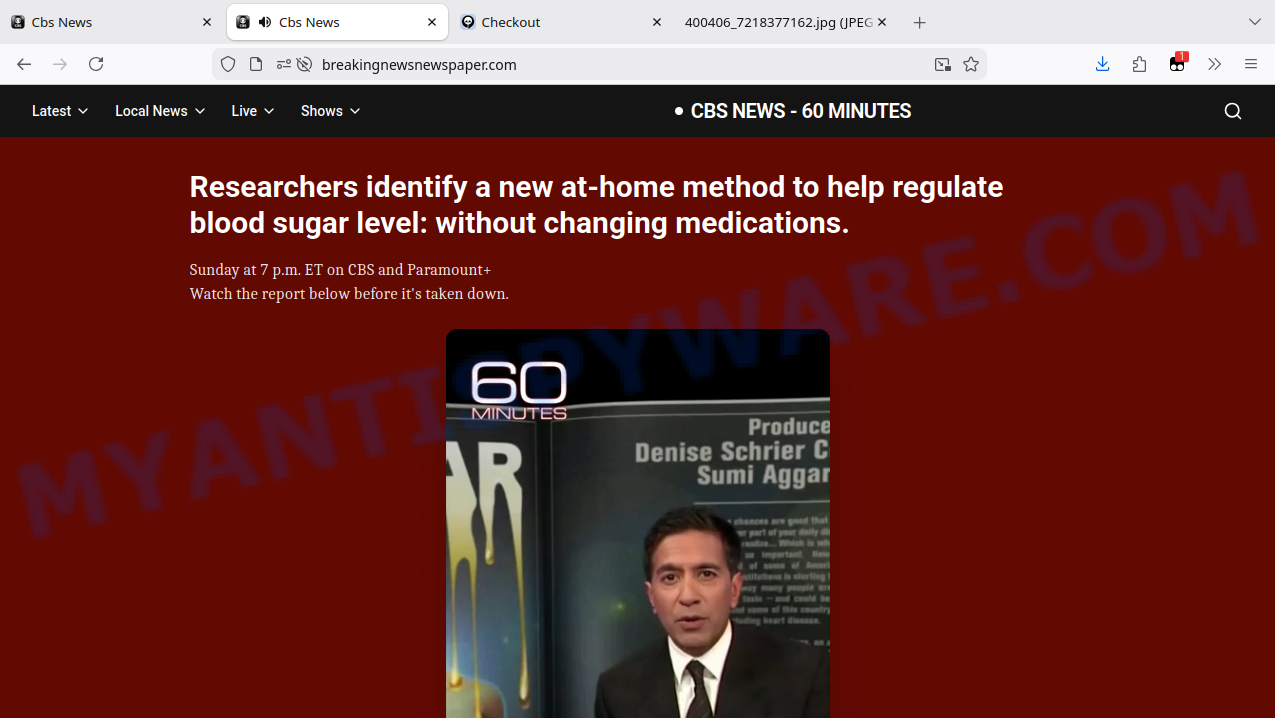
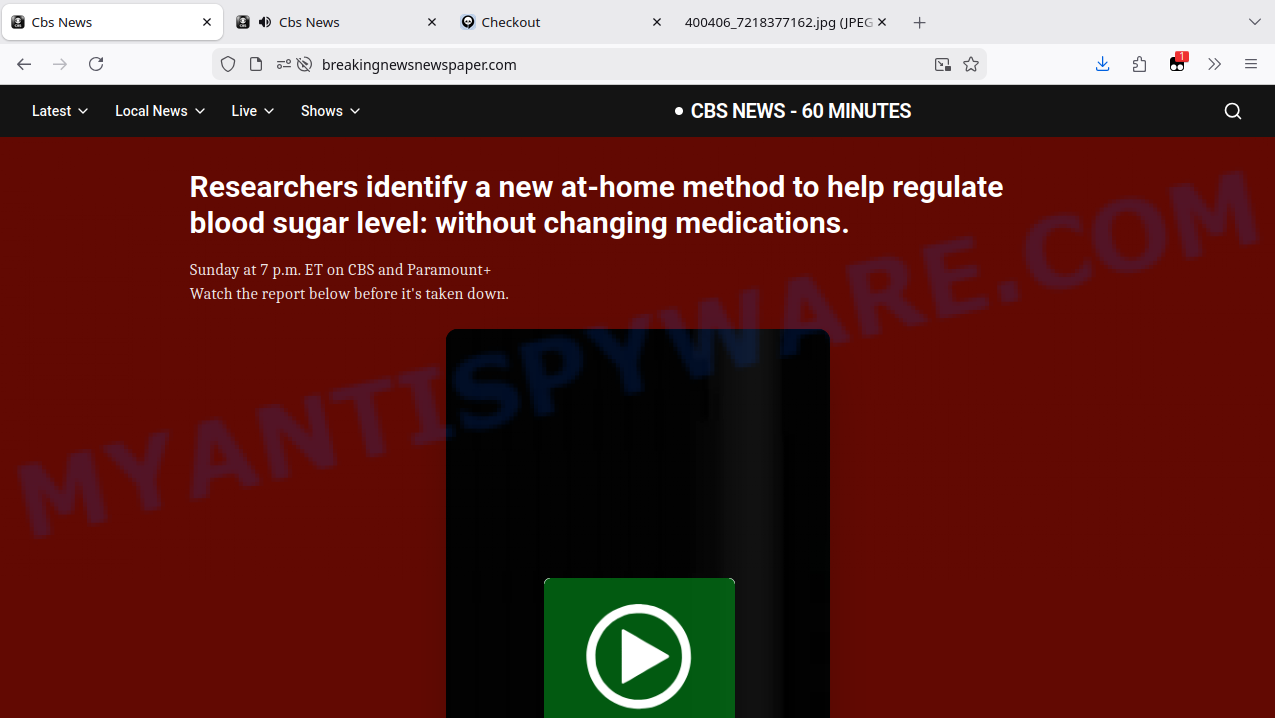
- 🌐 Fake News Broadcast Appearance: The main landing page mimics a CBS “60 MINUTES” news segment with headlines and video formatting but has no affiliation with any legitimate news organization. This counterfeit style is intended to deceive visitors into believing the product is medically endorsed.
- 🎥 Staged Video and Scripted Claims: A lengthy, scripted “investigative report” features named experts and celebrities allegedly endorsing Glycopezil’s “glucose reset” method. These endorsements are fabricated and cannot be verified via any legitimate sources.
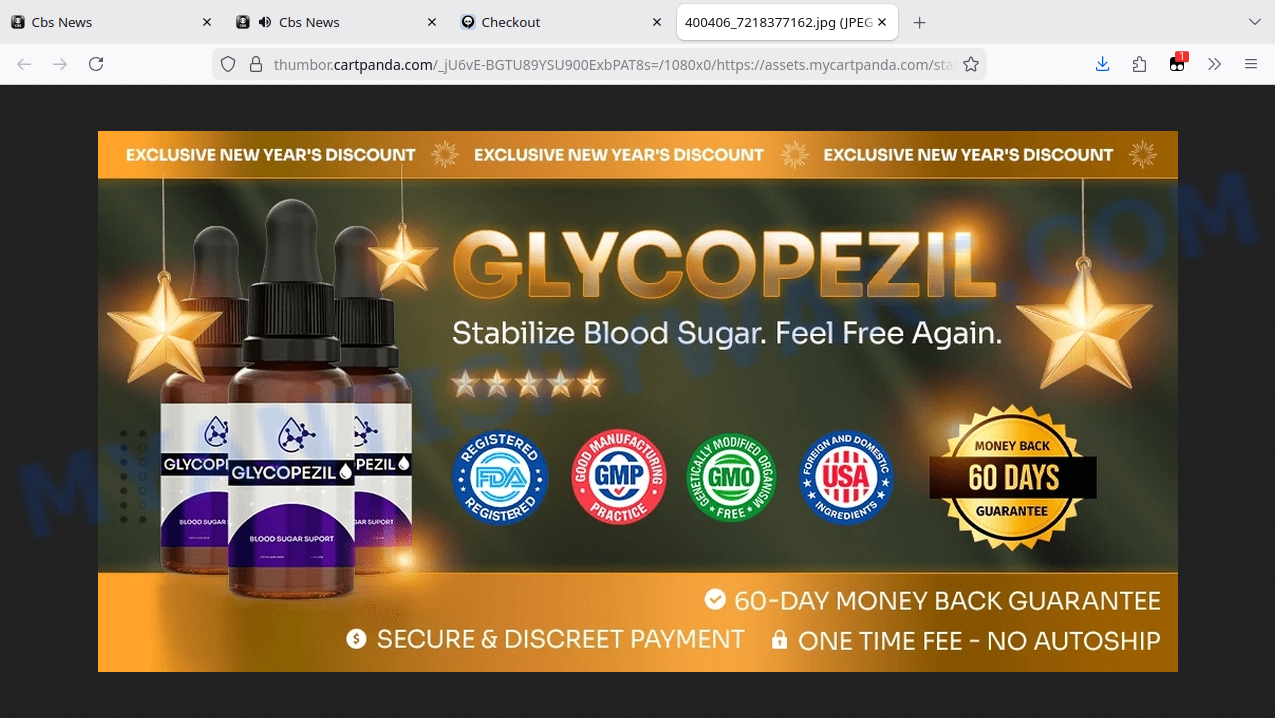
- 🔖 Misleading Badges and Certifications: The product and sales pages display icons labeled “FDA Registered”, “GMP”, and “GMO-Free” without providing verifiable certification documents or legitimate links to confirming authorities.
- 📉 Suspicious Website Domains and Checkout Platforms: The initial sales funnel begins on breakingnewsnewspaper.com and redirects to a checkout hosted on a mycartpanda subdomain, which is unrelated to genuine medical or supplement providers.
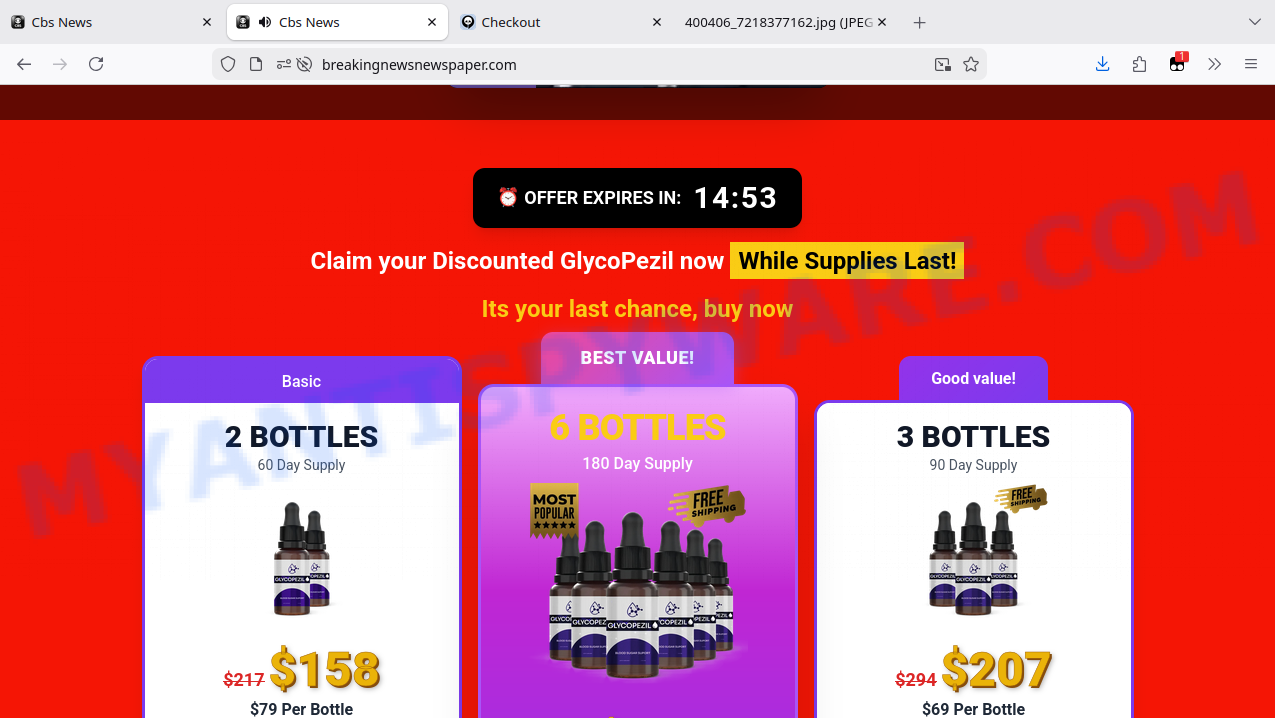
- ⚠️ High-Pressure Sales Tactics: Users are bombarded with countdown timers, limited stock warnings, and urgent discount offers such as “First 20 people” bonuses, all designed to rush impulsive purchases without adequate reflection.
- 👥 Dubious Social Proof: The website claims tens of thousands of positive reviews (“9.3 Excellent (42,534 reviews)”) and numerous users currently on the page, which are typical marketing funnel elements without independent verification.
- 💰 Refund and Payment Risks: Although a “60-Day Money Back Guarantee” is advertised, such promises on scam sites rarely result in effective refunds. Payment is processed through third-party merchant Cartpanda/mycartpanda which may complicate refund and data privacy protections.
In summary, Glycopezil is not a verified medical solution but rather a supplement marketed through a deceptive sales funnel that borrows trustworthiness from fake news styling, celebrity and doctor name-dropping, and misleading certifications. Consumers should avoid purchasing Glycopezil from these online pages and instead rely on treatments and advice from qualified healthcare professionals and verified sources.
🕵️♂️ How Glycopezil Operates
🚨 It’s a marketing trick where a simple dropper bottle supplement is falsely promoted as a miracle “glucose reset ritual” that can stabilize blood sugar and reverse diabetes without medication. 🔗 Step-by-Step Breakdown of the Scam:
🛒 Promoted Through Social Media Ads
The scam starts with flashy ads on platforms like Facebook, Instagram, and YouTube, promising a revolutionary method to control blood sugar “without medications”. These ads drive traffic to fake news-style webpages that mimic trusted sources.
🕸️ Fake News-Like Websites
They create websites styled like reputable news broadcasts (e.g., breakingnewsnewspaper.com with CBS News – 60 Minutes branding) that claim to reveal secret diabetes cures. These sites are carefully designed with copied logos and headlines but have no legitimate news outlet affiliation or verifiable authorship.
📢 Manipulative Video Reports
The webpages feature staged “investigative reports” with scripted narrations referencing celebrities “using” the ritual and citing fake endorsements from doctors and universities. The videos promise a simple, natural 4-ingredient remedy that works similarly to expensive prescription drugs — without side effects or injections.
💼 False Credibility and Endorsements
The scam uses fake credibility markers, such as logos labeled “Registered FDA”, “GMP”, and “GMO-FREE”, plus celebrity and doctor names like Dr. Phil and Halle Berry, none of which are actually connected to Glycopezil. This creates a misleading sense of trustworthiness.
💸 High-Pressure Sales Tactics
Once the video ends, visitors are pushed to purchase the product immediately with countdown timers, limited-time discounts, and scarcity messages (e.g., “Only 56 kits left”, “Offer expires in 15 minutes”). Prices range from $49 to $79 per bottle, with multiple-bottle bundles promoted as better deals.
🌟 Fabricated Reviews and Social Proof
Checkout pages show fake user ratings like “9.3 Excellent! (42,534 reviews)” and claim thousands of customers already use Glycopezil successfully. These reviews are not verified and appear designed to manipulate buyers.
⚖️ False Legal and Medical Claims
The scam claims Glycopezil is a safe, legal alternative to prescription drugs like Ozempic and Mounjaro. However, these health claims lack any scientific or regulatory support and are purely marketing fiction.
🛍️ Complicated and Risky Checkout Process
Purchasing requires entering personal and payment information on checkout pages hosted on domains like mycartpanda.com, offering “secure” payment logos without real buyer protection. The product is sold as a one-time purchase, but refund policies are vague.
🔁 Difficult or Nonexistent Refunds
Despite promises of a “60-Day Money Back Guarantee”, customers report that requesting refunds is nearly impossible. The seller often ignores communications or uses loopholes to avoid returns.
📦 Delivery of Ineffective Supplement
Customers do receive a small dropper bottle of liquid supplement, but it does nothing to alter blood sugar levels as advertised. It is an unproven health product with no clinical backing.
🚫 Poor Customer Service
Post-sale support is minimal or nonexistent — emails go unanswered, and customers are left without recourse after payment.
In summary, the 🚫 scam dupes people into buying an expensive, ineffective supplement by masquerading as a legitimate medical breakthrough. The fraudulent use of fake news websites, celebrity and doctor names, exaggerated success stories, and pressured sales tactics are clear warning signs. Buyers should be extremely cautious and skeptical of any product claiming to “reverse type 2 diabetes” without proper scientific evidence or regulatory approval. Avoid purchasing Glycopezil and verify any health supplement claims with trusted medical professionals.
😱 What to Do If Scammed
If you find yourself ensnared by the Glycopezil Scam, immediate action is crucial. Here’s what you should consider doing:
🛑 Stop Further Transactions
The first step is to halt any additional transactions that might be in process. Contact your bank or credit card provider and inform them that you’ve fallen victim to a scam. They can help by blocking the card or reversing any unauthorized transactions.
📞 Report the Fraud
File a report with your local police and provide all the available evidence, such as screenshots, emails, and website URLs. Additionally, report the scam to online portals like the Better Business Bureau (BBB) at www.bbb.org or the Federal Trade Commission (FTC) at reportfraud.ftc.gov. If you’re in another country, reach out to your national consumer protection agency.
💻 Take Screenshots
Before the scam website gets taken down or changes, make sure to capture screenshots of your transactions and communications. These can serve as evidence if you decide to pursue legal action.
⚖️ Consult Legal Advice
Speak to a legal advisor about your situation. While pursuing legal action may be time-consuming and costly, it could be a possible avenue for recovering your lost money.
📢 Share Your Experience
Use social media platforms to share your experience and warn others about the scam. Your story could prevent someone else from falling victim to the same or similar scams.
Summary Table
| Factor | Observations | Impact on Legitimacy |
|---|---|---|
| Product Description | Glycopezil is marketed as a natural liquid supplement that claims to stabilize blood sugar and reverse type 2 diabetes through a simple at-home “glucose reset ritual”. The product is sold in small dropper bottles and is promoted as a safer, cheaper alternative to prescription drugs like Ozempic without injections or side effects. These claims are presented in a video styled like a news report but lack any proven medical evidence or official approval. | Negative (Unproven health claims with no scientific support) |
| Reviews | The checkout page shows a high number of positive reviews and ratings, but these are not from verified independent sources. No real customer feedback exists on trusted platforms like Trustpilot, indicating the reviews are likely fake. | Negative (Fabricated testimonials and lack of genuine independent reviews) |
| Marketing Channels | The product is promoted via social media ads and a sales funnel that imitates a CBS “60 MINUTES” news broadcast. It uses celebrity mentions and doctor names without permission to create false credibility. The marketing uses urgency tactics like countdown timers and limited stock warnings to pressure quick purchases. | Negative (Misleading advertising and deceptive sales tactics) |
| Price | Glycopezil is offered in bundles, ranging from about $79 to $49 per bottle, often with supposed discounts and bonuses to entice buyers to purchase larger quantities quickly. Additional shipping fees may apply, and the total price can be higher than shown upfront. | Negative (High prices with pressuring sales tactics and hidden fees) |
| Real Functionality | There is no reliable evidence that Glycopezil or the so-called “glucose reset ritual” can treat or reverse diabetes. The supplements are not supported by medical studies or approved by health authorities. | Negative (False medical claims and no verified effectiveness) |
| Company Contacts | The website and checkout pages provide limited company information and use generic addresses. No clear manufacturer or medical institution is disclosed, reducing transparency and trustworthiness. | Negative (Lack of clear and trustworthy company information) |
| Product Source | The product packaging and page use badges like “FDA Registered”, “GMP”, and “GMO-Free” as images only, without any official documents or validation. The site falsely links the product to major media outlets and celebrities without permission. | Negative (False claims about certification and affiliations) |
| Safety Claims | The product claims natural, side-effect-free ingredients but provides no detailed safety information or warnings. This lack of transparency puts consumers at risk as interactions or side effects are not properly disclosed. | Negative (Insufficient safety information and misleading claims) |
| Website Transparency | The landing page uses copied news styles and logos, staged video reports, and fake testimonials to mislead visitors. It hides verification details and uses high-pressure messages to push purchases quickly. | Negative (Deceptive website design and sales pressure) |
| Refund Policy | Although a 60-day money-back guarantee is advertised, customers often find it hard to get refunds. The guarantee appears only as marketing text and is not backed by reliable processes. | Negative (Difficult refund process and unreliable money-back promise) |
Conclusion
The Glycopezil “Glucose Reset Ritual” is a scam that uses deceptive marketing tactics, fake celebrity endorsements, and fabricated expert testimonials to create a false impression of legitimacy. The product is promoted via a misleading news-style webpage on breakingnewsnewspaper.com and a suspicious checkout on a mycartpanda.com subdomain, using copied branding from CBS “60 MINUTES” and names like Dr. Phil and Halle Berry without any real association.
Instead of an effective, medically supported treatment for blood sugar regulation or type 2 diabetes reversal, visitors are presented with an elaborate sales funnel that heavily pressures for immediate purchases through countdown timers, scarcity tactics, and fake “60-Day Money Back Guarantee” badges. The small bottles labeled Glycopezil or Glycopazil come with unsubstantiated claims and no credible scientific evidence or third-party certification to back them up.
Bottom Line: Avoid Glycopezil Drops and similar “glucose reset” scams that rely on fake news pages, bogus testimonials, and unauthorized use of celebrity and expert names. There are no real reviews from trustworthy sources like TrustPilot, and buyers risk losing money or exposing personal information to unknown vendors. Always research thoroughly and be skeptical of products making miraculous health promises without verifiable evidence.