Beware of a new wave of scams targeting Trust Wallet users with fake security alerts designed to steal your crypto. These phishing emails claim there’s been a “critical security incident” and urge you to immediately scan your wallet via a provided link—purportedly to protect your assets from hackers. But in reality, this urgent “Trust Wallet Security Notice” is a trap.
At its core, the scam exploits fear and urgency by inventing a data breach that never happened, pushing victims to connect their wallets to malicious tools. These fake security tools then gain unauthorized access, draining funds in seconds. Remember: Trust Wallet will never ask for your seed phrase or private keys, nor send unsolicited emails demanding urgent actions through links outside official channels.
If you get a message claiming your wallet is “at risk” and offering a link to “scan” or “secure” it, don’t click. Always verify through the official Trust Wallet app or website. Falling for this classic phishing trick means handing criminals the keys to your digital fortune. Stay vigilant, question alarming emails, and keep your crypto safe by sticking to trusted sources only.
A typical “Trust Wallet – Urgent Security Notice” scam email reads as follows:
Subject: SECURE YOUR TOKEN AND AVOID FALLING INTO THE HANDS OF SCAMMERS.
Trustwallet
Trusted by 200M people • Founded 2017 • Independently Audited
Scan Your Wallet
URGENT SECURITY NOTICE – IMMEDIATE ACTION REQUIREDTrustwallet Users — A critical security incident requires you to check and secure your wallet now.
Dear Trustwallet User,
What HappenedTrustwallet recently detected a malicious attack that compromised parts of our wallet infrastructure. As a result, some user wallets may have been exposed to unauthorized access.
We have contained the breach
We are actively working with security experts and blockchain investigators
However, your wallet may still be at risk if immediate action is not takenThis incident may affect millions of users, and every user must assume potential exposure until verified.
What This Means for YouIf your wallet is compromised, attackers may be able to:
View your wallet address and transaction activity
Attempt unauthorized transfers
Drain assets if your wallet remains unsecuredDo NOT assume your wallet is safe. Even if you see no unusual activity, your wallet must be scanned immediately.
IMMEDIATE ACTION REQUIRED (VERY IMPORTANT)We have created an official Trustwallet security tool to help you check your wallet status and secure it if necessary.
Scan Your Wallet NowWhat the tool does:
Scan your wallet for known compromise indicators
Detect suspicious permissions or exploit patterns
Tell you clearly if your wallet is SAFE, AT RISK, or COMPROMISEDFollow the On-Screen Security Instructions
If the tool indicates ANY RISK, you will be guided to:
Revoke malicious wallet permissions
Secure your assets
Move funds to a safe wallet if necessary
Prevent further unauthorized accessDo not skip any steps shown by the tool.
Important Safety WarningsTo protect yourself:
Trustwallet will NEVER ask for your seed phrase or private keys
Do NOT trust messages claiming to “fix” your wallet outside our official channels
Do NOT connect your wallet to random websites or toolsOnly use the official link provided above.
Why You Must Act NowBlockchain transactions are irreversible. If a compromised wallet is not secured quickly, assets can be permanently lost.
Time is critical. Delaying action increases risk.
Our Commitment to YouWe deeply regret this incident and understand the fear and frustration it may cause. Your security is our highest priority:
Conducting a full forensic investigation
Strengthening our infrastructure
Preparing further updates and support resourcesYou will receive additional communication as more information becomes available.
Scan Now
Scan Your Wallet NowIf you do nothing, your wallet may remain vulnerable.
Thank you for your immediate attention and cooperation.
Trustwallet Security TeamProtecting your assets. Acting with urgency.
If you received this message in error or no longer want to receive security notices, please manage your notification preferences in your Trustwallet account.
© Trustwallet 2025 • All rights reserved.
🕵️♂️ How the Trust Wallet Urgent Security Notice Email Scam Operates
The Trust Wallet Urgent Security Notice email is a fraudulent message pretending to be from the official Trust Wallet team. 🚨 This scam attempts to trick users into revealing sensitive information or clicking malicious links by warning them of a fake security breach.
🔗 Step-by-Step Breakdown of the Scam:
📧 Sending Fake Security Emails
Scammers send convincing emails that appear to come from Trust Wallet, using alarming subject lines like “URGENT SECURITY NOTICE – IMMEDIATE ACTION REQUIRED” to create a sense of panic and urgency.
🕸️ Creating Phony “Security Tools”
The email includes a link to a fake Trust Wallet security tool website designed to look official. This site prompts users to scan their wallets but is actually a trap to steal sensitive data or trick users into authorizing malicious transactions.
⚠️ Making False Security Claims
The scam email claims a critical security breach has compromised wallets, listing possible threats such as unauthorized transfers or asset draining—none of which are true.
👀 Impersonating Official Trust Wallet Messaging
Scammers mimic the brand’s style and terminology (e.g., “Trusted by 200M people”, “Independently Audited”), creating false trust and legitimacy.
🔗 Directing Users to Unsafe Links
Users are urged to “Scan Your Wallet Now” via links that lead to malicious sites designed to capture private keys, seed phrases, or private wallet permissions.
💡 Warning Against Legitimate Security Practices (Ironically)
The scam ironically instructs users not to share seed phrases or private keys with others and not to trust random websites—while its own site is a fraudulent trap.
⏳ Pressuring for Immediate Action
The email emphasizes that immediate action is critical and any delay puts assets at risk, preying on user fear to prompt impulsive clicking or information sharing.
In summary, the Trust Wallet Urgent Security Notice email scam deceives users by posing as an official security alert to steal wallet credentials or push malicious actions. It uses fear, fake websites, false claims, and forged branding to trick victims into compromising their crypto assets. Users should always verify security alerts through official Trust Wallet channels and never click suspicious links or provide seed phrases to unknown sources.
📧 What to Do When You Receive the “Trust Wallet – Urgent Security Notice” Scam Email
We advise everyone who receives this email to follow the simple steps below to protect yourself from potential scams:
- ❌ Do not believe this email.
- 🔒 NEVER share your personal information and login credentials.
- 📎 Do not open unverified email attachments.
- 🚫 If there’s a link in the scam email, do not click it.
- 🔍 Do not enter your login credentials before examining the URL.
- 📣 Report the scam email to the FTC at www.ftc.gov.
If you accidentally click a phishing link or button in the “Trust Wallet – Urgent Security Notice” Email, suspect that your computer is infected with malware, or simply want to scan your computer for threats, use one of the free malware removal tools. Additionally, consider taking the following steps:
- 🔑 Change your passwords: Update passwords for your email, banking, and other important accounts.
- 🛡️ Enable two-factor authentication (2FA): Add an extra layer of security to your accounts.
- 📞 Contact your financial institutions: Inform them of any suspicious activity.
- 🔄 Monitor your accounts: Keep an eye on your bank statements and credit reports for any unusual activity.
🔍 How to Spot a Phishing Email
Phishing emails often share common characteristics; they are designed to trick victims into clicking on a phishing link or opening a malicious attachment. By recognizing these signs, you can detect phishing emails and prevent identity theft:
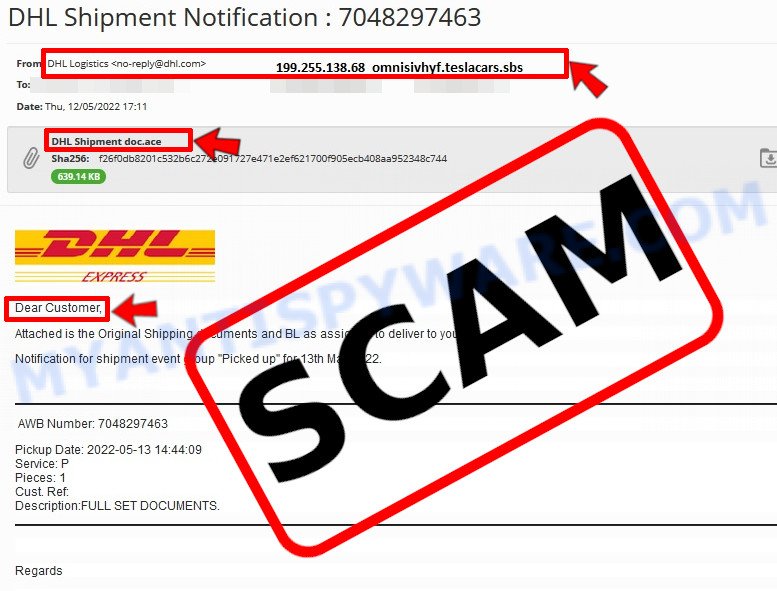
💡 Here Are Some Ways to Recognize a Phishing Email
- ✉️ Inconsistencies in Email Addresses: The most obvious way to spot a scam email is by finding inconsistencies in email addresses and domain names. If the email claims to be from a reputable company, like Amazon or PayPal, but is sent from a public email domain such as “gmail.com”, it’s probably a scam.
- 🔠 Misspelled Domain Names: Look carefully for any subtle misspellings in the domain name, such as “arnazon.com” where the “m” is replaced by “rn,” or “paypa1.com,” where the “l” is replaced by “1.” These are common tricks used by scammers.
- 👋 Generic Greetings: If the email starts with a generic “Dear Customer”, “Dear Sir”, or “Dear Madam”, it may not be from your actual shopping site or bank.
- 🔗 Suspicious Links: If you suspect an email may be a scam, do not click on any links. Instead, hover over the link without clicking to see the actual URL in a small popup. This works for both image links and text links.
- 📎 Unexpected Attachments: Email attachments should always be verified before opening. Scan any attachments for viruses, especially if they have unfamiliar extensions or are commonly associated with malware (e.g., .zip, .exe, .scr).
- ⏰ Sense of Urgency: Creating a false sense of urgency is a common tactic in phishing emails. Be wary of emails that claim you must act immediately by calling, opening an attachment, or clicking a link.
- 📝 Spelling and Grammar Errors: Many phishing emails contain spelling mistakes or grammatical errors. Professional companies usually proofread their communications carefully.
- 🔒 Requests for Sensitive Information: Legitimate organizations typically do not ask for sensitive information (like passwords or Social Security numbers) via email.
Conclusion
The Trust Wallet urgent security notice email is a scam, designed to create panic and trick users into compromising their wallet security. Scammers behind this fake alert use urgent language and alarming claims about a supposed security breach to lure users into clicking malicious links that prompt them to reveal private keys or seed phrases.
Instead of providing real protection, this fraudulent email attempts to steal your credentials by mimicking official Trust Wallet communications with fabricated logos, misleading statements, and counterfeit verification marks. Remember, Trust Wallet will never ask for your seed phrase, private keys, or prompt you to connect to unofficial websites.
Bottom Line: Do not trust security emails that pressure you into immediate action without verifying through official Trust Wallet channels. Always access wallet security features through the official Trust Wallet app or website directly, and never disclose sensitive information based on email prompts. Stay vigilant, ignore suspicious messages, and protect your crypto assets from scams that prey on fear and urgency.