WiggyDog Robot Puppy is being aggressively pushed as a lifelike AI-powered companion perfect for kids, promising realistic motions, touch-responsive behavior, and allergy-free fun. Marketed with flashy videos, fake customer reviews, and bold claims of German engineering and handcrafted quality, it insists it’s unlike typical robotic toys. But look closer: the glowing testimonials are suspiciously generic, the product’s AI “intelligence” is dubious at best, and despite advertising thousands of happy buyers, there’s zero legitimate social proof on platforms like TrustPilot.
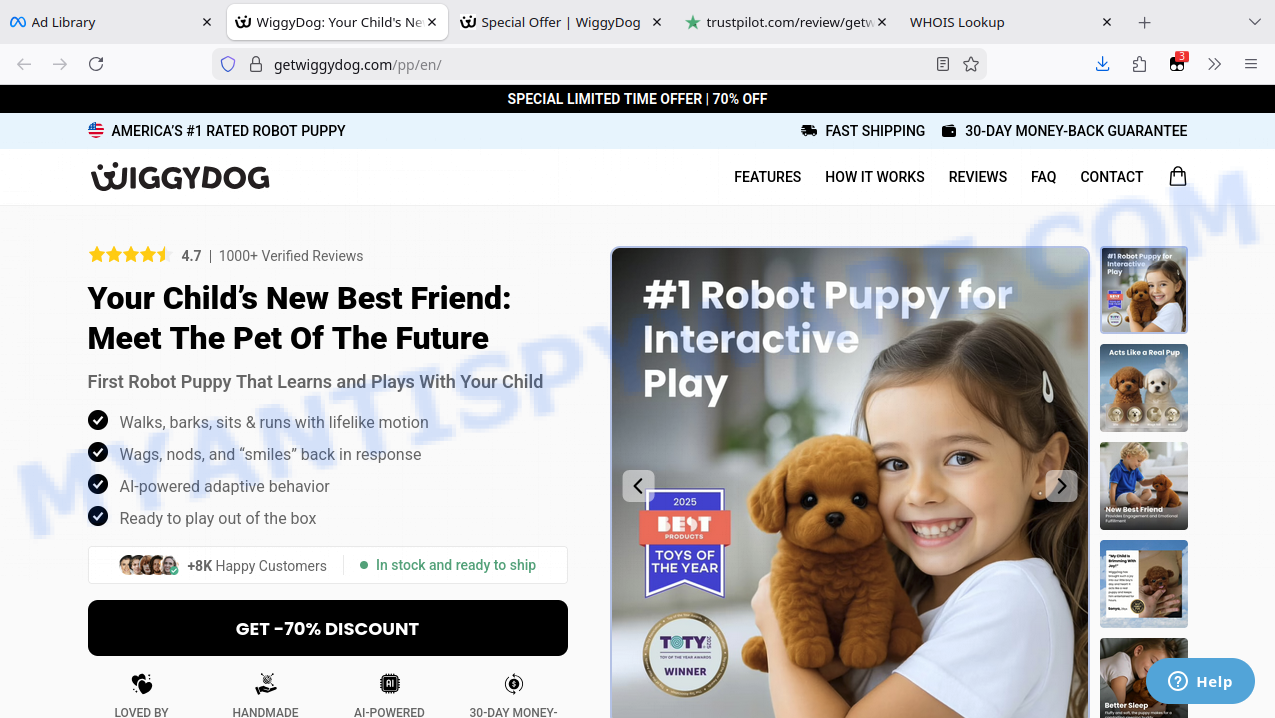
At its core, WiggyDog is just another entry in a rising wave of cheaply made robotic pets—think Wuffy Robot Puppy and Froplay AI Puppy—that prey on parents seeking a mess-free pet alternative but fail to deliver on their promises. The site’s elaborate marketing spins a story of premium design and emotional growth benefits, yet domain records reveal it’s a freshly minted website with no substantial track record. This is a classic case of inflated hype around a product with minimal real tech behind it. Read on to uncover the truth behind the WiggyDog scam and why it’s best to steer clear before your wallet gets the short end of this robotic leash.
💡 Heads-up: Similar Scams Are Everywhere. WiggyDog Robot Puppy is not unique. It is one of many fake supplements, gadgets, and other schemes we expose in our Fact Checks section. All of them aim to grab your personal data or money. The people behind these scams run slick websites, spread bogus promo codes, and even pose as trusted brands or experts. Below are a few recent scams that follow the same playbook as WiggyDog Robot Puppy: Euvelle Smart Glasses, MemoCore, Urgent Security Alert, Lercea Meglutide Drops, Spotifyreview.com.
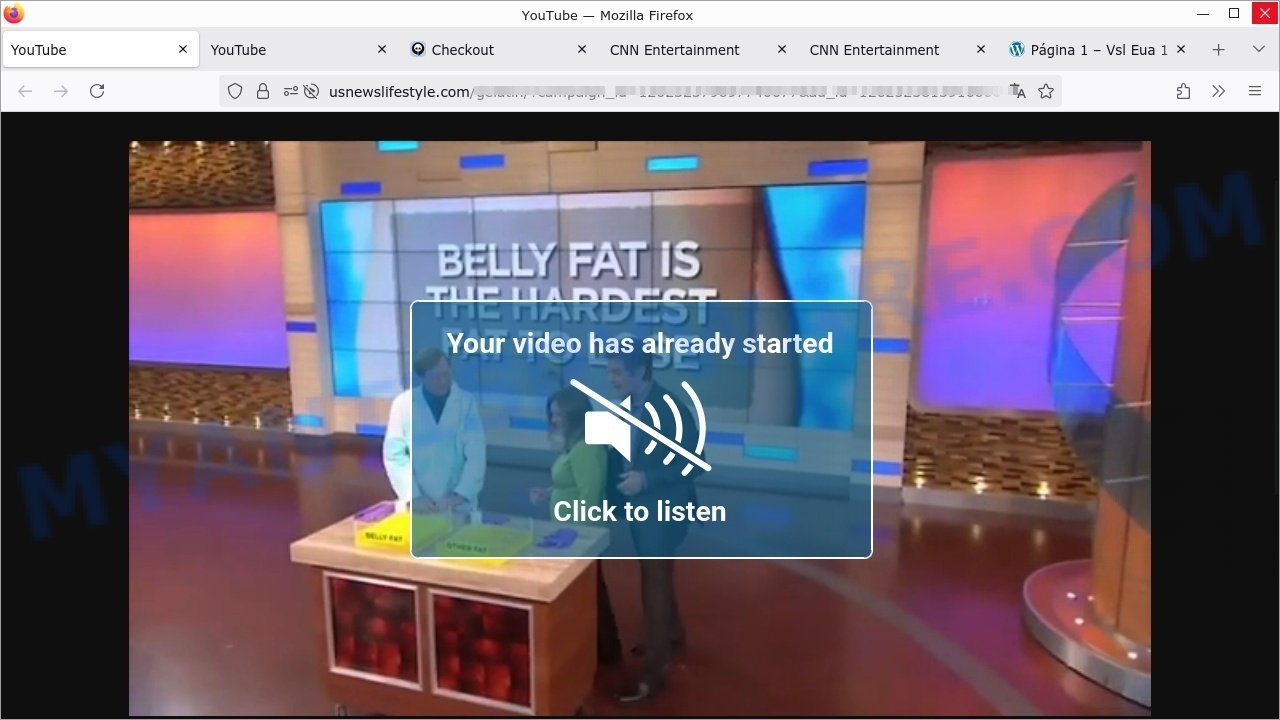

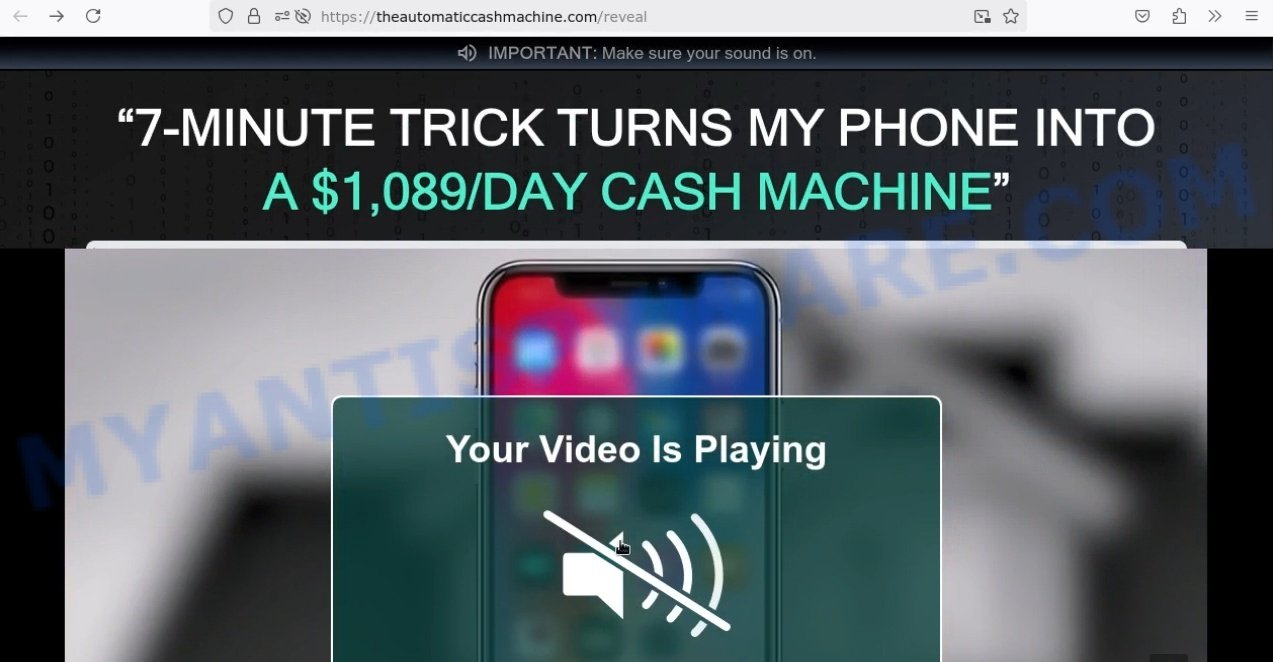

Table of Contents
🚩 Is WiggyDog Robot Puppy a Scam?
WiggyDog Robot Puppy is aggressively marketed as a lifelike, AI-powered robotic companion for children, promising an experience close to having a real puppy but without the mess, cost, or responsibility. However, a closer look reveals several red flags commonly associated with scam products designed to capitalize on parents’ desire for easy, low-maintenance alternatives to real pets.
Key Warning Signs:
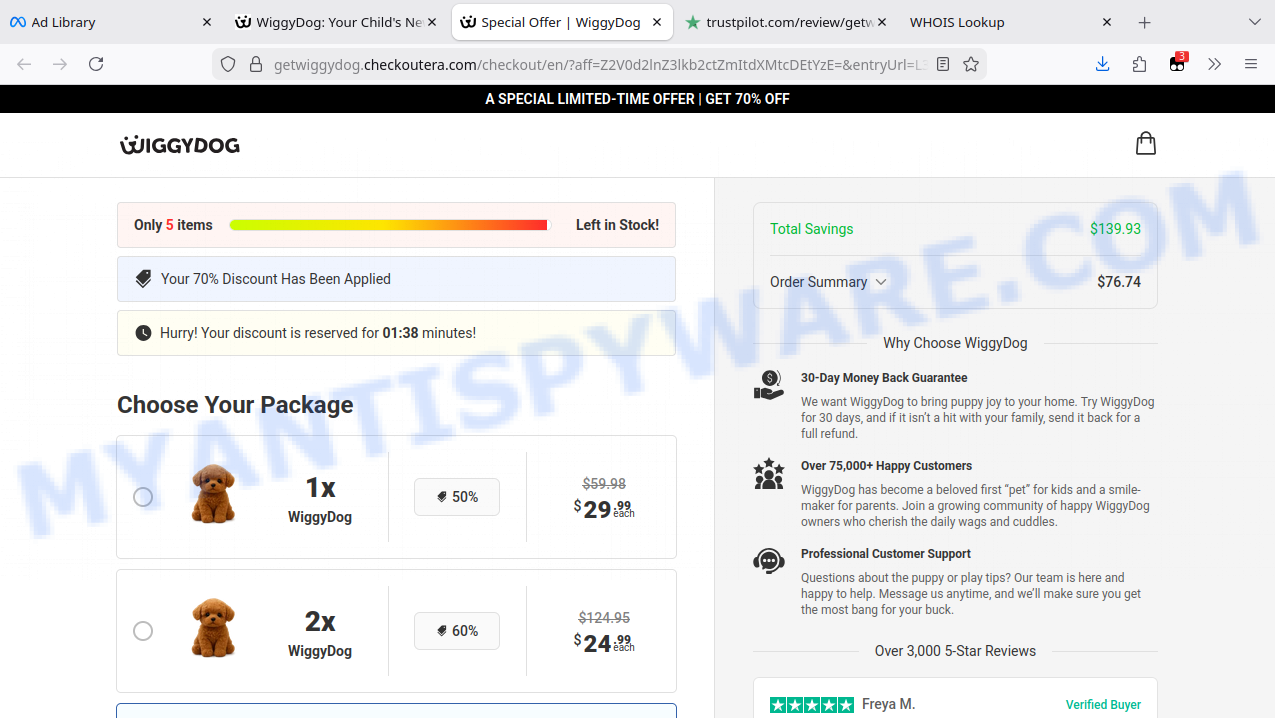
- 🌐 Overhyped Marketing and Fake Scarcity: WiggyDog ads use heavily scripted commercials featuring overly enthusiastic testimonials, countdown timers, and “limited stock” warnings created to rush buyers into impulse purchases without time to consider.
- ⭐ Dubious and Potentially Fabricated Reviews: While the website boasts thousands of 4-5 star reviews, independent platforms like Trustpilot show little to no genuine customer feedback, suggesting that many testimonials may be fabricated or manipulated.
- 🚫 No Trusted Third-party Verification: Claims of “German engineering” and advanced AI are unsubstantiated by any technical documentation or certifications, raising questions about the authenticity of these assertions.
- 🔍 Suspicious Website and Domain Information: The official site (getwiggydog.com) is newly registered with privacy-protected Whois details, preventing transparency about the real company behind the product.
- 💸 Confusing Pricing and Upselling Tactics: The checkout process showcases aggressive discounts and bulk deals that may pressure consumers into buying multiple units at inflated prices, often accompanied by add-ons like extended warranties with unclear value.
- ⚠️ Product Quality Concerns: Despite promises of “handmade quality” and advanced AI behavior, similar prior scams using cheap robotic toys marketed as high-tech have disappointed buyers due to poor build quality and limited interactivity.
- ❓ Lack of Clear Customer Support and Return Transparency: While a 30-day money-back guarantee is advertised, the absence of verified independent reviews and a real customer service track record raises concerns about whether refunds are processed smoothly.
In Summary: WiggyDog Robot Puppy appears to be part of a recurring pattern of robotic pet scams, where cheap toys are heavily marketed as sophisticated AI companions with lifelike behaviors. The misleading marketing, lack of credible verification, and suspicious sales tactics suggest that consumers should approach this product with caution. To avoid wasting money on overhyped and possibly worthless items, it is advisable to research thoroughly and consider well-established brands or real-world alternatives for children seeking a pet experience.
🕵️♂️ How WiggyDog Robot Puppy Scam Operates
WiggyDog Robot Puppy is a deceptive scam targeting families looking for a lifelike robotic pet. 🚨 It is a type of fraud where cheaply made toys are sold online as advanced, AI-powered robotic puppies with realistic behaviors that don’t truly exist. 🔗 Step-by-Step Breakdown of the Scam:
🛒 Buying Cheap Toys
The scammers source very basic robotic or plush toys at extremely low prices from bulk suppliers, often on offshore platforms. These are simple toys with minimal electronics that do not include any genuine AI or lifelike interactive features found in advertised advanced robotic pets.
🕸️ Creating Fake or Misleading Websites
They create professional-looking websites like getwiggydog.com to market WiggyDog as a high-tech, handcrafted German-engineered AI puppy. However, these sites hide essential contact details, use generic support emails, and lack verifiable business credentials or social media presence, all designed to look credible but evade accountability.
📢 Promoting Through Misleading Ads
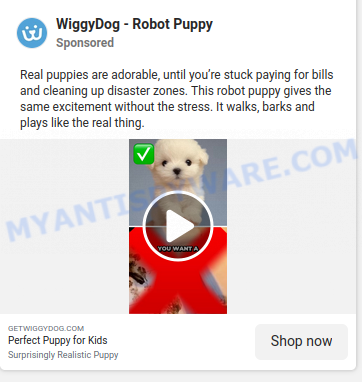
WiggyDog is heavily promoted via slick Facebook, Instagram, TikTok, and Google ads featuring cute videos and testimonials. They claim features like “AI-powered adaptive behavior”, “touch-responsive interaction”, and an experience that mimics a real puppy — all to create strong emotional appeal. The ads emphasize huge discounts (up to 70% off), urgency, and “30-day money-back guarantees” to pressure quick purchases.
💼 Falsifying Advanced Technology Claims
Advertisements make false promises about the toy’s AI capabilities, lifelike responses, and German engineering excellence. In reality, the product is subpar, lacking any true AI or advanced sensors, and typically provides very limited or generic robotic movements and sounds.
💸 Offering Big Discounts and Scarcity Pressure
The scam uses fake discount tactics, showing a high original price slashed to an implausibly low “sale” price, combined with countdown timers and indications that “only a few items left” to rush buyers into purchasing without sufficient research.
🌟 Using Fake Reviews and Testimonials
Websites are loaded with fabricated 5-star reviews and glowing testimonials claiming thousands of satisfied customers and exceptional product quality, though independent platforms like TrustPilot have no reviews at all, exposing the fake social proof.
📦 Delivering Low-Quality, Non-Functional Products
Customers do receive a product, but instead of an advanced robotic puppy, they get a cheaply made toy with limited sounds, stiff motions, or malfunctioning parts — falling far short of the advertised smart behaviors and AI features.
In summary, the WiggyDog Robot Puppy 🚫 scam dupes families searching for a high-quality, interactive robotic pet by falsely advertising a premium AI toy. The scammers use convincing websites, emotional marketing, fake reviews, and bogus discounts to sell cheap, low-quality toys that fail to deliver promised features. Buyers are often left stuck with useless products and no recourse for refunds or support. Beware of WiggyDog and similar robotic pet offerings—always research thoroughly and verify independent reviews before making online toy purchases.
😱 What to Do If Scammed
If you find yourself ensnared by the WiggyDog Robot Puppy Scam, immediate action is crucial. Here’s what you should consider doing:
🛑 Stop Further Transactions
The first step is to halt any additional transactions that might be in process. Contact your bank or credit card provider and inform them that you’ve fallen victim to a scam. They can help by blocking the card or reversing any unauthorized transactions.
📞 Report the Fraud
File a report with your local police and provide all the available evidence, such as screenshots, emails, and website URLs. Additionally, report the scam to online portals like the Better Business Bureau (BBB) at www.bbb.org or the Federal Trade Commission (FTC) at reportfraud.ftc.gov. If you’re in another country, reach out to your national consumer protection agency.
💻 Take Screenshots
Before the scam website gets taken down or changes, make sure to capture screenshots of your transactions and communications. These can serve as evidence if you decide to pursue legal action.
⚖️ Consult Legal Advice
Speak to a legal advisor about your situation. While pursuing legal action may be time-consuming and costly, it could be a possible avenue for recovering your lost money.
📢 Share Your Experience
Use social media platforms to share your experience and warn others about the scam. Your story could prevent someone else from falling victim to the same or similar scams.
Summary Table
| Factor | Observations | Impact on Legitimacy |
|---|---|---|
| Product Description | WiggyDog Robot Puppy is promoted as a lifelike AI-powered robot pet that walks, barks, and reacts to touch. The ads claim it teaches kindness and offers screen-free play without the mess of a real dog. However, it closely resembles cheap toy robots sold before, suggesting the product may not live up to its high-tech promises. | Negative (Exaggerated claims and possible reuse of low-quality robot toys) |
| Reviews | The website shows many positive reviews and customer testimonials but there are no reviews on independent sites like Trustpilot. This absence raises doubts about the authenticity of the posted feedback. | Negative (Likely fake or biased reviews with no independent verification) |
| Marketing Channels | WiggyDog is marketed heavily through Facebook ads using emotional appeals and limited-time offers to push quick purchases. The ads link to a sales site with pressure tactics and countdown timers to create urgency. | Negative (High-pressure marketing and urgent sales tactics) |
| Price | The product is aggressively discounted with offers up to 70% off, urging buyers to act fast. This pricing strategy is common in scams or low-quality products to attract impulsive buyers. | Negative (Use of deep discounts and limited stock warnings to pressure buyers) |
| Real Functionality | Although WiggyDog claims advanced AI behavior and lifelike responses, the product appears similar to earlier low-tech robot puppies that only perform limited movements and sounds. No solid proof confirms the AI features or realistic interactions. | Negative (Unverified technology claims with likely basic toy functions) |
| Company Contacts | The site provides minimal company information, and domain registration uses privacy protection to hide owner details. This lack of transparency makes it hard to trust the source of the product. | Negative (Hidden ownership and limited customer support details) |
| Product Source | The product’s domain was registered recently, with no established business history. The website tries to sound official but lacks credible manufacturing or technology background. | Negative (New domain with no proven track record or authentic origin) |
| Safety Claims | The toy is described as allergy-friendly and safe, but no detailed safety or quality certifications are provided. The product’s durability and child safety are uncertain. | Negative (No clear safety or quality assurance information) |
| Website Transparency | The official site uses high-pressure sales tactics, artificial scarcity messages, and countdown timers. Some text is presented as images, making verification harder. The refund policy is stated but hard to confirm its effectiveness. | Negative (Opaque sales tactics and unclear refund conditions) |
| Refund Policy | While the site offers a 30-day money-back guarantee, there is no evidence showing smooth refund processing. Such policies are often difficult to use in similar online discount offers. | Negative (Potentially misleading refund promises that may be hard to claim) |
Conclusion
The WiggyDog Robot Puppy is a scam, employing clever marketing, AI-generated videos, and fabricated testimonials to create a false sense of authenticity and appeal. Despite claims of handcrafted quality, advanced AI features, and thousands of satisfied customers, WiggyDog appears to be another iteration of recurring robotic puppy scams like Wuffy Robot Puppy and Froplay AI Puppy, with similar tactics but no genuine product validation.
The website boasts impressive-sounding features such as German engineering, adaptive AI behavior, and touch responsiveness that mimic a real puppy. However, these claims are not supported by credible third-party reviews or independent verification; notably, TrustPilot shows zero reviews despite the site touting thousands of happy buyers. The glowing customer testimonials and five-star ratings are likely fabricated or manipulated to entice purchases.
WiggyDog’s social media ads hype it as an ideal gift for children, promising emotional development benefits and mess-free pet companionship. Yet, there is strong evidence these ads use AI-generated voices and stock footage rather than genuine user experiences. The domain is newly registered with privacy protection, further adding to the suspicion around transparency and legitimacy.
Bottom Line: Avoid purchasing WiggyDog Robot Puppy. Always approach robotic toys with bold claims and manufactured hype with caution, especially when critical feedback is absent from trusted independent review platforms. If an offer seems too good to be true or relies on questionable marketing strategies and unverifiable endorsements, it is most likely a scam designed to take your money without delivering a quality product.